How to Give Your Bathroom a Vintage Look Without Renovating (9 Steps Under $200)
Most people chasing a vintage bathroom look without renovating start by buying old-looking things. Maybe a rattan basket, or a brass tray you found at a flea market. Then the room still looks new, and you can’t figure out why.
The reason is simpler than it feels. You’ve been decorating around the problem instead of removing it. Four or five objects in that bathroom are stamped with the year it was built, and no amount of pretty styling can talk over them.
Take those out and the room quiets. Whatever you add after that gets heard.
Nine swaps do the work. None of them need a contractor, a permit, or your landlord’s permission, and the full list comes in under $200 even if you buy everything new. Start with the photo test below before you spend anything.
This post contains affiliate links. If you buy through one, I may earn a small commission at no extra cost to you.
The five objects broadcasting your build year (it’s not the tile)
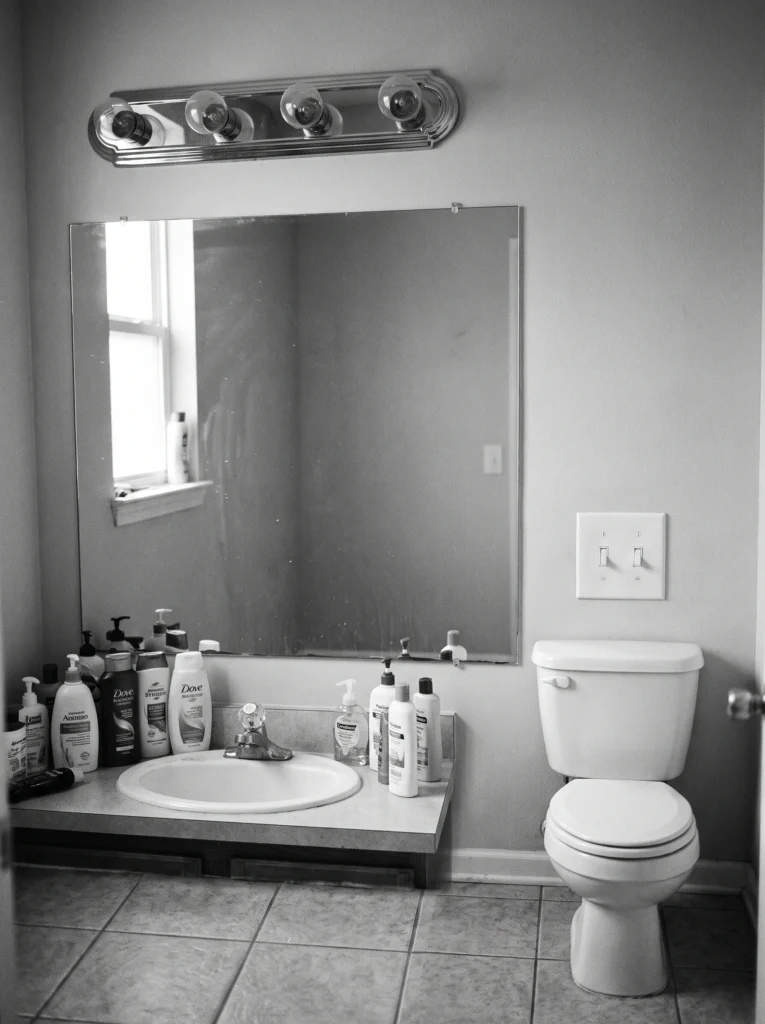
Take a photo of your bathroom, turn it black and white, and look at what still pulls your eye once the color is gone. Shape and shine survive the edit. Age lives in both.
Five objects give away the build date in most bathrooms. A wide light bar with three or four exposed bulbs showed up around 1990 and never left. Frameless mirrors glued straight to the drywall arrived the same way. Plastic toilet seats, glossy white switch plates, and shampoo bottles with brand names on them finish the job.
Notice that tile isn’t on the list. Your beige floor is boring, but boring is quiet, and quiet is something you can work with. It is not the reason the room looks new.
Every step below pulls out one of those five. Once they’re gone, the room stops announcing its birth year, and the older pieces you add finally have space to be noticed.
Choose 1925, 1948, or 1962 before you spend a dollar
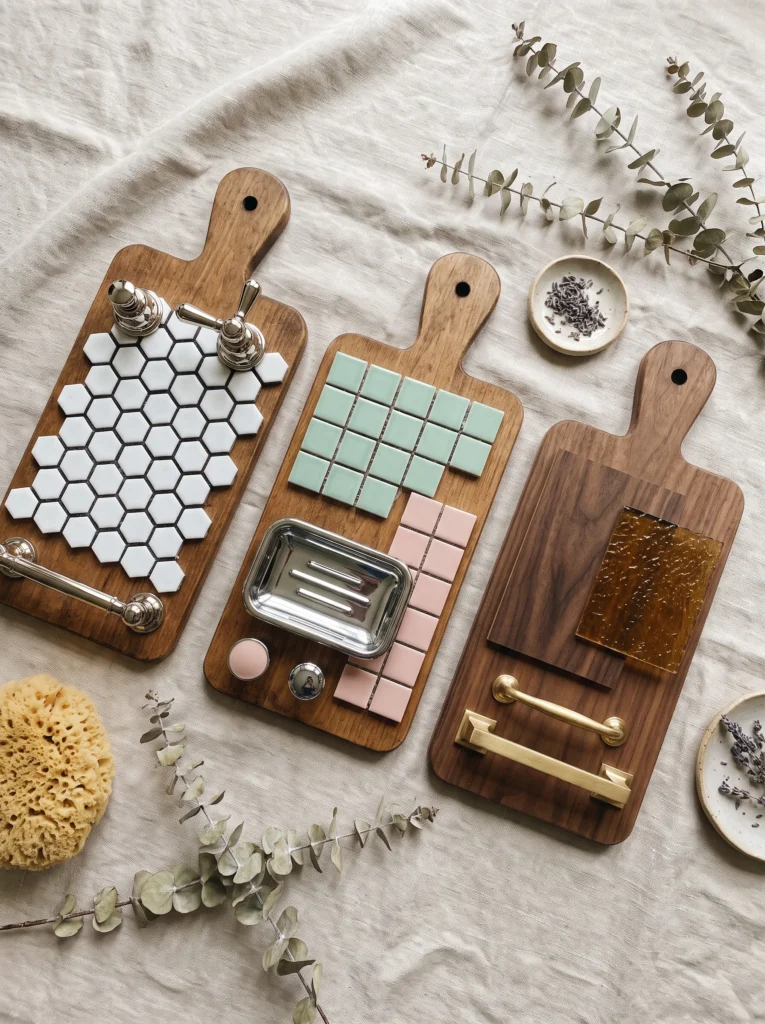
Pick a decade before you buy anything. Rooms read as old when their parts agree with each other, and they read as costume the second you mix a 1920s sconce with a 1960s vanity tray.
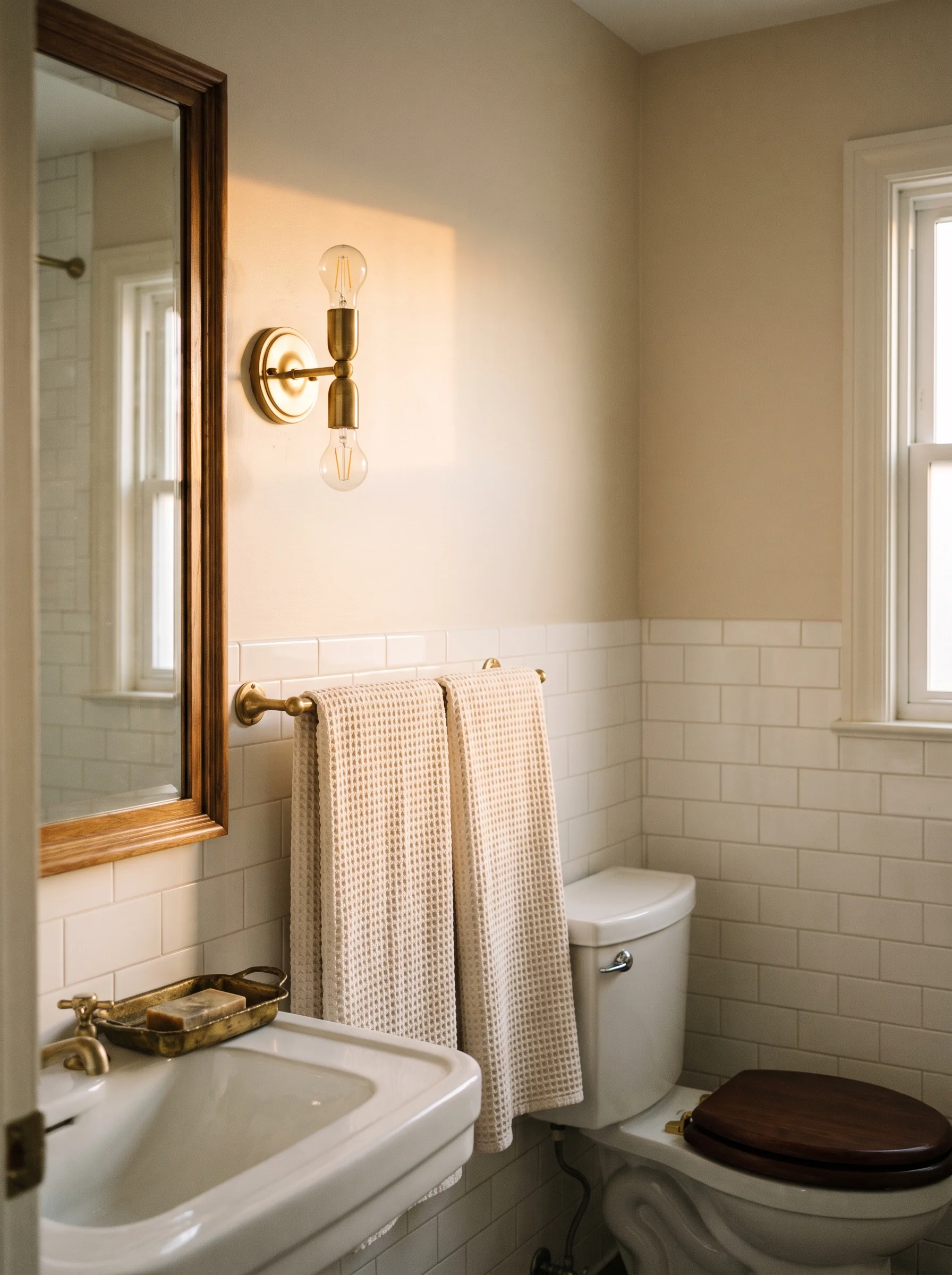
Three decades work well in a small bathroom you can’t gut. 1925 means white, black, and nickel or chrome. Hexagon floor tile, milk glass shades, and exposed metal belong here. 1948 means color. Mint green, soft pink, and butter yellow ran through American bathrooms for two decades, usually paired with chrome fittings and soft rounded shapes. 1962 means wood and brass. Walnut, teak, amber glass, and warmer light show up in that decade.
Write your pick on a sticky note and stick it on the mirror. Everything you buy from here has to pass that one test.
Steps 1–2: Remove the plastic bottles and decant what’s left
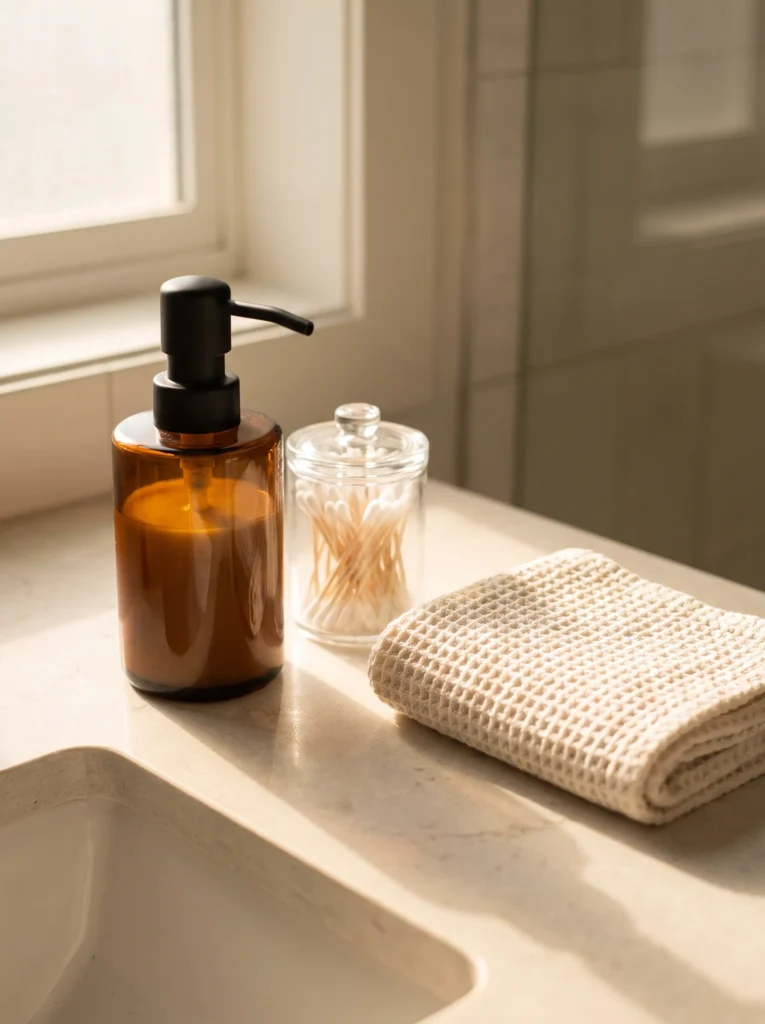
Count the objects sitting out on your counter and tub edge right now. Most modern bathrooms hold twenty or more. A 1930s bathroom held maybe six visible items, because almost nothing you used came packaged in a printed plastic bottle back then. That gap does the damage.
Step one: put everything with a logo on it inside the cabinet. Shampoo, razors, cleaning spray, the electric toothbrush charger, all of it goes behind a door.
Then move what stays out into glass or ceramic. Hand soap in an amber pump bottle reads as old before you’ve spent a dollar on hardware, and cotton swabs go in a small lidded jar.
Shop it on Amazon : Amolliar Glass Foaming Soap Dispenser, Foam Lotion Dispenser
Twenty minutes of this changes the room more than the sconce will, and it costs nothing beyond the container you already own or the one you buy.
Steps 3–4: Replace the vanity light bar with a two-bulb sconce and drop to 2700K
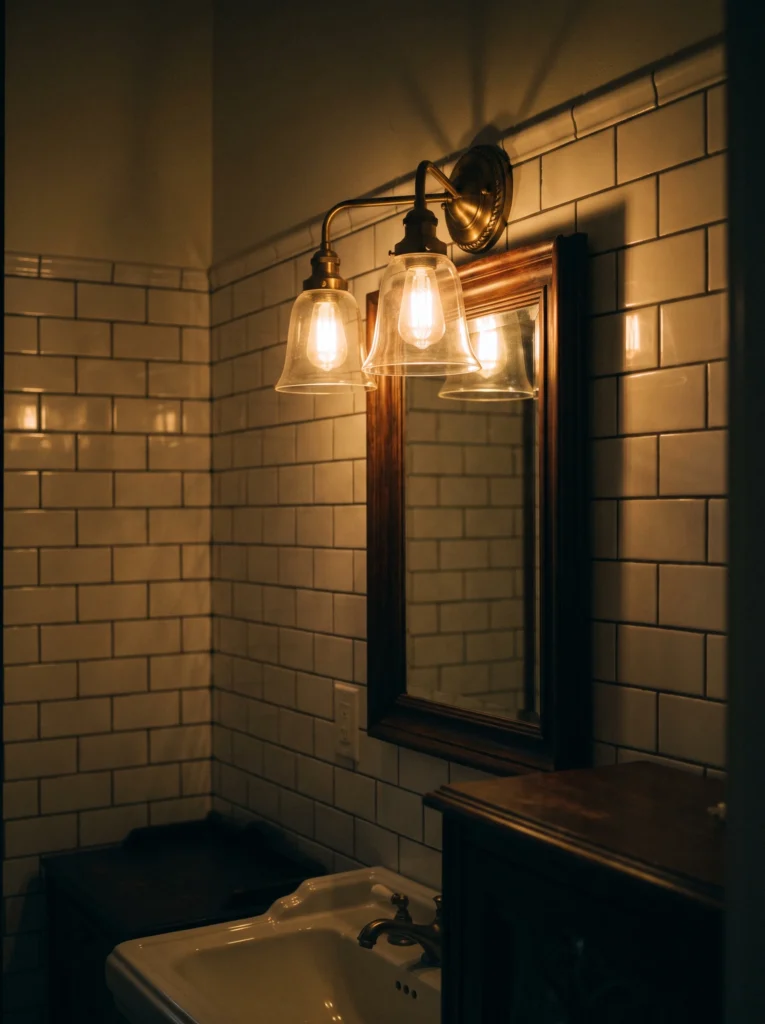
One swap changes more than the other eight combined. That light bar over your mirror is the loudest modern object in the room, and it sits at eye level where you cannot avoid looking at it.
Two-bulb sconces in brass or black run about $40 to $60. Most mount to the same electrical box the bar was using. Kill the breaker first. If wiring makes you nervous, an electrician will swap it in under an hour.
Shop it on Amazon : LOUSACE 2-Light Antique Brass Vintage Bathroom Vanity Light
Then change the bulbs. Color temperature does quiet work that nobody talks about. Cool white bulbs at 4000K or 5000K turn brass slightly green, flatten wood grain, and make every warm finish in the room look cheap.
2700K puts the warmth back. Buy the dimmable version if your switch supports it.
Shop it on Amazon : 6-Pack Dimmable LED Light Bulbs 60W Equivalent, Vintage Edison Light Bulbs, 2700K
Steps 5–6: Frame the builder mirror in place and swap every switch plate

You do not have to take the mirror down. Glued mirrors come off in pieces and take drywall with them. Build a frame around it instead.
Wood molding from the hardware store, cut to length and stuck on with construction adhesive, turns a bare mirror into a framed one for around $25. Paint or stain it to match your decade before you glue anything. Miter cuts are the fussy part. Butt joints look fine if you’re careful about the corners.
Switch plates take five minutes. Glossy white plastic is the single cheapest tell in any bathroom, and swapping it for antique brass or brushed steel costs less than a takeout lunch. Cover the outlet plates too, since a matched wall reads as intentional.
Shop it on Amazon : ZILLSEA Antique Brass Light Switch Cover, 4 Pack
Steps 7–8: A wooden toilet seat and cross-handle faucet handles
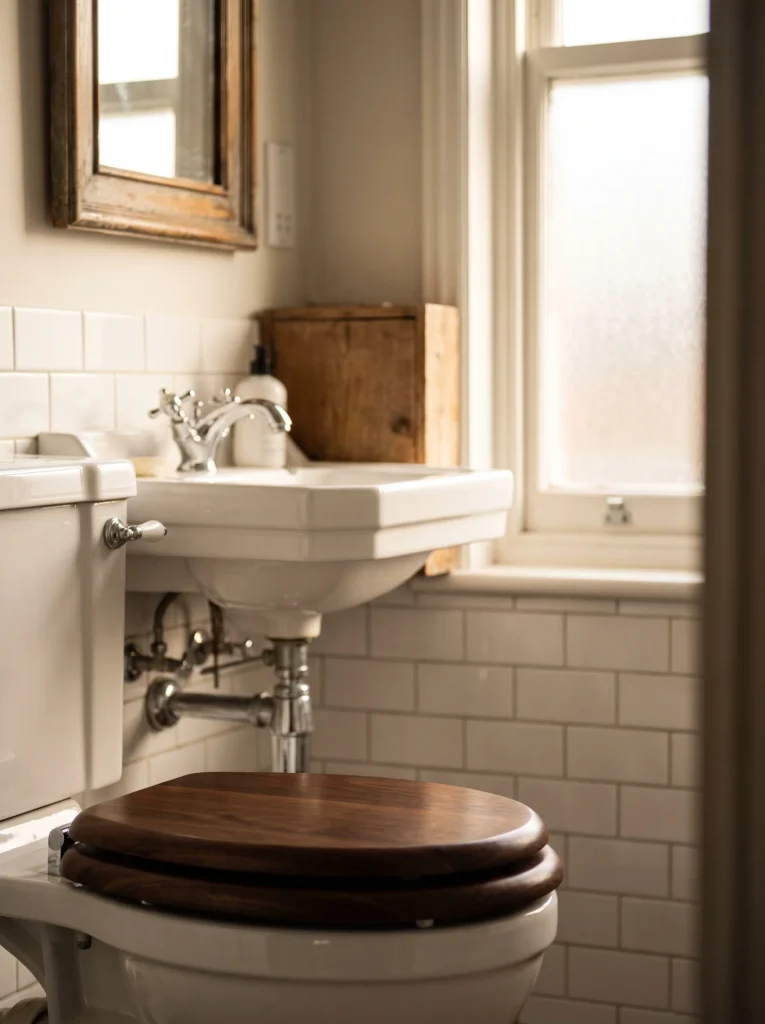
Nobody writes about the toilet, which is strange, since it is usually the largest single object in a small bathroom and the one your eye lands on first. A white plastic seat with plastic hinges says 2005 in a way nothing else does.
Wood seats cost $30 to $45 and install with two bolts. Measure the bowl first. Round and elongated are not interchangeable.
Faucets are the other one people skip, usually because replacing a whole faucet costs more than this entire project. You often don’t need to. Many builder faucets take replacement handles that screw onto the same stems, so you can swap lever handles for cross handles without touching the body or the plumbing underneath.
Pop the plastic cap off the top of the handle and look for a screw. If there’s one under there, handles are probably an option for you.
Step 9: One waffle-weave towel set and one thrifted anchor object
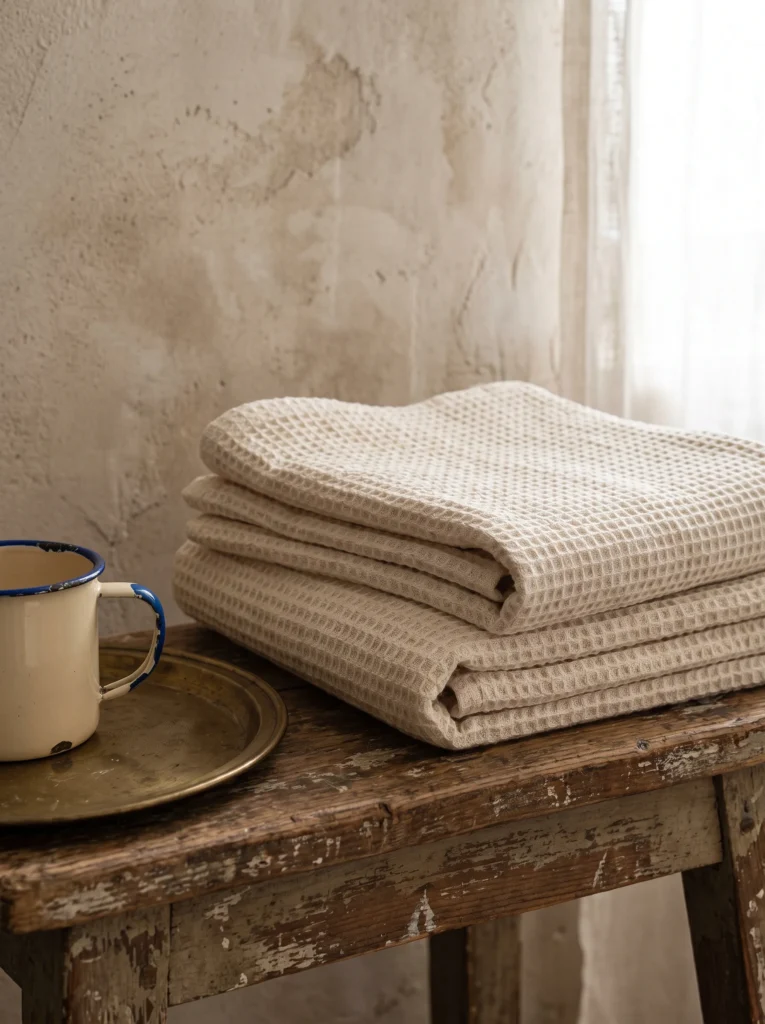
Plush matching towel sets are modern. Thick terry in coordinated colors became normal in the 1970s, so a fluffy sage green three-piece set quietly dates your bathroom no matter what else you’ve done.
Flat woven cotton reads older. Waffle and huckaback weaves hung in bathrooms for a century before anyone made a bath sheet. They dry faster too.
Add one real old thing after that, and only one. A chipped enamel cup, a small brass tray, a wooden stool with worn edges: any of these carry wear that no new product can fake, and your eye picks up on that instantly.
Skip the framed art unless the bathroom has a working fan. Steam warps paper and fogs glass.
What to do about the fiberglass tub surround, integrated vanity top, and beige floor tile
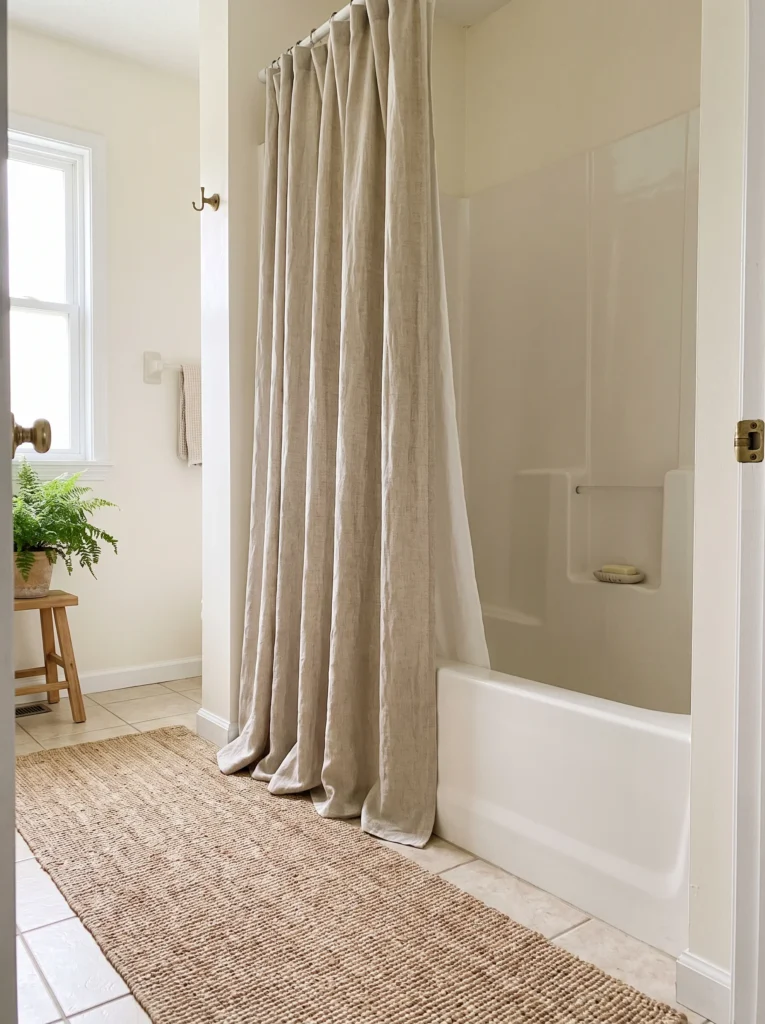
Some surfaces are staying, and pretending otherwise wastes your money. Fiberglass tub surrounds cannot be made to look like 1925. Cover its edges instead.
A long shower curtain hung high, close to the ceiling rather than at the rod height the builder chose, hides the top seam and pulls the eye upward at the same time. Cotton or linen curtains work better than vinyl here.
Cultured marble vanity tops with the sink molded in are the same problem. Break up the surface. Set a tray, a jar, and a folded hand towel on it so your eye lands on those instead of the seamless plastic underneath.
Floor tile is the one you can actually change. Runners in cotton or jute cover most of a small bathroom floor for under $40. Painting works too, and a stencil in a period pattern costs less than a night out: How to Stencil Your Bathroom Floor Tiles for Under $60.
One rule holds through all of this. Never put something interesting directly next to a surface you’re trying to hide.
The $200 ledger, and what to cut if you only have $120
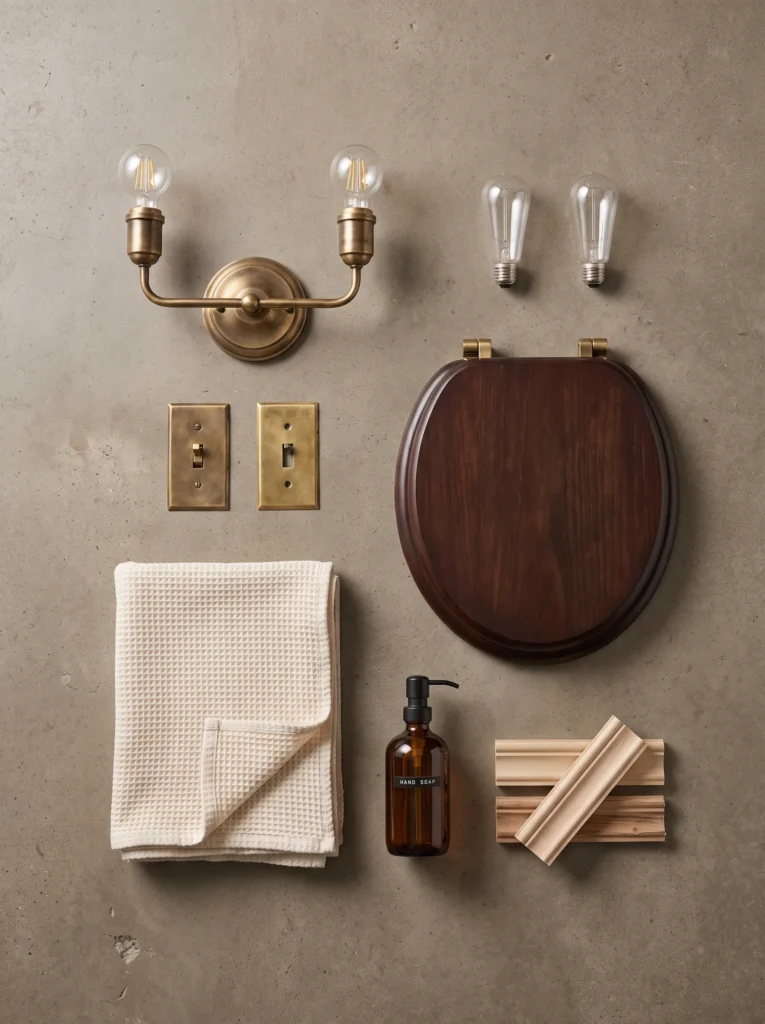
Rough prices, before shipping and before any sale you happen to catch.
- Two-bulb sconce: $40 to $60
- 2700K bulbs, four-pack: $12 to $18
- Wood toilet seat: $30 to $45
- Mirror molding and adhesive: $20 to $30
- Switch and outlet plates: $15 to $25
- Waffle towel set: $25 to $40
- Glass dispenser and lidded jar: $15 to $25
- Faucet handles: $15 to $30
- Thrifted anchor object: $5 to $20
Buy at the bottom of every range and you land near $175. Top of the ranges puts you closer to $290. Two items do most of the work. The sconce and the 2700K bulbs together cost under $80 and change how every other surface in the room looks, which is why they should never be the ones you skip.
Cut in this order if $120 is your ceiling. Faucet handles go first. Mirror molding goes second, since a bare mirror under a warm sconce still looks better than a framed mirror under a light bar. Towels go third. Everything else stays.
Three tests to run before you add anything else
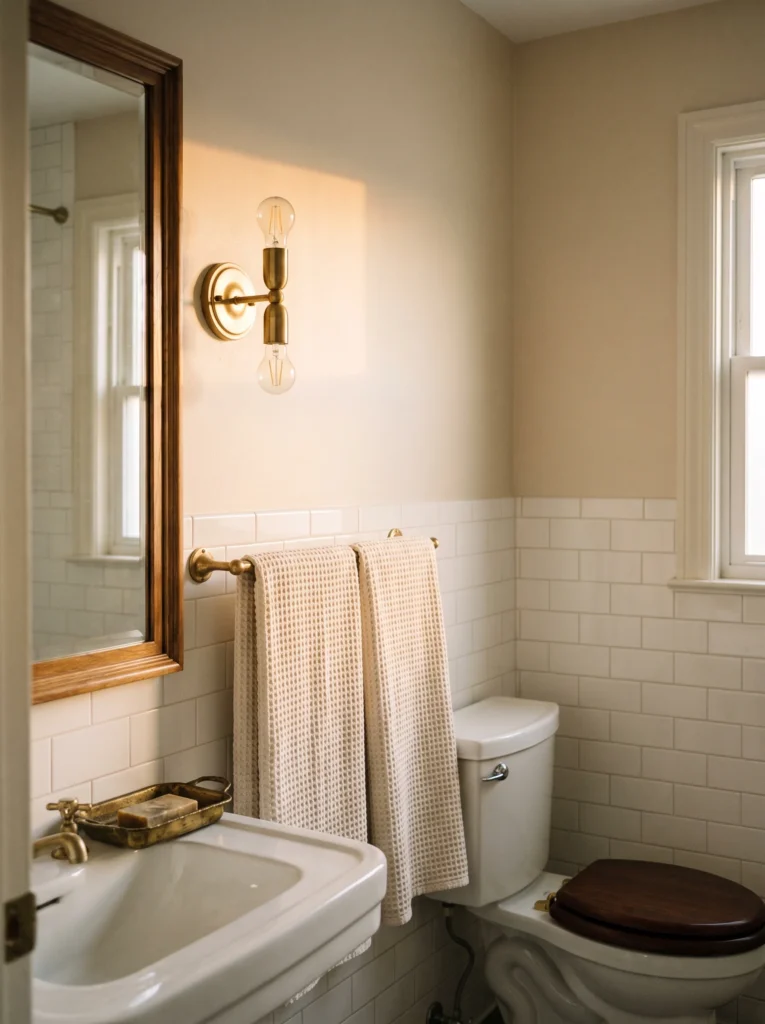
Count your vintage-signaling objects. Rooms that read as genuinely old usually carry three or four of them, while rooms that read like a theme restaurant tend to carry eleven or twelve.
Second test: count your metals. Two finishes are fine and three is the edge. Chrome faucet with brass sconce and black hardware and a nickel towel bar reads as accidental, because it is.
Third test is the honest one. Walk through and ask whether each vintage piece is something you actually use. A wooden stool you stand towels on belongs there. An old washboard hung on the wall of a room with no washing machine is a prop, and props are what turn a bathroom into a set.
Use is what separates old from staged.
Save this to your Pinterest board so you have the nine steps and the price list handy when you start shopping.
Table of Contents
For more bathroom color palettes and design aesthetics to pull inspiration from, see our guide on brown and beige warm neutrals that actually work.