
18 Bathroom Flooring Ideas for Every Kind of Bathroom
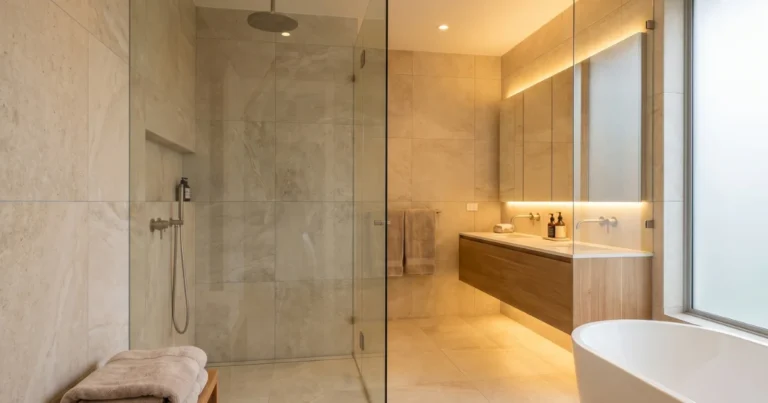
The best bathroom flooring for most homes is matte porcelain tile, because it shrugs off water, wear and cleaning sprays for decades. Luxury vinyl plank wins on comfort, price and DIY installs, and sheet vinyl is the cheapest fully waterproof floor.
The catch: pick by what your room handles every day, since a kids’ bath, a powder room and a curbless shower each need a different floor.
These 18 bathroom flooring ideas are sorted by that job, not by trend. Each one comes with the grip, height and upkeep facts that decide whether it will hold up in your room, plus the photo of a real-looking bathroom that uses it.
This post contains affiliate links. If you buy through them, we may earn a small commission at no extra cost to you.
Table of Contents
Choose large matte porcelain as the bathroom flooring for a busy family bath
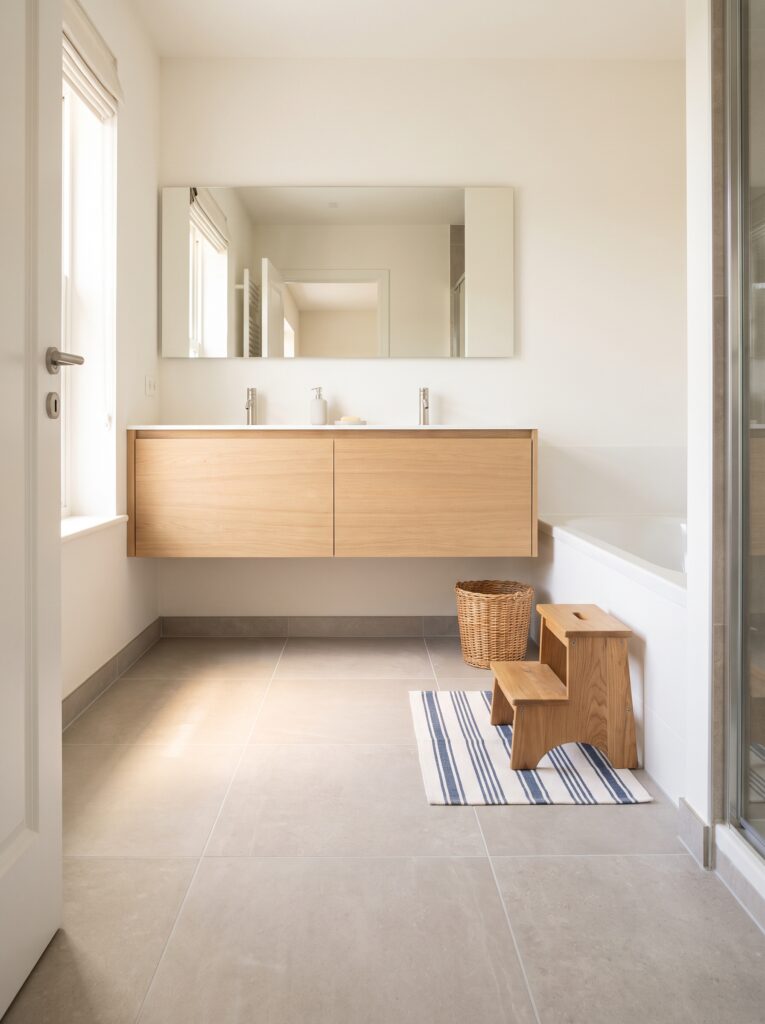
A family bathroom takes wet feet, dropped bottles, bath toys and daily mopping, so the floor has to be the toughest surface in the house. As bathroom flooring goes, matte porcelain handles all of it. True porcelain absorbs 0.5% of its weight in water or less, which is why it won’t stain, swell or crack from moisture.
Check the PEI wear rating on the box before you buy. Class 3 or higher suits any home floor, while Class 1 and 2 tiles are made for walls. The finish matters as much as the rating, because polished porcelain turns slick the moment a wet child steps out of the tub.
Big tiles, around 24 x 24 inches, mean fewer grout lines to scrub, and a warm gray stone look hides footprints between cleans. The trade is flatness. Tiles with any edge longer than 15 inches need a subfloor flat to within 1/8 inch over 10 feet, or the edges sit uneven and catch toes.
Keep the grout close to the tile color. A pale gray joint on warm gray tile reads as one calm surface and won’t show every mark the way white grout does after a year of bath nights.
Run one small mosaic from the bathroom into a curbless shower
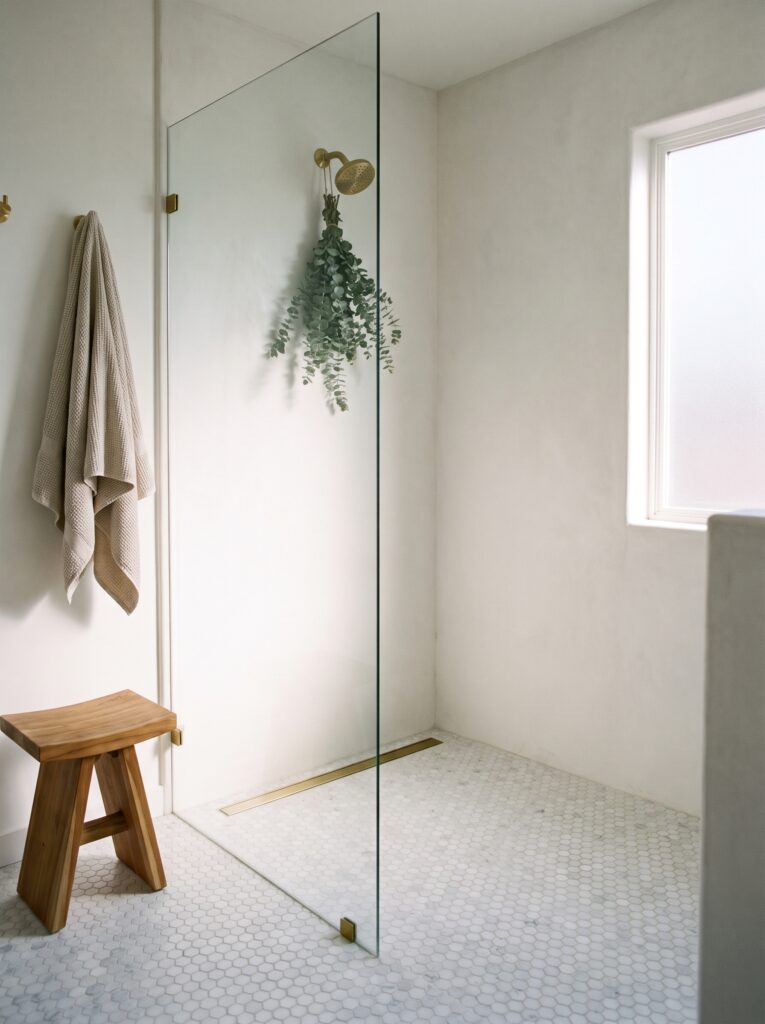
A curbless shower only feels seamless when the floor doesn’t change at the glass, and small mosaic tile is the floor that makes that possible.
Tiny tiles bend to the slope a shower floor needs. Plumbing codes ask for about 1/4 inch of fall per foot toward the drain, and a 1- or 2-inch hexagon follows that tilt without the lifted corners a big tile would show.
A linear drain along the back wall keeps the slope to one direction, so the floor looks flat from the doorway.
All those grout lines are also the grip. Each joint gives a bare foot something to hold, which is why small mosaics stay safer than large tiles when water sheets across them.
Honed marble hexagons look soft and spa-like, but they etch if acidic cleaners touch them. If you want the look with less care, choose marble-look porcelain hex and save real stone for the vanity top, where it gets wiped instead of soaked.
Put wood-look porcelain planks over a heating mat in a primary bath

Most people who want a wood floor in the bathroom reach for engineered oak. Wood-look porcelain gives you the same honey grain with none of the swelling, and it pairs with underfloor heat better than any real wood can.
Porcelain bathroom flooring holds and spreads warmth, so an electric heating mat under it turns the coldest floor in the house into the warmest. Most mats run at about 12 watts per square foot and sit roughly 1/8 inch thick in the thinset, so they barely change the finished floor height.
Plan the mat for the places you stand barefoot: in front of the tub, the vanity and the shower door. Leave it out from under the tub, toilet and vanity, since heat trapped under fixtures does nothing for your feet and wastes power.
Shop it on Amazon: Warming Systems 20 Sq Ft 120V Electric Floor Heating Mat Kit
Lay the planks lengthwise toward the window or tub so the long lines pull the eye through the room. Keep the joint offset to a third of the plank length or less, which stops long porcelain planks from sitting uneven where they meet.
Pick luxury vinyl plank for a rental or basement bathroom

Luxury vinyl plank costs less than tile, goes down in a weekend and is waterproof on its face, as long as you seal the places where water sneaks under it.
Rigid-core LVP floats over most existing floors, which is why it suits rentals and basement baths built on a cold slab. Floating floors need a gap of about 1/4 inch at every wall and fixed object so the planks can move with the seasons. Water getting into that gap is the real risk, not the planks themselves.
Fill the gap at the tub, toilet and shower base with 100% silicone, not grout or acrylic caulk. Silicone stays flexible as the planks shift and keeps splashes out of the seam for years.
Watch the toilet flange too. A new floor raises the floor height, and the top of the flange should sit level with the finished surface or slightly above it. If it ends up below, a flange spacer ring or an extra-thick wax ring fixes it before a slow leak starts.
A light greige oak tone is a smart bathroom flooring pick for a small rental. It hides dust and grit well and keeps the room reading bright under a single ceiling light.
Lay seamless sheet vinyl where kids splash the most
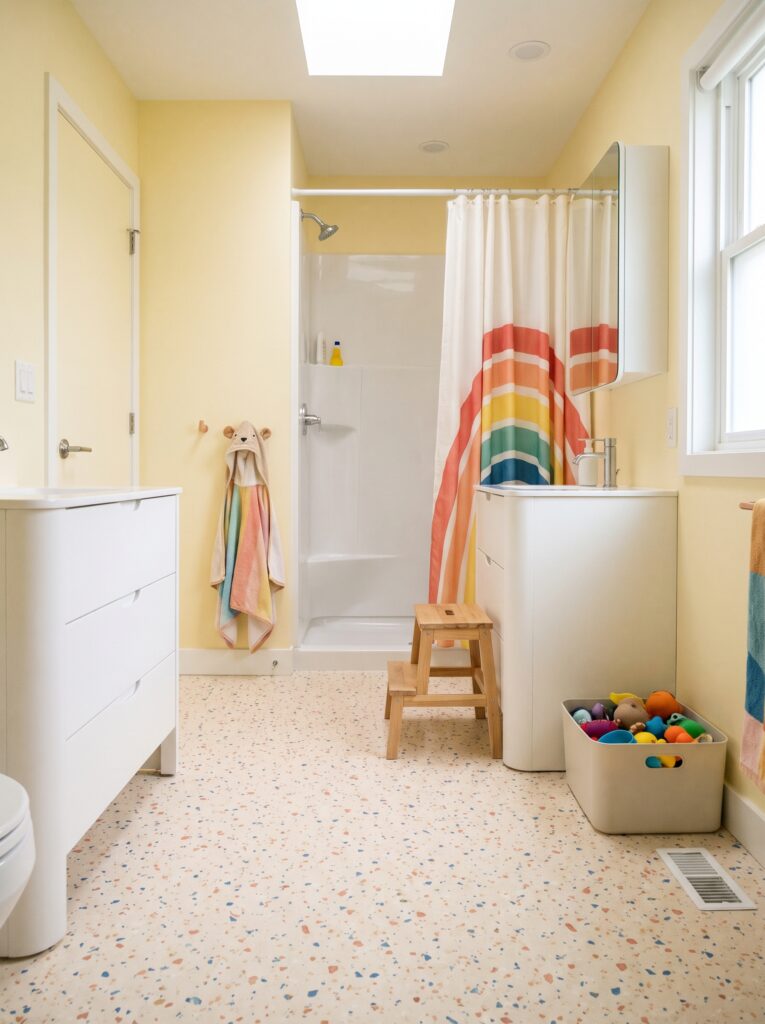
Parents of small children can skip grout altogether with sheet vinyl, one waterproof sheet that leaves no joint for bathwater to soak into.
Sheet vinyl comes in rolls up to 12 feet wide, so most kids’ bathrooms are covered by a single piece with no seams at all. It’s the cheapest fully waterproof bathroom flooring you can buy, and it’s soft enough that a dropped cup bounces instead of shattering.
Pick a speckled pattern rather than a solid color. A terrazzo-style print in cream with coral and blue chips hides hair, toothpaste drips and tracked-in sand between cleans. Plain white shows every hair, and plain dark shows every dried water spot.
Run the vinyl tight to the tub and shower base and seal that edge with silicone. Expect around 10 to 20 years of wear, which lines up nicely with the years your kids will spend splashing in that tub.
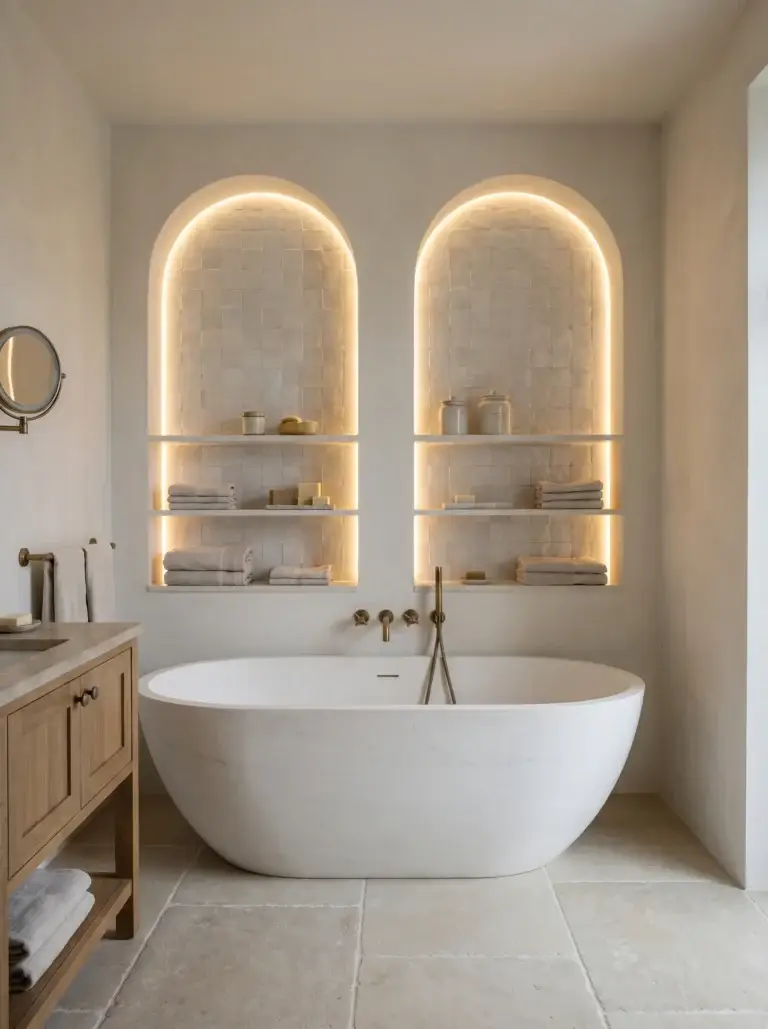
Save honed travertine for a powder room that rarely gets wet

If your powder room has a toilet and a sink but no shower, it can carry a softer stone than any full bathroom could.
Travertine is a limestone full of natural holes. Filled and honed, it feels warm and chalky underfoot and gives a small room the look of an old European house. A French pattern of mixed rectangles and squares adds movement without the busy look of a mosaic.
Stone needs care, though. Seal it after installation and again every year or two, and clean it with a pH-neutral stone cleaner. Vinegar and many bathroom sprays are acidic and leave dull etch marks that no amount of scrubbing removes.
Because a powder room only sees hand-washing splashes, the sealer lasts longer here than it would in a shower room. That is what makes travertine smart bathroom flooring for this room and a risky one for a family bath with daily soaking.
Use natural slate near a back door where dirt comes in

Slate is the bathroom flooring for a room that doubles as a mudroom, the kind you walk into straight from the garden or the dog walk.
Its split face is naturally textured, so it grips even under wet boots, and the dark charcoal tones with rust and green streaks hide mud between mops. Gauged slate, cut to an even thickness, is much easier to lay flat than hand-split pieces.
Dark floors have one weak spot. They hide dirt but show white marks: soap residue, hard-water spots and dried shampoo. Seal the slate with a penetrating sealer and keep an absorbent mat by the tub so drips don’t dry into chalky rings.
Use dark grout to match the stone. It keeps the joints from turning a dingy gray over the years, which pale grout always does in a high-traffic room.
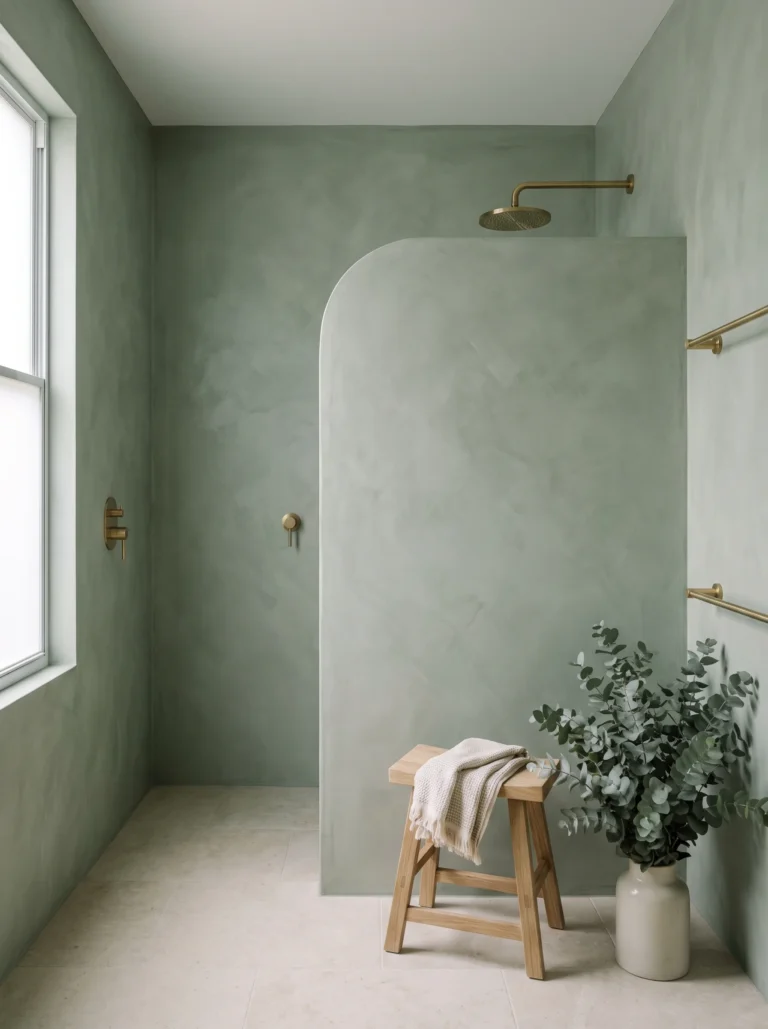
Choose microcement for a wet room that drains in one direction
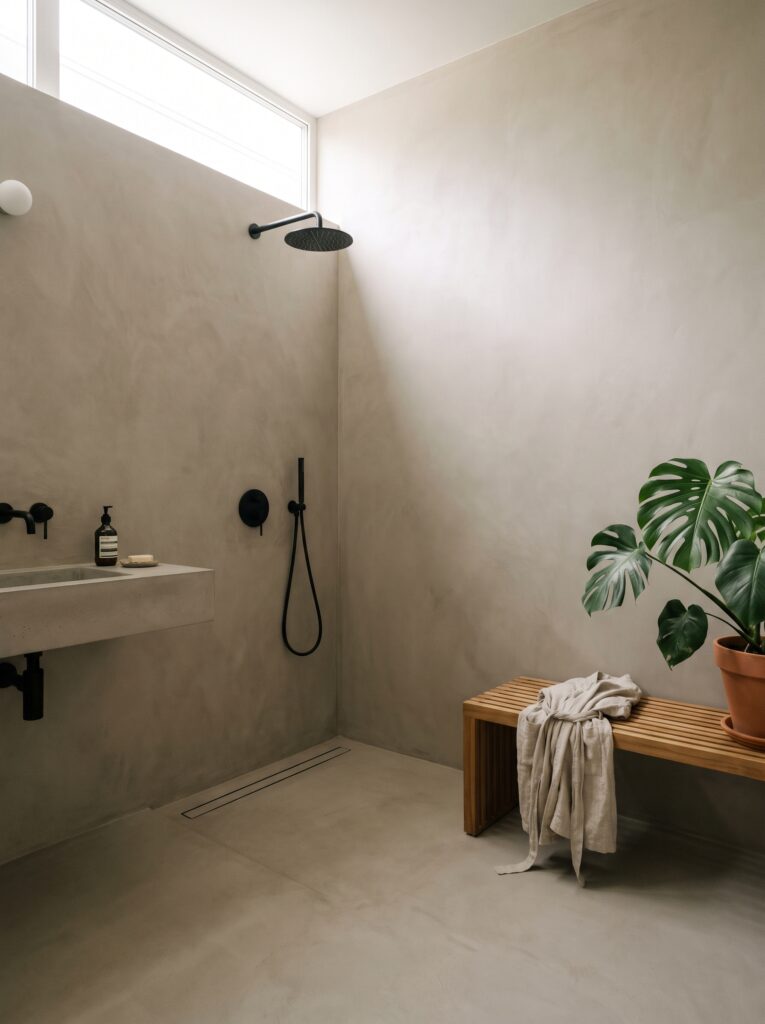
Microcement costs more per square foot than most tile, but it buys you bathroom flooring with no joints, no grout and no edge between the shower and the rest of the room.
It goes on in thin coats only 2 to 3 millimetres thick, often right over existing tile, and can wrap up the walls in the same warm greige. In a wet room the whole floor has to fall toward the drain, so the slope is shaped in the screed underneath before the finish goes on.
A long linear drain under the shower head means the floor only tilts one way. That looks calmer than a four-way slope around a center drain, and it’s simpler to build.
Ask for an anti-slip additive in the final sealer coat. Smooth microcement is lovely dry and slippery wet, and the sealer is what makes it waterproof, so plan on a fresh coat every few years in a busy wet room. For more surface and drainage planning, browse our materials, fixtures and layout ideas.
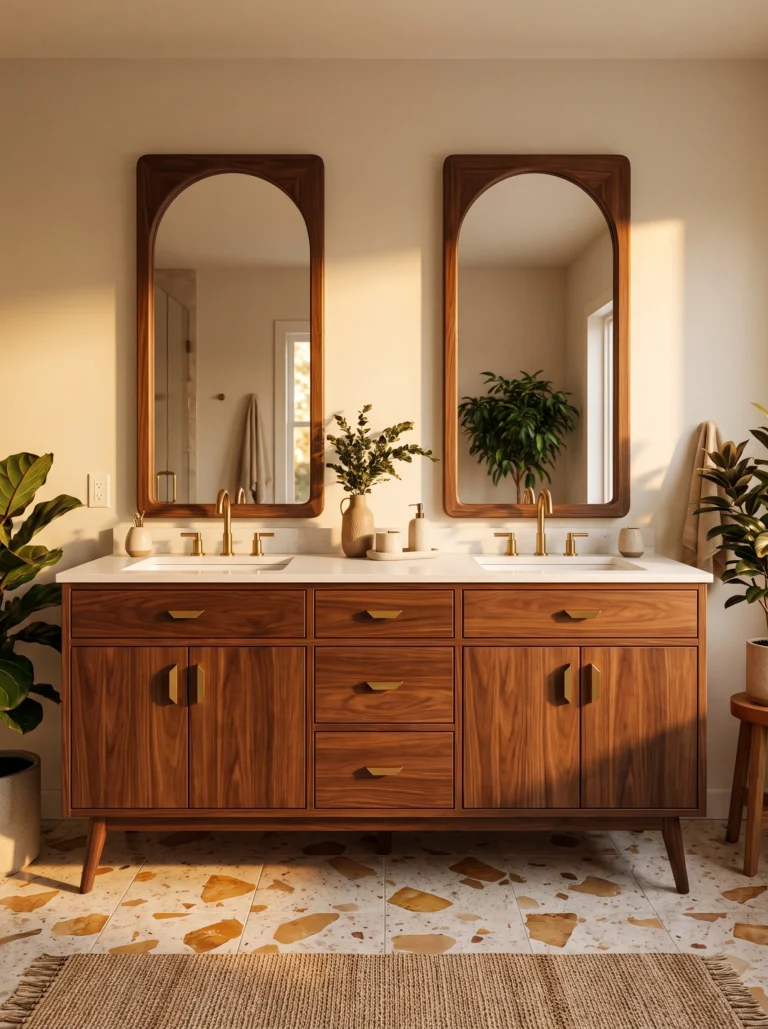
Bring color in through terrazzo in a mid-century bathroom

Try terrazzo when you want patterned bathroom flooring that still feels calm, because the pattern is random rather than repeated.
Terrazzo tiles are chips of marble, stone or glass set in cement or resin, then ground smooth. Pull your towel, stool and accessory colors from the chips, like mustard and rust next to a teak vanity, and the room looks planned without anything matching exactly.
Ask for a honed finish rather than a high polish. Polished terrazzo is slick when wet, and honed keeps the chips just as visible without the glare from a window.
Cement-based terrazzo is porous and should be sealed like stone. Resin terrazzo absorbs less but scratches more easily, so it suits an adult or guest bath better than a kids’ room.
Chip size changes the mood. Big chips read bold and retro, small chips read quieter and more modern. Next to a busy wood vanity, choose fewer, larger chips so the floor and the wood don’t compete.
Make a small powder room memorable with encaustic cement tile

Most people assume bold patterned bathroom flooring will make a small room feel smaller. In a powder room it usually does the opposite, because the floor becomes the one thing guests remember.
Encaustic cement tiles get their color from pigmented cement poured in layers, not a printed glaze, so the pattern wears with the tile instead of rubbing off. That depth is also why they’re porous and need more care than porcelain.
Seal them before grouting so the grout can’t stain the pattern, then seal again once the grout cures. Use a pH-neutral cleaner only, since acidic and bleach cleaners dull the surface.
Shop it on Amazon: Aqua Mix Sealer’s Choice Gold Penetrating Sealer
Keep the walls quiet. White plaster and one natural texture, like a rattan mirror, let a navy and terracotta pattern carry the whole room without fighting anything.
Lay a black and white checkerboard on the diagonal in a vintage bath
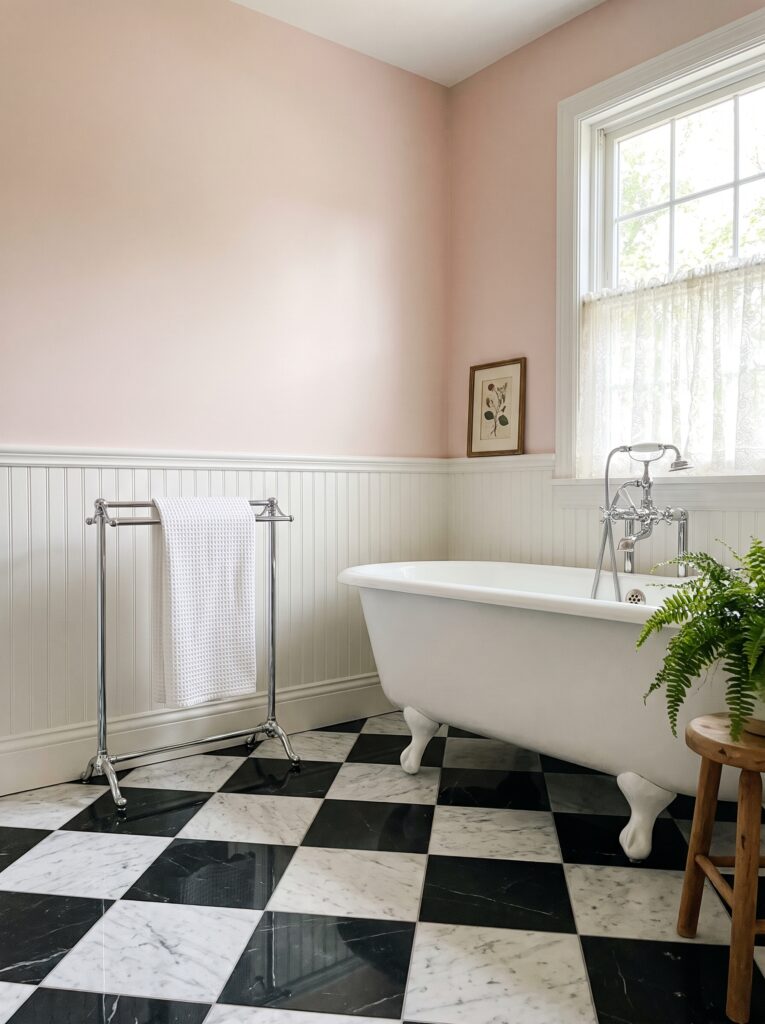
Go diagonal with a checkerboard if your room is small or a little crooked, since the angle hides walls that aren’t square.
Squares set at 45 degrees pull the eye to the corners and make the floor look wider. They also hide out-of-square walls, which older bathrooms almost always have, because no cut edge runs parallel to the wall.
Plan on about 15% extra tile for all the diagonal cuts, compared with around 10% for a straight lay. Running short halfway through is how you end up with a slightly different batch color in one corner.
Real marble checkerboard should be honed, not polished, in a room with a tub. If you want lower upkeep, porcelain or vinyl versions copy the look and won’t etch. White beadboard, a clawfoot tub and chrome keep the floor reading classic rather than graphic.
Point a herringbone floor down the length of a narrow bathroom
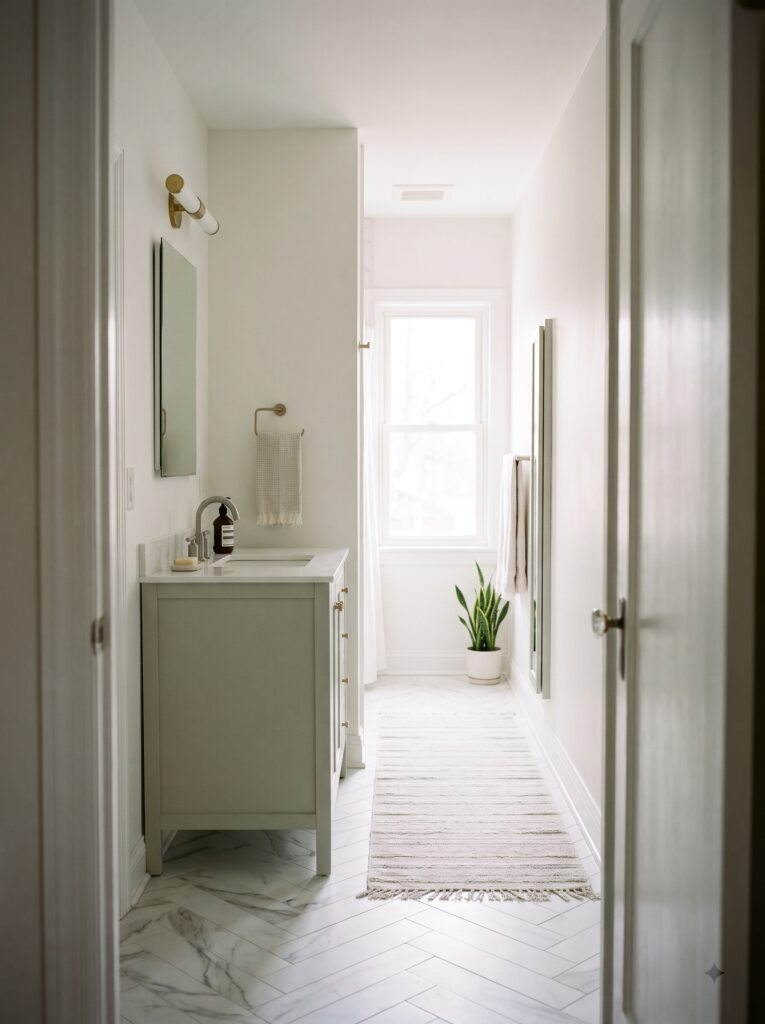
Long, narrow bathrooms need bathroom flooring that moves the eye toward the far wall instead of across the short one.
A herringbone of marble-look porcelain does exactly that. Lay it so the V points down the length of the room toward the window, and the space reads longer and calmer than a straight lay would.
Herringbone uses more tile because every edge piece is cut, so order 15 to 20% extra. Rectangles around 3 x 12 inches keep the pattern in proportion in a small room, where large planks would show only a few zigzags.
Choose white with soft gray veins rather than strong black veining, which looks busy at herringbone scale. The wall tile matters too, and our guide to which floor and wall tile pairings work covers how to match the two.
Give a retro bath grip with penny round mosaic

If slippery bathroom flooring worries you, small tiles are the quickest fix, and penny rounds are among the smallest you can buy.
Each round is about 3/4 inch across, so a big share of the floor is grout. That gives bare feet plenty of grip, and the playful dot pattern suits a mint or pink retro bathroom with a pedestal sink.
The cost of all that grout is cleaning. Use a stain-resistant grout or seal regular cement grout, and pick a light gray grout rather than pure white, which yellows around the toilet first.
Penny tile comes on mesh sheets about 12 inches square. Line up the sheets carefully, since a crooked join shows as a wavy seam across a whole field of dots.
Warm a Spanish-style bath with sealed terracotta tile
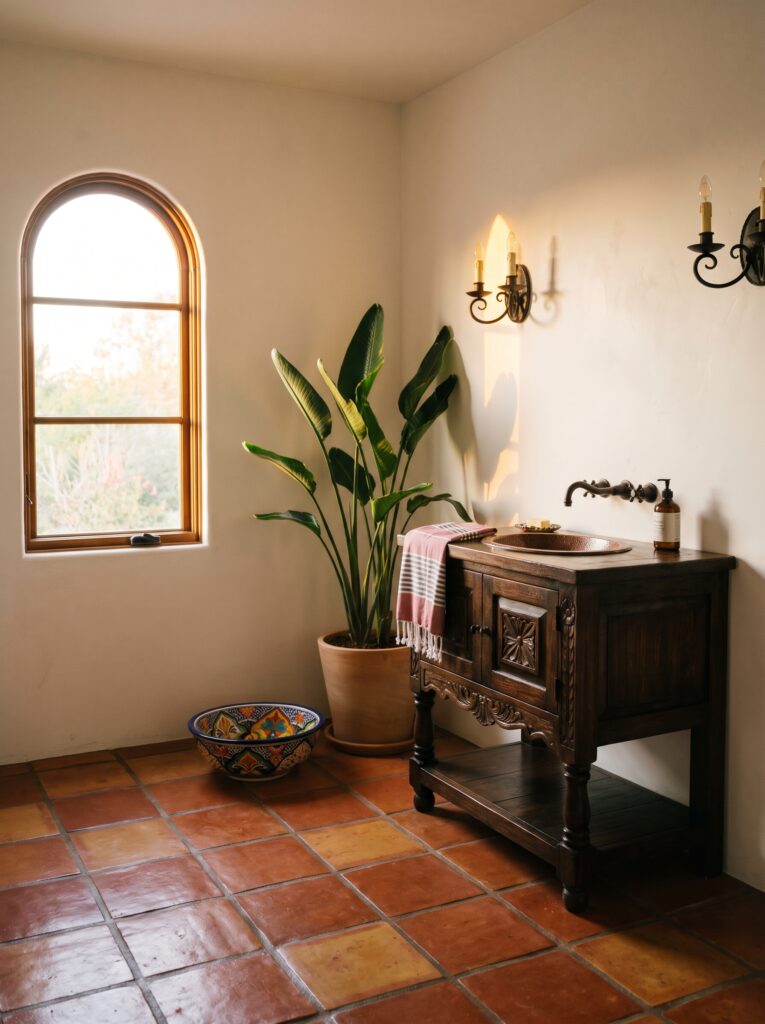
Terracotta is the bathroom flooring that makes a white stucco room feel sun-warmed even on a gray day.
Handmade clay tiles like Saltillo come in rust, orange and honey tones that shift from tile to tile. They’re soft and porous, so they need several coats of sealer before grouting and a fresh coat every few years. A satin sealer deepens the color without making it glossy.
Terracotta is softer than porcelain and can chip if you drop something heavy, like a ceramic soap dish. Keep it for a guest bath or a bathroom where the shower has its own tiled floor, rather than a busy kids’ room.
Dark carved wood, wrought iron sconces and a hammered copper sink all pick up the warmth in the clay, so the floor ties the whole room together.
Use cork in the dry half of a cozy guest bathroom

Guests who pad around barefoot in the morning will notice a cork floor before anything else, because it feels warm and a little soft.
Cork is tree bark pressed into tiles or planks. Choose glue-down cork tiles over click planks in a bathroom, since glued tiles leave no open seams for water. Finish them with a water-based polyurethane and recoat when the surface looks dull.
Cork is water-resistant, not waterproof. Keep it in the dry part of the room, where a separate tiled shower floor takes the spray and a mat catches the drips at the door.
Honey-toned cork looks lovely with terracotta pink walls, a chunky knit pouf and cream towels, and it makes a small guest room feel more like a bedroom than a bathroom.
Carry engineered oak into a half bath without a shower
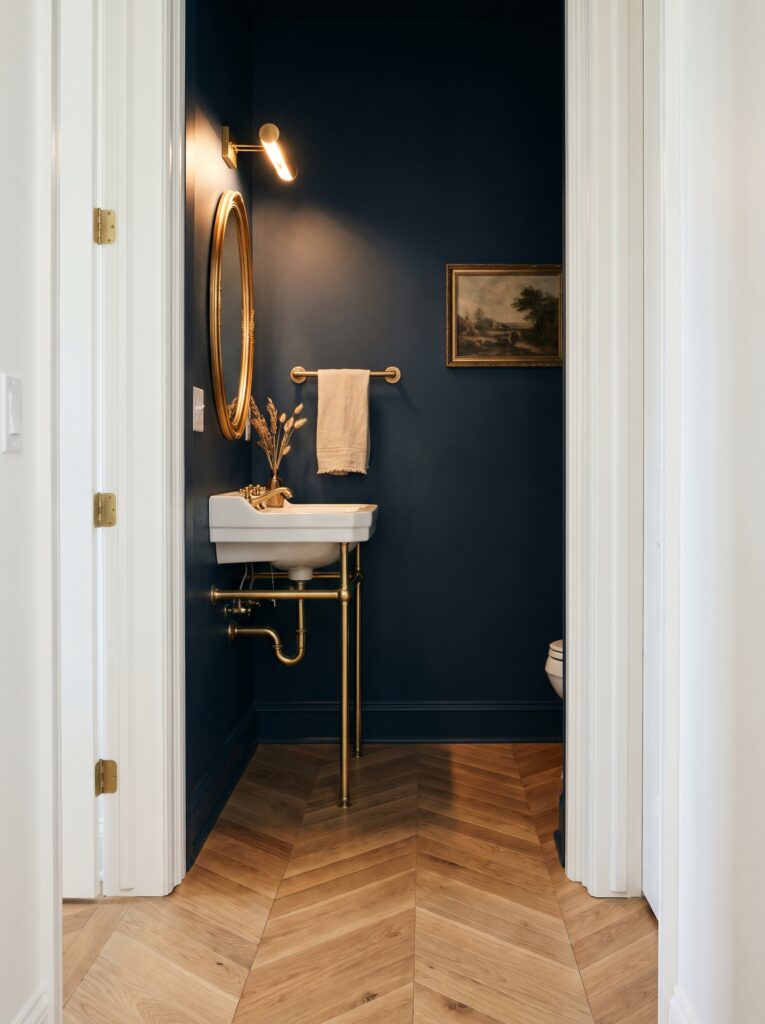
Engineered oak is risky bathroom flooring in a full bath but fine in a half bath, where the only water is a quick splash at the sink.
Engineered wood has a real oak top layer over a stable plywood core, so it moves far less with humidity than solid wood. Running the same floor in from the hallway with no threshold makes a tiny half bath feel like part of the house rather than a closet.
A chevron pattern adds a tailored look against deep navy walls and brass. Keep a small mat under the sink and wipe drips straight away, since standing water still marks the finish.
Skip it if the toilet is prone to overflowing or if small kids use the sink. Wood-look porcelain gives you the same warm look with none of that risk.
Cover a dated rental floor with peel-and-stick vinyl tiles
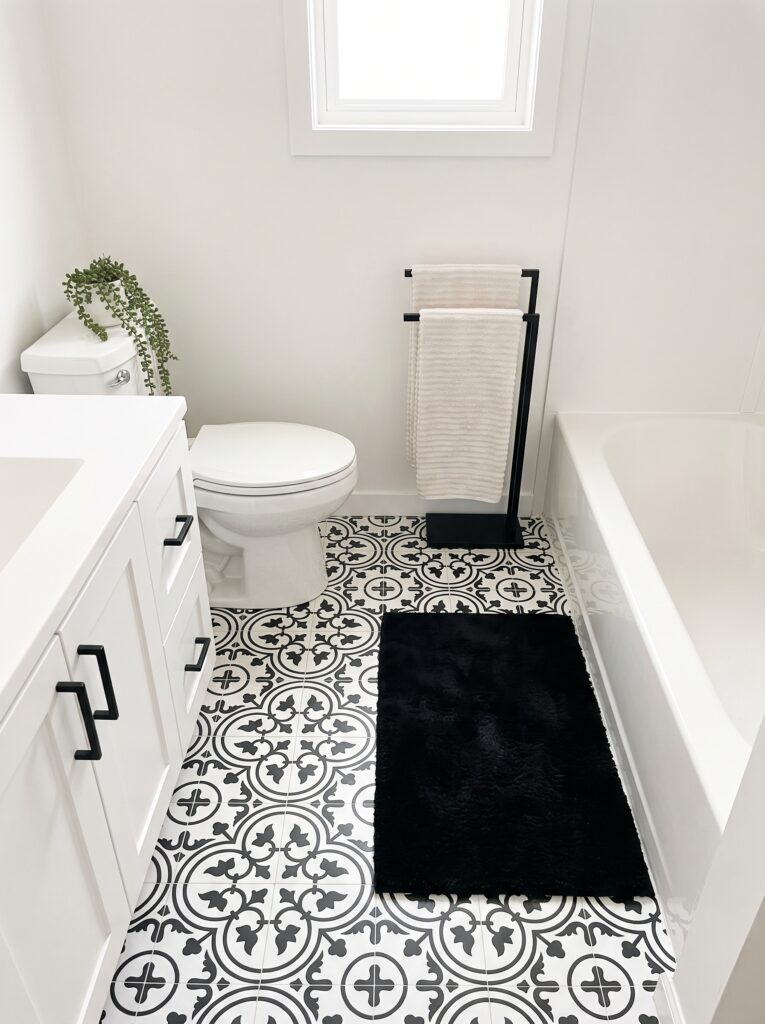
Try peel-and-stick tiles if you rent and need bathroom flooring you can change without a contractor or a big deposit risk.
Self-adhesive vinyl tiles stick to clean, smooth, dry floors. Over old tile, the grout lines show through within weeks, so skim the joints with a floor patch first and let it cure fully before the first sheet goes down.
A black and white Moroccan pattern draws the eye away from builder-grade fixtures. Ask your landlord before you start, because the adhesive can leave residue when the tiles come up.
Shop it on Amazon: IOHEFY Peel and Stick Floor Tiles 12×12 Inch, Black and White Moroccan
Press each tile down with a roller and keep the edges away from standing water. Water creeping between the seams near a tub is what lifts the corners first.
Lay a flat pebble floor in a spa shower for natural grip

If you want a shower floor that feels like a river bed, flat-cut pebbles are the way to get it.
Pebble tile comes on mesh sheets of river stones, often sliced flat on top so they’re comfortable to stand on. The uneven grout around each stone gives excellent grip, and the small pieces follow the slope to the drain easily.
Seal the stones and grout, and plan to reseal once a year. Lots of grout means more places for soap scum, so a quick squeegee after showers and a weekly rinse keep it fresh.
Gray, cream and tan pebbles against warm sand-colored walls feel calm. Keep them to the shower floor, though, since a whole bathroom of pebbles is tiring to walk across every day.
Match your bathroom flooring to the job before you shop
There is no single best flooring for bathrooms, only the best match for yours. Use these quick matches to narrow the bathroom flooring options above to two or three before you visit a showroom.
Small kids and a tub that splashes daily? Sheet vinyl or matte porcelain. Leave natural stone, cork and wood for later.
A curbless or walk-in shower? Small mosaic or flat pebbles inside the shower, and the same mosaic or a matte porcelain outside it so the floor never changes at the glass.
Renting or on a tight budget? Peel-and-stick tiles or floating LVP over the existing floor, with silicone at the tub and toilet.
Want a heated floor? Porcelain or stone over an electric mat. With vinyl, check the maker’s surface temperature limit, which is often around 85°F.
A powder room with no shower? This is where travertine, encaustic cement and engineered wood finally make sense.
Raising the floor more than about 1/2 inch? Check the toilet flange height, the door clearance and the step at the hallway before you order anything.
Start with what your bathroom floor has to survive
Before you fall for a pattern, list what your floor faces every day: kids, steam, muddy boots, a heated mat or a landlord. That list rules out half the options on its own and leaves a short, sensible pick.
The best bathroom flooring is the one that suits that list first and your mood board second. Choose in that order, and the floor you lay this year will still look right, and still be dry underneath, in ten years.
Found your floor? Save this pin so these bathroom flooring ideas are ready when you start shopping for tile.