Bathroom Tile Combinations: Which Floor and Wall Pairing Wins
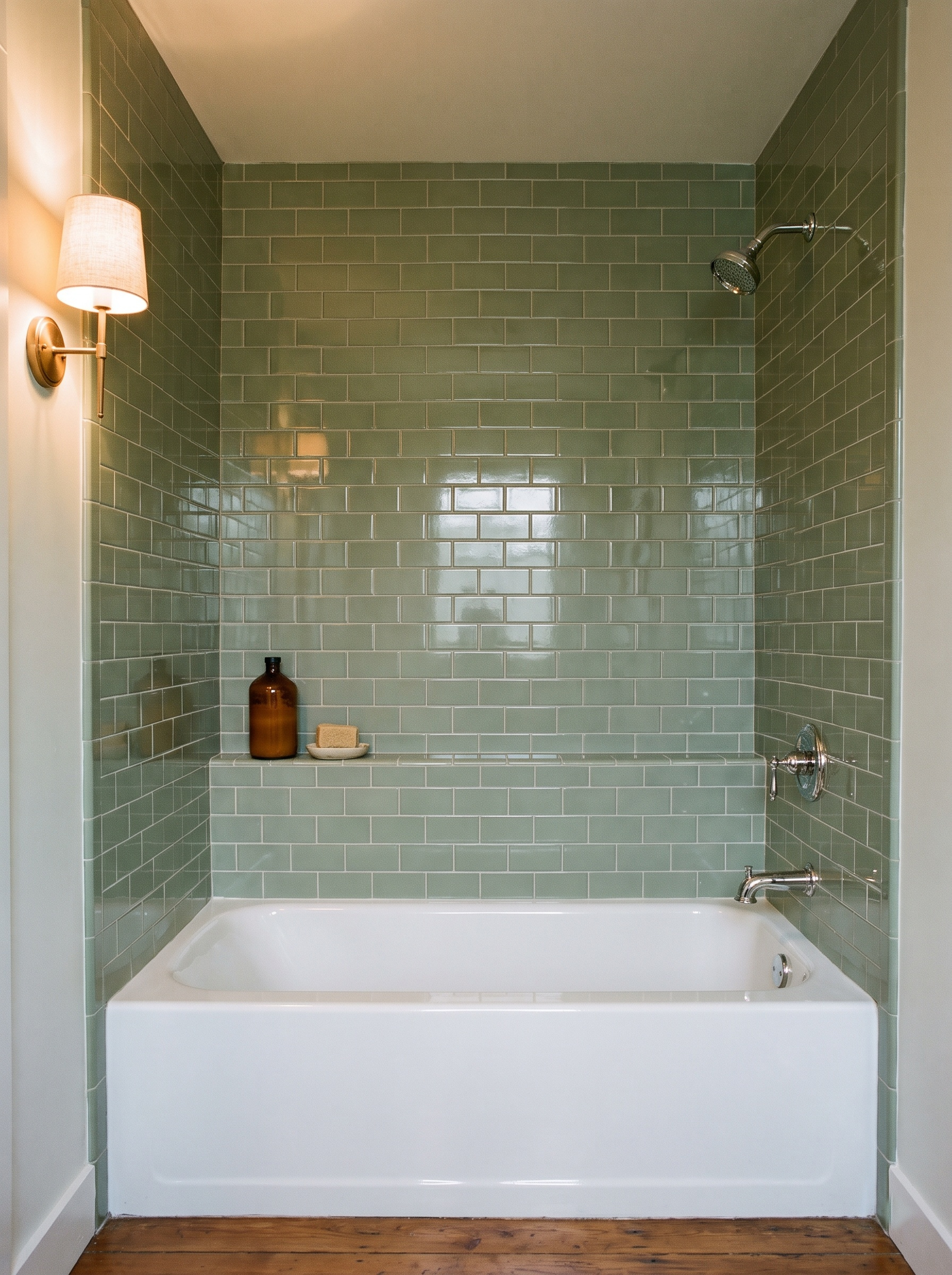
The best bathroom tile combinations pair a matte porcelain floor with glossy ceramic walls from one color family. Floors handle grip, and walls handle light and cleaning. Change that only for a shower floor, where small mosaics grip better, or a tiny room, where one large tile can run from floor to wall.
Most guides show photo after photo and leave you to guess. This one compares nine real floor and wall pairings on the same points: what each suits, what the tile costs, how well it grips, how much upkeep it wants and where it goes wrong. Costs and ratings come from named sources, and I flag where they disagree.
Short on time? Jump to the table. Mixing two tiles? Read the section on joins, because that is where most pairings fail.
Affiliate disclosure: this post contains Amazon affiliate links. If you buy through one, we may earn a small commission at no extra cost to you.
Table of Contents
Pick the floor first, because grip and cost decide the wall
Most people fall for a wall tile first, then hunt for something to put underfoot. That order costs them. The floor is the surface that has to grip when wet, so it narrows your choices faster than any color does. After that, the wall can be almost anything.
Start with three questions. Is the floor inside a shower, or does it only stay damp? Then ask whether the room is under about 40 square feet, which Inch Calculator calls the average bathroom, and whether it gets real daylight.
Wet floors need a grip rating, small rooms need fewer tile edges, and dim rooms need lighter, warmer tile.
Then budget for labor, not tile. Inch Calculator puts installed bathroom tile at $10 to $25 per square foot, and HomeWyse’s May 2026 figure is $16.58 to $20.60. With labor that large, a $4 tile and a $9 tile differ far less than the quote suggests.
That is why the pairing matters more than any single tile. A modest tile in the right pairing looks planned, while an expensive one in the wrong pairing still looks like two different bathrooms.
Nine floor and wall pairings compared side by side
Here is the full comparison. Prices are material costs per square foot from the cost guides named in each section, and the ranges are wide because tile quality varies so much. Add labor on top.
| Pairing | Best for | Tile cost per sq ft | Grip | Upkeep |
|---|---|---|---|---|
| Matte porcelain floor, glossy ceramic wall | Most bathrooms | Porcelain $3 to $30, ceramic $2 to $50 | Good when matte | Low |
| Small mosaic shower floor, large wall tile | Wet showers | Marble hex mosaic about $15 | Best | Medium |
| Cement-look floor, plain white wall | Small rooms with character | Real cement $10 to $25, printed porcelain $3 to $12 | Good when matte | High for real cement |
| Zellige accent wall, plain floor | One feature wall | Handmade $15 to $50, zellige-look $5 to $12 | Wall only | Medium |
| Marble-look porcelain, real marble trim | Quiet luxury on a budget | Porcelain $3 to $30, marble $3 to $50 | Good when honed | Low, high for the marble |
| White subway wall, black hexagon floor | Classic contrast | Ceramic $2 to $50, porcelain $3 to $30 | Good | Medium |
| One large tile, floor to wall | Rooms under 40 sq ft | Porcelain $3 to $30 | Good when matte | Lowest |
| Wood-look floor, glazed colored wall | Warm and cool balance | Porcelain $3 to $30, ceramic $2 to $50 | Good | Low |
| Terracotta floor, cream wall | Warm, earthy rooms | Terracotta $5 to $15 and up | Fair when sealed | High |
Use the table as a filter. Cross out any pairing whose upkeep you will not do, then pick from what is left by the light in your room.
Two things the table cannot show. Labor adds $10 to $25 per square foot to every row, so the cheap and mid-priced rows end up closer than they look. And every extra tile type adds a cut, a join and a sample to test, so Ceramic Connection suggests no more than two or three materials in one room.
Matte porcelain floor with glossy ceramic walls is the safest pair
Most people assume floor and wall tile should match. They do not need to. What the pair needs is a shared color family and different jobs: a matte floor to grip, and a glossy wall to bounce light and wipe clean.
Choose the floor by its wet grip rating. MSI Surfaces explains that under ANSI A326.3, level interior floors walked on when wet should reach a wet DCOF of 0.42 or higher. It also warns that 0.42 does not make a tile right for every project, so treat the number as a floor, not a finish line.
Keep both tiles in one undertone. A warm greige floor beside a cool blue-white wall can look dirty even when each tile looks fine alone, and Block Renovation warns that cool grays and warm beiges can clash. Hold the two samples side by side before you order.
In a very small room, a 12 by 12 inch floor tile is easier to fit than a 24 inch one, since there are fewer awkward cuts around the toilet and tub.
Cost helps this pairing win. Inch Calculator lists porcelain at $3 to $30 per square foot, and the glossy wall is the cheaper surface to change later. A cream wall over a sand floor is the safest place to start.
Reach for this pairing when you want the lowest-risk answer and the room has a window or a fan. It is the wrong pick for the shower floor itself, because a large porcelain tile cannot follow a drain slope.
Small mosaic on the shower floor, big tile on the wall
A big tile on a shower floor looks clean, then fights the slope. Shower floors fall toward the drain, and large flat tiles cannot follow that fall. Flooring Clarity recommends 1 to 2 inch mosaics, or 2 by 2 to 4 by 4 inch tiles, with a slope of at least 1/4 inch per foot.
More grout lines mean more grip, which is why mosaic tile suits the shower floor. The price is upkeep, because every line holds soap film. Pick a grout one or two shades darker than the tile so the film does not show.
Finish matters as much as size. Crossville advises against polished tile where standing water is likely, since its coefficient of friction is low. Choose honed or matte for the floor, and keep the shine for the wall.
On the walls, go the other way. Tiles 12 by 24 inches and larger mean fewer joints to scrub, though Flooring Clarity notes they need a flatter wall behind them.
A shower with no curb, or a floor that feels slippery today, is where this pairing earns its place. Pass on it if you hate scrubbing grout. Porcelain tile mosaic sheets skip the sealing step that marble needs, and a 4 by 4 inch tile still follows the slope with fewer lines.
A honed 2-inch marble hexagon mosaic costs about $52 for a 3.5 square foot box, which works out near $15 per square foot. Inch Calculator says marble must be sealed in wet areas, so check that you will do it before you choose stone over porcelain.
Shop it on Amazon: Marble Mosaic Tile, 2 Inch Hexagon, Honed, 5 Sheets
Patterned cement-look floor and plain white walls
Put the pattern on one surface only. A patterned floor under plain white walls looks bold and calm. Pattern on both surfaces reads as noise, and the eye has nowhere to rest.
Real cement tile is porous and must be sealed. Cost comparisons I found put stock patterns at about $10 to $25 per square foot, and custom or imported colors at $18 to $35 or more. Printed porcelain look-alikes run about $3 to $12. Avoid vinegar on cement, since acid can etch it.
If you want the look without the sealing, choose the porcelain print and spend the savings where it shows. Our materials, fixtures and layout guides cover the fixtures and finishes that sit well beside a patterned floor.
Ask for a sample from the production run. Handmade tile varies by batch, and the color on a screen is rarely the color in your hand. Pull one shade from the pattern, such as a soft grey, and use it for the grout.
For real cement, test the sealer the way you would on terracotta: a few drops of water should bead up, not sink in.
Small, plain rooms that want one feature without paint suit this pairing. Walk away from real cement tile if you know you will not reseal it. When you pick the grout color, match it to the lightest tile in the pattern, not the darkest, so the joints stay quiet.
A zellige accent wall over a plain, quiet floor
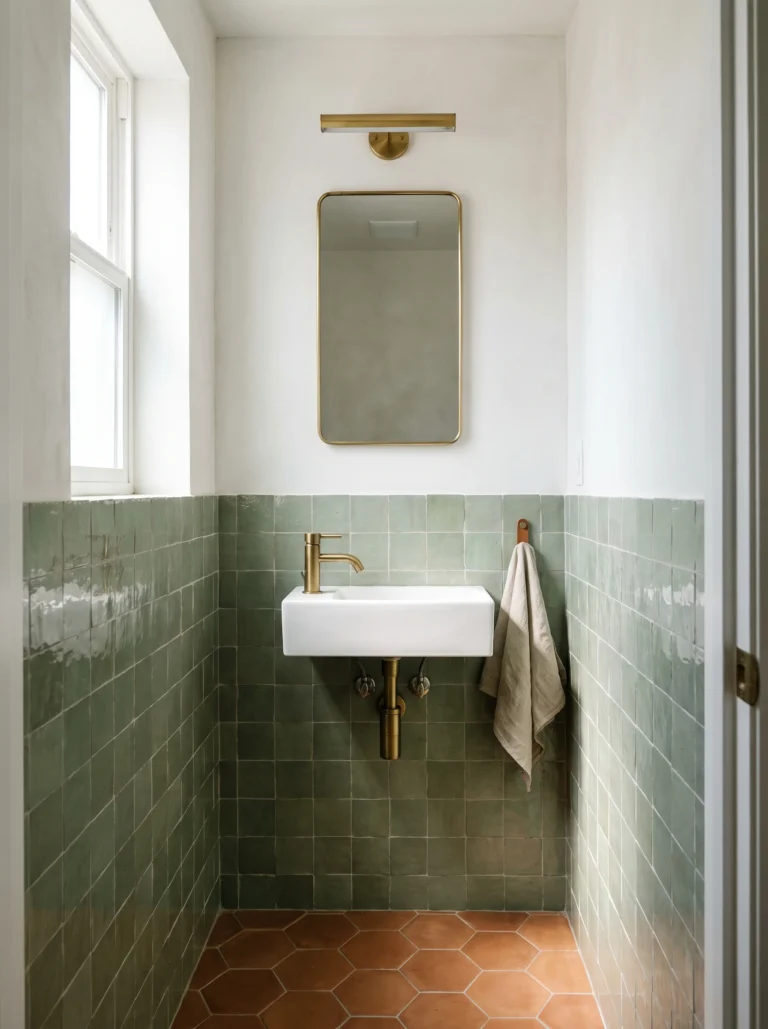
Handmade zellige is not a floor tile for most bathrooms. It is a wall that you notice. The glaze pools, the edges vary and the surface shimmers, so keep the floor plain and in the same color family. A matte cream or stone floor does the job.
It also costs more. DG Floors gives handmade zellige at about $15 to $50 per square foot, with popular imported brands near $25 to $40, and zellige-look ceramic at $5 to $12. Two guides say the real thing costs five to ten times standard subway tile. Order 15 to 20 percent extra for waste.
Use it on one wall, behind the vanity or inside the shower, not on all four. That holds the cost down and lets the uneven surface be the point. Choose a grout within one shade of the tile, so the wobble reads as texture instead of mess.
If the budget says no, a machine-made zellige-look ceramic at $5 to $12 gives you the wave without the price. It lacks the true handmade irregularity, so look for a glaze with visible variation and avoid a perfectly flat, even color.
One wall can be the star here, if the budget can take it. A 20 square foot shower wall at $25 to $40 per square foot is $500 to $800 of tile before waste. The catch is cleaning, since the uneven edges hold grime and never wipe in one pass.
Marble-look porcelain everywhere, with real marble only where hands touch
Real marble everywhere is a maintenance plan. Marble-look porcelain gives the same veined calm without it. Use the porcelain on the floor and walls, then add real marble in one small place you will see and touch, such as a niche sill, a vanity top or a threshold.
The split saves money too. Inch Calculator lists marble at about $3 to $50 per square foot and says it must be sealed in wet areas, while porcelain at $3 to $30 skips that step. One small slab of the real thing costs little compared with a whole room of it.
Match the vein color, not the exact white. Warm Calacatta-style veining on the floor beside a cool white marble niche looks off. Check both pieces together in the same light.
For more looks that use this pairing, see our modern luxury bathroom tile ideas. That list shows the finished rooms, and this guide gives you the rules for choosing between them.
This pairing fits anyone who loves the look and hates sealing. Keep real marble off any floor that gets wet. Some porcelain tile is colored all the way through, which hides chips better than a printed surface, so ask which kind the box holds.
White subway walls over a black hexagon floor
This is the classic that never needs defending. Glossy white subway tile keeps the room bright, and a black hexagon floor anchors it. The contrast does the work, so keep everything else quiet.
Decide the grout before the tile. Livingetc shows white tile with dark brown grout as a small change that adds interest, and says a darker tile with brighter grout feels moodier. On a black hex floor, light grout draws a honeycomb, while matching dark grout makes a solid field. Pick one.
Small hexagons grip well when wet because of the extra grout lines, the same point Flooring Clarity makes for shower mosaics. Keep the hex small on any floor that gets splashed.
Check the thickness where the sheets meet a tub or a doorway. Hex mosaics come on mesh sheets and can sit thinner than wall tile, so measure before you plan the edge.
Crisp contrast suits you if you will wipe the floor weekly. Avoid a pure black floor if your water is hard, because dark tile shows limescale and dust sooner than a mid-tone. A charcoal or mid-grey hexagon is the compromise, and it still lets the white wall pop.
One large tile from floor to wall for a small room
In a room around 40 square feet, fewer joints calm the eye. Running one large tile from the floor up the wall removes the line where two sizes meet, so the room reads as one clean box.
The cost of that calm is flatness. Flooring Clarity notes that larger tiles need a flatter surface behind them and more careful cutting. Ask the installer to check the wall with a long straightedge, because a bowed wall shows as lippage, the raised edge between neighboring tiles.
Keep the floor matte even if the wall piece is the same tile. Polished tile loses grip when wet, so choose a matte or honed version of the tile and use it on both surfaces. The wall will look quieter, and the floor will be safer.
Choose a grout within one shade of the tile so the joints almost vanish. That leaves the tile itself, not the grid, as the design.
A room around 5 by 8 feet that needs to feel bigger is the target. Do not try it if the walls are not flat or the budget has no room for a skilled installer, because large tile punishes a rough wall.
Order 10 percent extra, the same overage Inch Calculator builds into its material estimates, since one broken piece is hard to replace.
Wood-look porcelain floor with a glazed blue or green wall
Wood warms a cool wall color. A wood-look porcelain plank underfoot and a glossy blue or green tile on the walls is the easiest warm and cool balance in the list, and it handles water better than real wood.
Match undertones. Honey or golden oak plank suits warm olive and sage, while a grey or ash plank suits blue and blue-grey. Block Renovation warns that cool grays and warm beiges can clash when they are not coordinated.
In a narrow room, run the wall tile horizontally. One guide notes that large tiles laid horizontally on the walls of a narrow bathroom create an illusion of greater width.
Test the glaze before you commit. Dark glossy blue and green tile show water spots and streaks, so choose a satin glaze or accept a squeegee habit.
A cold or clinical room is the best target. It is not for strict contrast, because a plank with heavy knots beside a veined wall tile fights for attention. Pick a plank with soft, even grain when the wall tile is glossy and colored.
Terracotta floor with cream walls for a warm, earthy room
Terracotta looks best when the walls step back. Cream, sand or soft white walls let the orange-brown floor carry the warmth, and a window facing south or west makes it glow.
It needs sealing, and the sources agree. Unsealed terracotta soaks up water, soap scum and toothpaste, and a proper system uses a penetrating sealer plus a topical finish. One guide advises machine-made tile over handmade Saltillo for bathrooms because it is easier to keep.
Cost runs about $5 to $15 per square foot for the tile, before sealing and labor. To check the seal later, drip a little water on the floor. If it darkens the tile instead of beading, seal again.
Pair the floor with a matte glazed or plaster-look wall tile, and keep metal fixtures warm, such as brass or bronze, so the whole room reads as one palette.
A room with a window and a lived-in look is the sweet spot. Keep it out of a shower splash zone and out of a room with no daylight, since a dark warm floor with no light feels heavy. Machine-made tile is the lower-maintenance pick.
Match grout within one shade for calm, contrast it for graphic
Grout is the third tile in every pairing. Matching grout hides the grid and makes two different tiles feel related. Contrasting grout outlines every tile and turns the pattern into a drawing.
Pick one effect per surface. Do not contrast the floor and the wall together unless you want the grid to be the main feature. A calm floor with a graphic wall, or the reverse, reads as intentional.
Corners follow a different rule. The Tile Council of North America says that where floor meets wall, caulk should be used instead of grout, because the surfaces move independently. It also lists reasons installers still grout, such as matching the color. Ask your installer which they will use before the job starts.
Buy a color-matched silicone with the grout. That way the corner joint, the floor-wall joint and the field all look like one choice, and the sealant will not be the odd color out.
Test it before you buy a whole bag. Set two samples with two grout colors, let them dry, and photograph them in your bathroom light, because grout color looks lighter dry than wet. Then pick the grout that makes the weakest part of your pairing disappear, such as a wide joint on a wall tile.
Where two tiles meet: thickness, thresholds and corners
Two tiles are rarely the same thickness. Where they meet, the height gap decides the fix. Flooring Clarity lists three bands: 1/16 to 1/8 inch can take thin grout ramping or a tapered strip, 1/8 to 3/8 inch calls for a metal or PVC reducer, and over 3/8 inch needs a threshold, a mortar ramp or a subfloor fix.
These are installer rules of thumb, not a code, so check your local rules. Measure each tile, the setting bed and any underlayment before you order a profile, since the numbers add up.
Stop the tile at the doorframe. A reducer or threshold at the edge of the door looks planned. Tile that runs under the door and changes there looks accidental.
Corners are the other place height changes: where tile meets a tub flange, a vanity plinth or a shower curb. Pick trim that matches your metal fixtures, brushed or polished, before the tile arrives.
For a gap between 0.3 and 1.6 inches, an aluminum reducer ramp bridges the height. The Lunghaa strip costs about $25, and its listing says no glue comes in the package, so buy construction adhesive with it.
Shop it on Amazon: Lunghaa Aluminum Floor Transition Strip, Threshold Reducer (Matte Black, 2.9 ft x 3.9 in)
Judge the pairing under 3000K light with a CRI of 90
Tile looks different under every bulb. Design guides put bathroom light at 2700K to 3000K and suggest a CRI of 90 or higher so colors look true, though the exact best number is debated.
Test your two samples under the bulb you will actually live with, at night and at midday. A warm greige floor can turn yellow under a very warm bulb, and a cool grey can turn blue under a cooler one. Move the samples around the room, because the window side and the mirror side differ.
Change the bulbs before you buy the tile. A 4-pack of 3000K, 90+ CRI bulbs costs about $13, which makes it the cheapest test in this guide.
Judge the tile at the mirror, where you will see skin and tile together, and keep any high-Kelvin task light switched off while you decide. Read the Kelvin number on the box, because names such as soft white vary between brands.
Four tells of a good tile before you buy
In the showroom, check these before you check the price. A tile that passes all four is worth paying more for, and one that fails the first two is usually cheap for a reason.
- If the edge is rectified, then you can use narrow grout joints. Inch Calculator notes that rectified tile is cut after firing for a precise fit, and that it costs more.
- If the box shows several shades, then open three boxes and mix them before you lay, or the wall will look patchy.
- If it is a floor tile for a wet room, then look for a wet DCOF of 0.42 or higher on the spec sheet. A tile with no number is a tile you cannot compare.
- If you see a PEI class, then remember it measures abrasion, not slip. MSI’s tile listing calls class III suitable for medium-duty residential use, which covers a bathroom floor.
Which bathroom tile combination to choose for your room
Choose a matte porcelain floor with glossy ceramic walls in one color family, unless your room has a specific problem. For a wet shower floor, go to 1 to 2 inch mosaics. Under about 40 square feet, run one large tile from floor to wall. Want personality? Put a pattern on the floor or a zellige wall, never both.
If you change only one thing, change the floor. A matte porcelain floor with a wet DCOF of 0.42 or higher fixes more problems than any wall tile can. The wall can follow when the budget allows, and the pairing will still hold.
Whatever pairing wins, settle the joins first: grout within one shade, caulk in the corners, a reducer where the height changes and a bulb test before the order. The best bathroom tile combinations look planned because the plain decisions were made first.
Save this pin so you can find these bathroom tile combinations when you are ready to order your tile.