16 Bathroom Tray Ideas That Look Styled and Wipe Clean
The best bathroom tray is the one that matches the damp around your sink. Use glazed ceramic, glass or silicone where it gets splashed, and save marble, wood, rattan and silver plate for the dry end of the counter. Choose the material first, then add two or three things.
Most bathroom tray styling advice shows the finished look and skips what happens after a month of steam, soap and toothpaste. Each of the 16 ideas below names one material, says what fails first and gives a simple way to style it, so the tray still looks good later.
You will also find a short price check at the end, so you can see where the money is worth spending.
Affiliate disclosure: this post contains Amazon affiliate links. If you buy through one, we may earn a small commission at no extra cost to you.
Table of Contents
Pick honed marble for perfume and rings, and wipe spills at once

Honed marble earns its place under perfume bottles, a ring dish and a single pump of hand cream. It does not like acid. Marble is calcium carbonate, so lemon juice, vinegar or an acidic cleaner can leave a dull, cloudy ring called an etch.
A sealer will not fix that. Stone Doctor, a stone-care company, says penetrating sealers cannot prevent etch marks, because they only slow staining. So treat a marble tray as a dry-zone piece, wipe spills straight away and clean it with a pH-neutral stone cleaner.
Keep toothpaste off it as well. One stone-care page lists it with lemon juice and wine as a risk. The guides I found did not test perfume directly, so wiping drips from a perfume bottle is caution, not a proven rule. A 12-inch marble tray holds three small things without crowding.
To style it, stand the tallest bottle at the back corner and keep the front third empty so a hand can reach in. Marble is heavy for its size, so check that a floating shelf or a thin vanity top can carry it before you buy.
Filled travertine is the safer pick for a tray near the basin
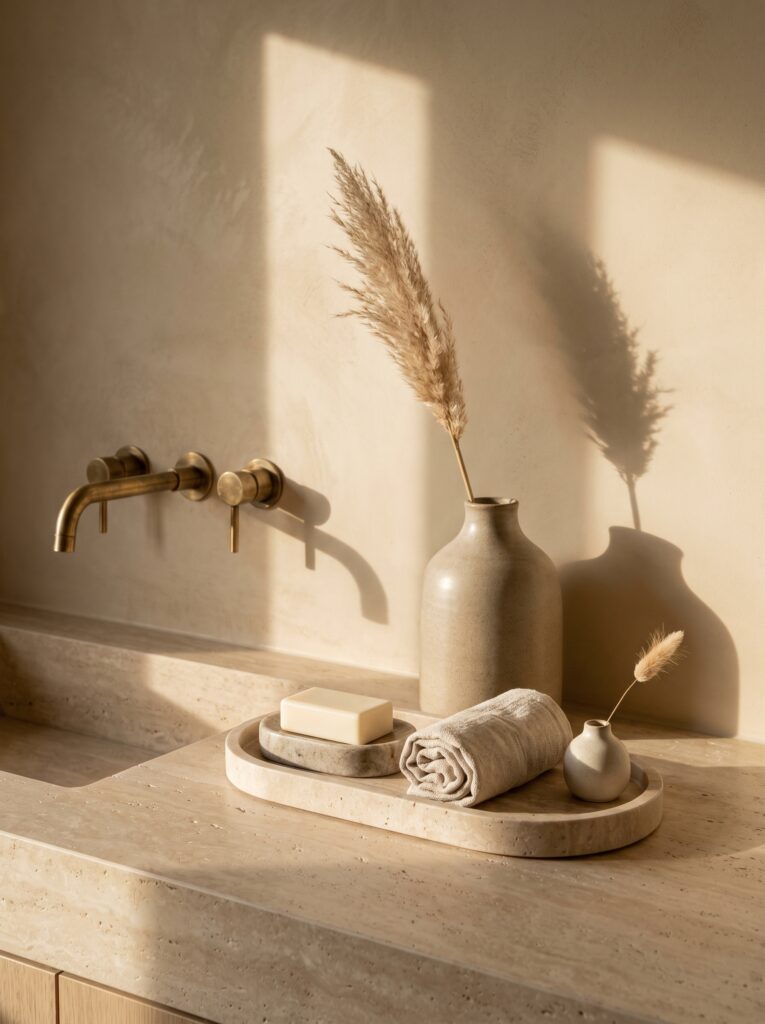
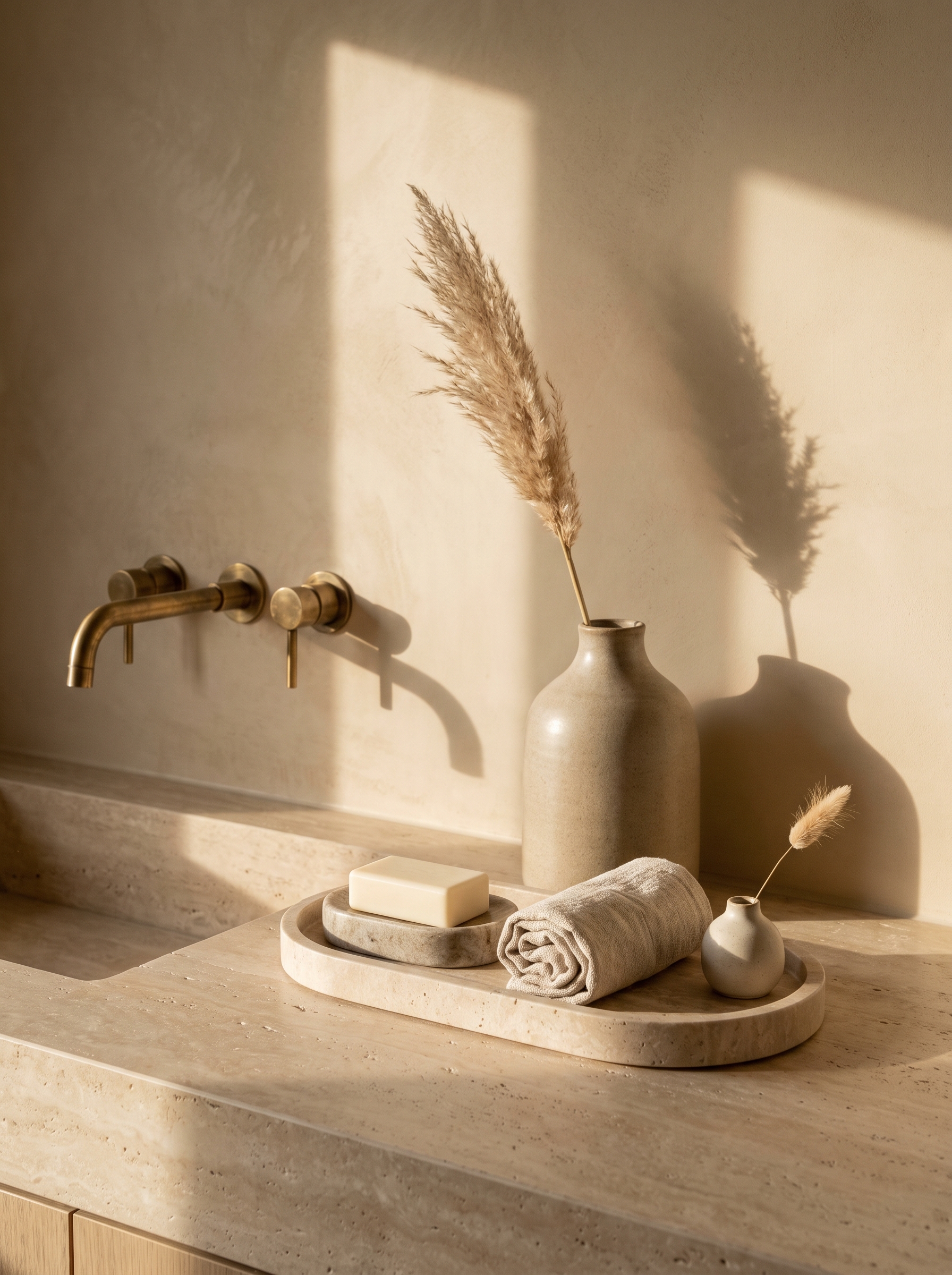
Travertine gives a bathroom tray the soft beige of a spa, with tiny natural pits in the surface. Check whether the tray is filled or unfilled before you buy. Floor & Decor explains that filled travertine has its pits packed with resin or cement and ground flush, so the surface is smooth.
Unfilled pits can collect soap, dust and water. Filler can also wear out over time, and a stone restoration contractor can refill it. Give a bar of soap its own dish so residue does not build up on the stone.
Seal travertine every 6 to 12 months, or twice a year in a steamy room, according to stone supplier Caron Stone. To test it, drop a little water on the surface. If the water sinks in fast, the seal has worn off. One bud vase and one rolled linen cloth keep the bathroom tray decor calm.
Cream, sand and warm white objects suit it best. A clear glass bottle or a plain ceramic dish looks right on travertine, while bright colors fight its calm.
A black marble tray gives a white counter a clear edge

A dark marble tray on a pale counter gives a few products a clear border. The white veining ties back to the counter, so it feels planned rather than stuck on. The same acid rule applies as with any marble tray, and a pale etch ring stands out on black stone.
Polished black also shows dust and water marks sooner than light stone, so keep a dry cloth in the drawer below. Choose one tall piece, such as a pump bottle, and two low ones, such as a cotton jar and a candle, so the dark tray does not look heavy.
The contrast works best beside a matte black faucet and a pale oak vanity.
If your counter is already dark, flip the idea and use a white or cream tray, so the products have something light to sit on.
How often should you test the sealer on a concrete tray?

Test it twice a year, and sooner if the tray sits near the faucet. Concrete is porous, so it relies on its sealer to resist stains. Concrete countertop guides give a sealer life of roughly one to three years, but a small tray gets wet more often than a counter does.
Drip a little water on the tray. If it beads, the sealer is working. If the water soaks in and darkens the grey, reseal it. Even a sealed concrete surface can stain from standing water, so dry the tray after a spill.
Matte grey concrete looks calm in a pale plaster bathroom and goes well with the green, terracotta and wood tones in our bathroom decor and storage ideas. A round vanity tray about 9 inches wide fits a soap pump, a toothbrush cup and one small plant.
Concrete is heavy and can scratch a polished top. Stick felt pads or thin cork dots under it if the counter is quartz or glass.
Teak is the easiest wood for a tray that gets wet every day

Teak is the safest wood for a damp counter. Its natural oils help it resist water and mildew, and it rarely warps. Many wooden trays come pre-oiled, so you may never need to touch it.
Teak oil is optional. It helps the wood shed water and keeps it from drying out, so add a coat when the surface looks pale or thirsty. Skip harsh cleaners, which strip the finish, and use mild soap and a damp cloth.
Pair it with a slatted wooden soap dish so water drains away from the bar. A teak bath stool nearby repeats the wood without adding a second tray, and keeping the golden tone the same looks neater than mixing stains.
A round tray about 10 inches across takes one soap dish, one glass and a folded towel. That is a full tray, and adding a candle makes it crowded.
Check the finish on an acacia tray before you trust it with water

Acacia has the dramatic grain, dark ribbons against honey brown, that makes a plain counter look finished. It needs more care than teak. One wood-care guide warns that raw or poorly sealed acacia can darken unevenly and stain a white surface when wet.
Ask whether the tray has an oil finish or a sealed finish. Retail advice differs. Some listings suggest a light coat of mineral oil every 6 to 12 months, while others say a sealed finish needs no oiling. Follow the maker’s note, and re-oil when the wood looks dry.
Keep amber pump bottles and a swab jar on it, and put any plant in a pot with a sealed base so a leak never reaches the wood.
Acacia looks best with cool colors. Amber glass, white ceramic and green leaves let the grain stay the star, and patterned jars only fight with the swirls.
Try a bamboo tray when you want wood warmth for about $20

Bamboo is the budget answer to wood, and it looks calm next to blue or white tile. Homestyler’s FAQ lists bamboo among the tray materials that cope with humid rooms. Check the finish, though. A sealed surface wipes clean, while a raw edge soaks up water like any other wood.
Slim trays suit narrow vanities, and round ones suit a corner. Wipe the tray dry after a spill, and do not leave it sitting in a puddle.
Bamboo trays vary in weight, so lift one before you buy. A very light tray slides when you pull a pump bottle, and a small rubber dot under each corner fixes that.
A round bamboo vanity tray with gold handles is about $20 and 9.84 inches across, enough for a toothbrush cup, a soap and a small plant.
Shop it on Amazon: Bamboo Vanity Tray with Gold Handle, 9.84 Inch Round
Silicone is the one tray material that can sit in a puddle

Silicone does not stain, rust or swell, so it suits the spot where the tray gets splashed all day. Rinse it under the tap and let it air dry. A ridged surface lifts bottles off the water, and the raised edge catches drips from a pump bottle.
Heat is the catch. Chowhound found that silicone bakeware claims range from about 300 to 450 degrees Fahrenheit, so the numbers are not standard. Never rest a hot curling iron or flat iron on a tray unless its label gives a temperature.
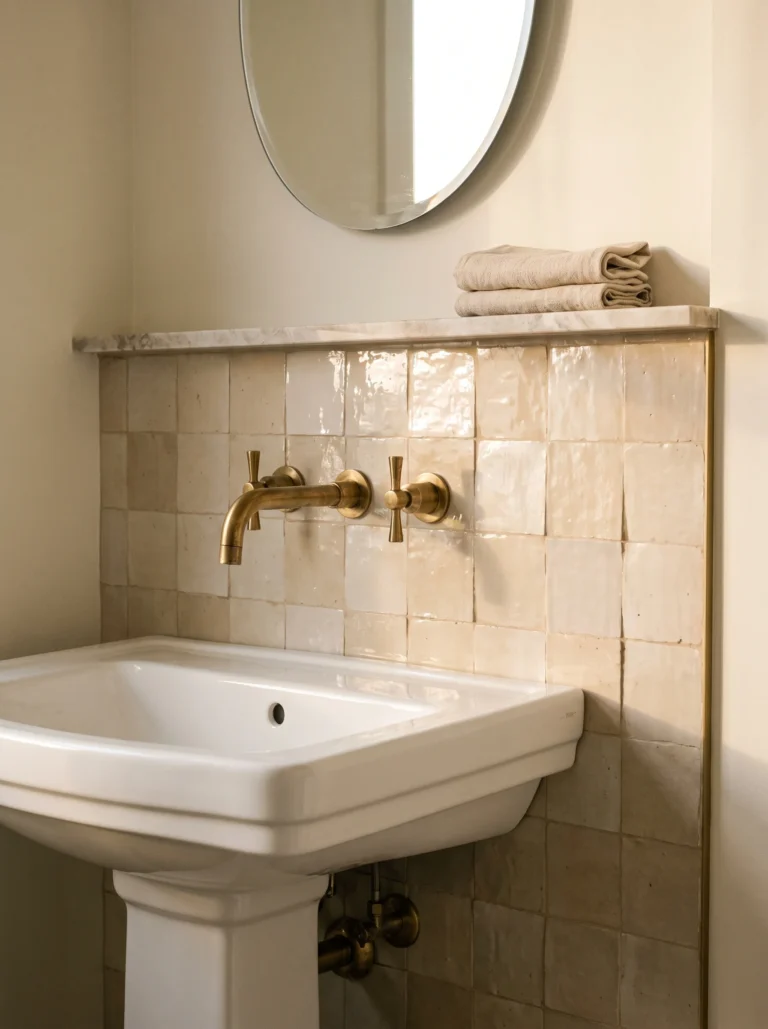
Sage, stone and cream tones look calm beside zellige-style tile. A 10-inch round silicone tray costs about $14 on Amazon.com.
Silicone also moves easily from sink to dresser, so it suits a rental where you cannot drill or seal anything. Wipe the underside now and then, because water pools there.
Pick thick clear acrylic for a small counter, and clean it without ammonia

Clear acrylic takes up almost no visual space, so it suits a dark counter or a tiny bathroom where a solid tray would feel heavy. Choose a thick one, around 8 to 10 millimeters, so it stays flat and does not slide when you lift a bottle.
It scratches easily, and the wrong spray clouds it. Plastics suppliers warn that ammonia-based glass cleaners can turn acrylic cloudy and brittle over time. A few drops of dish soap in lukewarm water and a microfiber cloth are safer.
Style it with warm touches so it does not feel cold. A gold ring dish, a white orchid or one stem in a dark vase gives the clear tray something to frame.
This 10 mm acrylic tray measures 10.23 by 6.3 inches and costs about $19. It holds two perfume bottles and a gold ring dish with room left over.
Shop it on Amazon: 10mm Ultra Thick Clear Acrylic Bathroom Tray, 10.23 x 6.3 in
Put a mirrored tray under bottles of three different heights
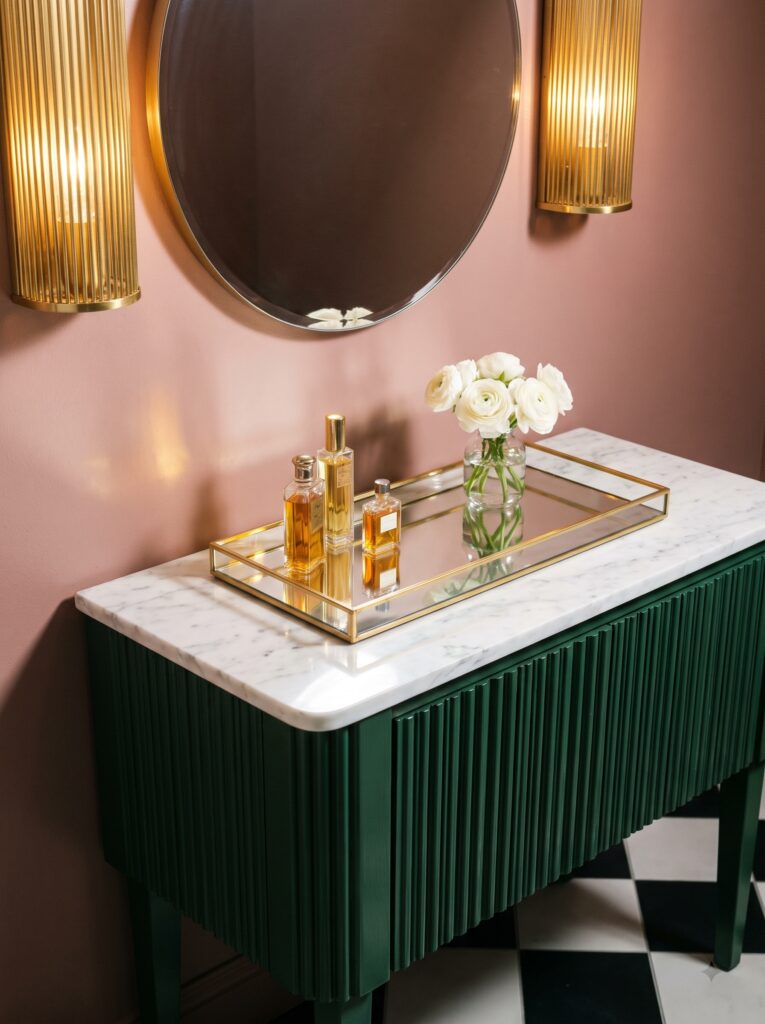
A mirrored tray doubles whatever stands on it and bounces light from a wall sconce back into the room. It works best with three bottles at three heights, one tall, one medium and one short, so the reflection reads as a second row and not a muddle.
Water spots and fingerprints show instantly on a mirror finish, so keep it on the dry side, away from the faucet. A microfiber cloth brings the shine back in seconds.
Match the edge to the faucet. A gold edge suits warm bulbs and brass hardware, and a chrome edge suits cool light.
Keep the vase small. A tall arrangement breaks the reflection and tips over easily on a slick surface.
A glass tray keeps the counter visible and wipes clean in one pass

Glass lets the quartz or tile show through, so the counter still looks clean even with bottles on top. Glass jars of cotton balls and bath salts make the set look like storage and decoration at once.
Check the base. A thin pane slides on a wet counter, but a thick base with a small lip stays put. Glass shows water spots, yet one pass with a damp cloth clears them, and nothing soaks in the way it can with porous stone.
If you are still planning the rest of the vanity, our bathroom counter ideas cover layout, zones and what to keep out of the splash area. The tray is only one piece of that plan.
Jars with cork or metal lids keep the contents dry. Open cotton balls pick up steam, and bath salts clump in humid air.
Glazed ceramic gives you a tray that survives almost any spill

Glazed ceramic is the safest all-round material for a sink that gets splashed. The glaze seals the clay, so soap, toothpaste and perfume wipe off with a damp cloth. A speckled cream tray, a stoneware dispenser and a toothbrush cup look like a set even when they come from different shops.
The weak spot is the edge. A chip exposes the clay under the glaze, and that raw patch can absorb water and stain. Replace a badly chipped tray rather than keeping it under a pump bottle.
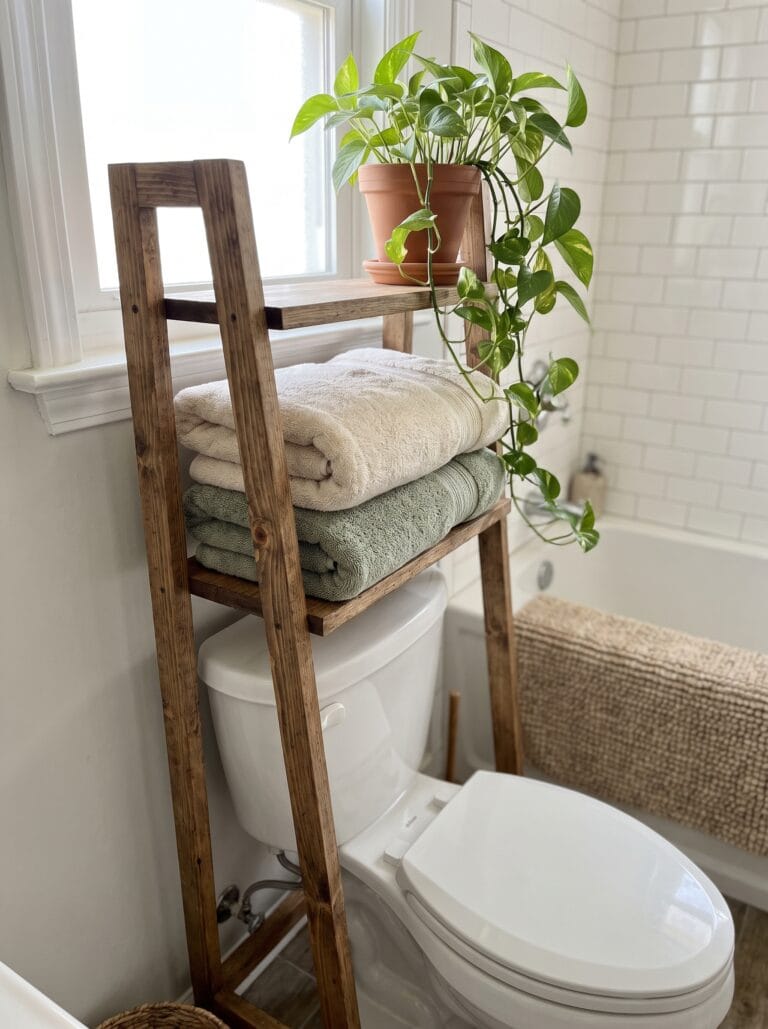
A trailing pothos adds green without much fuss. Keep it in a pot with a saucer beside the tray, not on it.
Choose pieces from one color family, such as cream, sand and stone. Three matching glazes look styled, and three different colors look like a sale table.
Decide between lacquered and unlacquered brass before you buy a brass bathroom tray
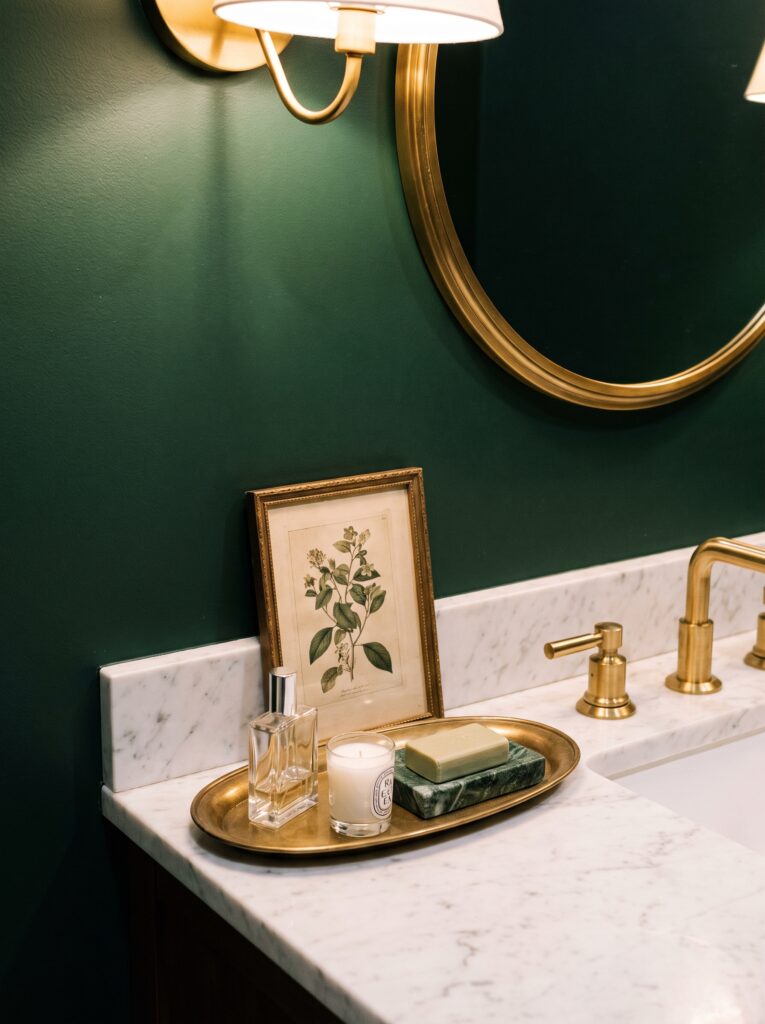
Lacquered brass has a clear coating that slows tarnish. Unlacquered brass is bare metal that darkens over time. The Suffolk Latch Company calls it a living finish and notes that it shows water spots, fingerprints and tarnish more readily.
Lacquer can wear where hands touch it, and then the brass can darken in patches. If you like an aged look, go unlacquered and let it patina. If you want it bright, go lacquered and wash it with mild soapy water only.
Keep brass away from the toothbrush cup and soap, which splash and leave marks. A small candle, a perfume bottle and one stone dish suit it better.
A brass-look stainless oval is the practical middle. This gold stainless steel tray measures 11.8 by 4.8 inches and costs about $10, so the tarnish question mostly goes away. Check the finish for wear after a few months.
Shop it on Amazon: Gold Oval Vanity Tray, Stainless Steel, 11.8 x 4.8 inches
Brushed stainless steel hides scratches and suits shaving gear
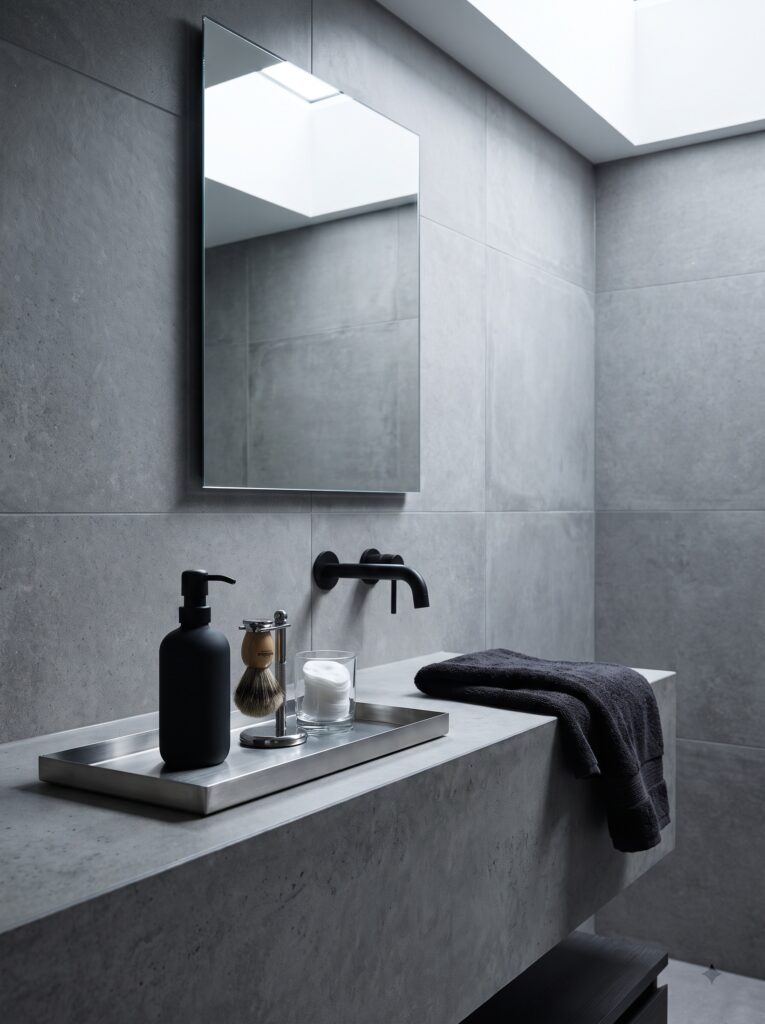
Stainless steel is hard to damage. It will not chip or etch, so it suits a tray that holds a shaving brush, a razor stand and a pump bottle. A brushed finish hides fine scratches better than a mirror polish does.
Water spots are the only real complaint. Equal parts white vinegar and water, wiped along the grain and dried straight away, removes them, as several cleaning guides explain. Rinse the vinegar off, and keep bleach cleaners away, since chlorine can corrode the metal over time.
A dark folded towel beside it keeps the look calm and clean without extra decor.
Pick one pump in matte black or white and decant the rest. Mixed brand labels make a small steel tray look cluttered.
Rattan belongs on the dry end of the vanity

Natural rattan is warm and soft to look at, but it hates damp. Decor-Walther, a maker of rattan bathroom trays, warns that long dampness can make rattan swell or grow mold. If mold appears, a water and vinegar mix cleans it.
Put the tray at the dry end of a wide vanity, line it with a folded linen cloth, and load it with rolled hand towels and a bud vase. Keep it out of the shower spray, and dry it right away if it gets wet.
If your bathroom is steamy but you want the look, imitation rattan made from plastic is the safer choice.
Roll the towels tight and stand them side by side, three at most. Loose, fluffy folds spill over the edge of a round tray.
Save a silver-plated tray for the powder room and polish it sparingly
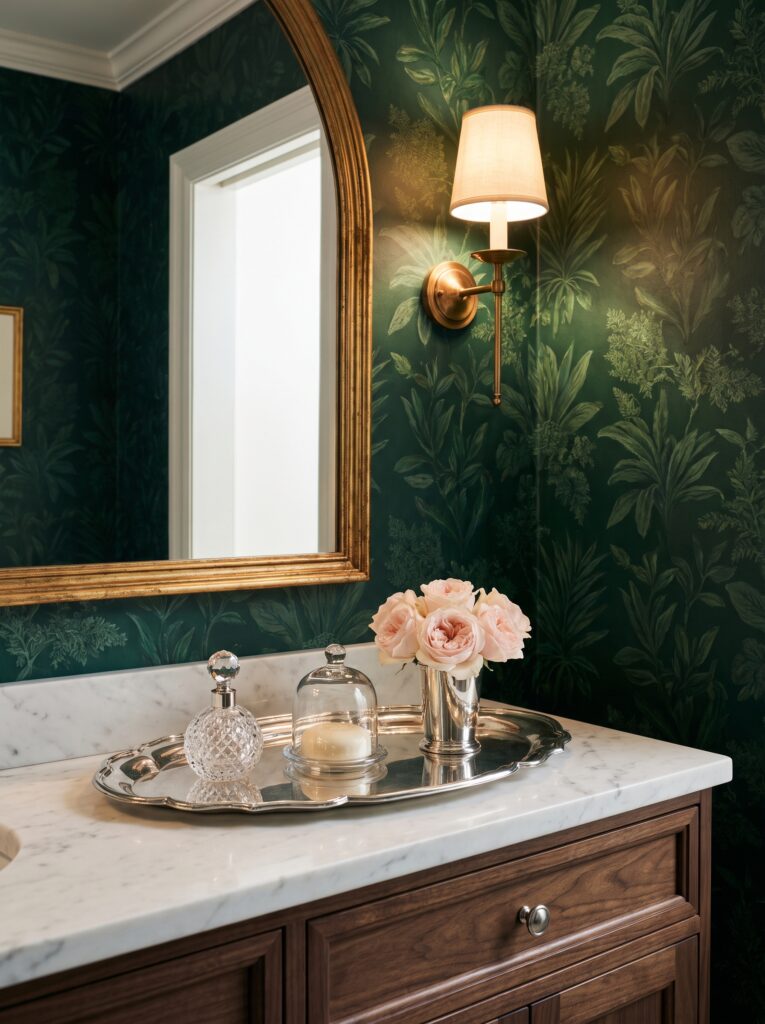
Silver plate suits a powder room with a crystal perfume bottle and a small posy of roses. It tarnishes faster in damp air, because moisture helps sulfur in the air form the dark layer. A steamy family bathroom is a harder home for it than a guest powder room.
Polish only when tarnish shows, and stop when the surface is clean. Silver-care guides warn that over-polishing wears through thin plating and exposes the base metal. A soft anti-tarnish cloth does the job without scrubbing.
A scalloped edge adds a vintage line. A glass dome over a candle or a bar of soap keeps it from gathering dust.
Group in odd numbers, such as three objects of different heights. It looks more natural than a pair, and the plated edge frames them.
What a bathroom tray costs, from about $10 to $26
I checked Amazon.com listings on 13 October 2026. Prices move, so read these as bands, not quotes.
- Under $10: a gold stainless steel oval at $9.95, and small clear acrylic trays at $8.99 to $9.99.
- $10 to $15: a 10-inch silicone round at $13.99, a 9 by 6 inch walnut-finish wood tray at $14.99, and mirror-finish gold trays at about $13 to $15.
- $15 to $20: a round bamboo tray with handles at $19.99, a thick 10 mm acrylic tray at $18.98, and a 12 by 6.5 inch crystal tray at $15.99.
- $20 to $26: mirror glass trays at about $20 to $24, and a 12 by 6 inch marble tray in a travertine color at $25.99.
I did not price concrete, teak, ceramic, rattan or silver plate. Those vary too much by maker for one honest number.
A simple order works well. Buy the ceramic, glass or silicone tray for the faucet corner first, and add a decorative tray for the dry end only once the first one has survived a month.
Spend the money where water hits. A well-made ceramic, glass or silicone tray near the faucet will outlast a cheap marble one, and a cheaper mirrored or wooden tray on the dry side carries little risk.
Match your bathroom tray to the wettest spot on your counter
Find the wettest spot first, usually the corner beside the faucet. Put the toughest material there: glazed ceramic, glass or silicone. Save marble, wood, silver plate and rattan for the dry end.
Then move one thing onto a tray tonight, such as the pump bottle or the perfume, and see how it feels before you add a second. A bathroom tray only looks styled if it still looks good after a month of splashes, and that comes down to the material you chose.
Save this pin so you can find these bathroom tray ideas when you are ready to restyle your counter.