The Aesthetic Primary Bathroom Everyone Is Copying
You have saved it. Probably more than once. That same warm, soft, spa-like primary bathroom keeps landing on your feed, and you keep wondering why yours looks nothing like it.
Here is what nobody tells you about aesthetic primary bathroom ideas: it is not one bathroom. It is a short list of materials and a few quiet rules, repeated by different designers until it feels everywhere. Warm microcement or limewash, fluted oak, aged brass, handmade zellige, one piece of stone doing something dramatic. Soft light. Almost no clutter. Curves where you expect corners.
Below are ten real versions of that look, then exactly how to copy it in your own home, in what order, and where it is safe to save money.
This post contains affiliate links. If you buy through them, I may earn a small commission at no extra cost to you. I only link to things that fit the look.
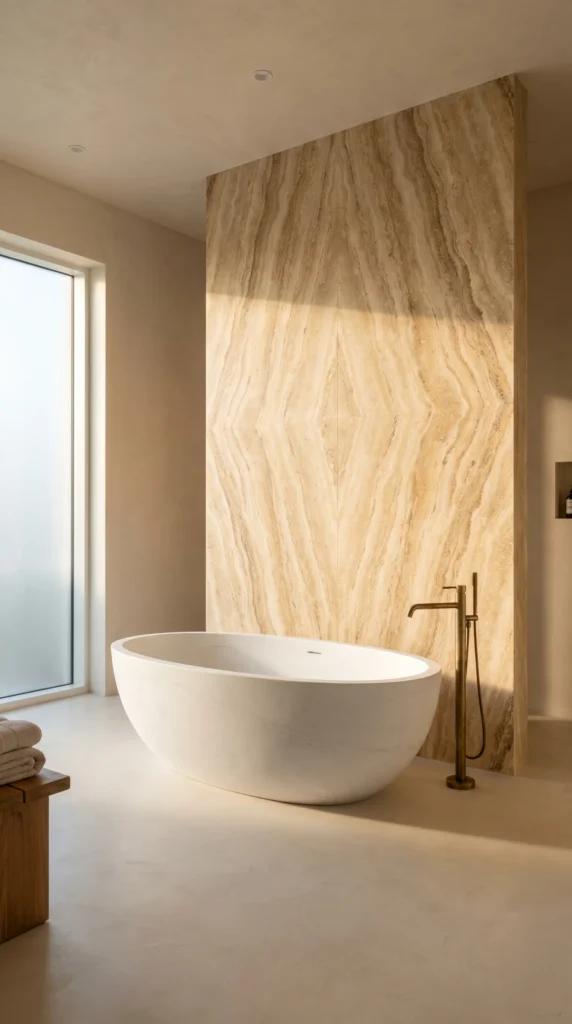
The travertine slab feature wall behind a stone tub

This one is the showstopper, and it earns it. A single wall of book-matched travertine runs floor to ceiling behind the tub. The stone is cut so the veins mirror each other down the center, which is what makes it read as expensive instead of busy. Everything else in the room steps back and lets the stone talk.
Notice how calm the rest of it is. The walls and floor are the same warm microcement, almost no color shift between them, so the eye glides right to the travertine. The tub is a thick, rounded stone basin sitting low to the floor. Towels are stacked on a simple wood bench. There is one frosted window pulling in soft light from the side, which is part of why the stone glows the way it does.
The brass tub filler is the detail that ties the whole room to the rest of this list. It is a tall floor-mounted faucet in a warm, slightly aged finish, not the cold chrome most builders default to. If you want that exact heirloom look without a custom price, an unlacquered brass freestanding tub filler gives you the same gooseneck shape and warm tone, and the raw brass actually darkens over time so it looks better the longer you have it. That little patina is the secret. Shiny brass screams new. Aged brass looks like it has always been there.
Buy it on Amazon : unlacquered brass freestanding tub filler.
Mood here: quiet luxury. Big stone, small everything else.
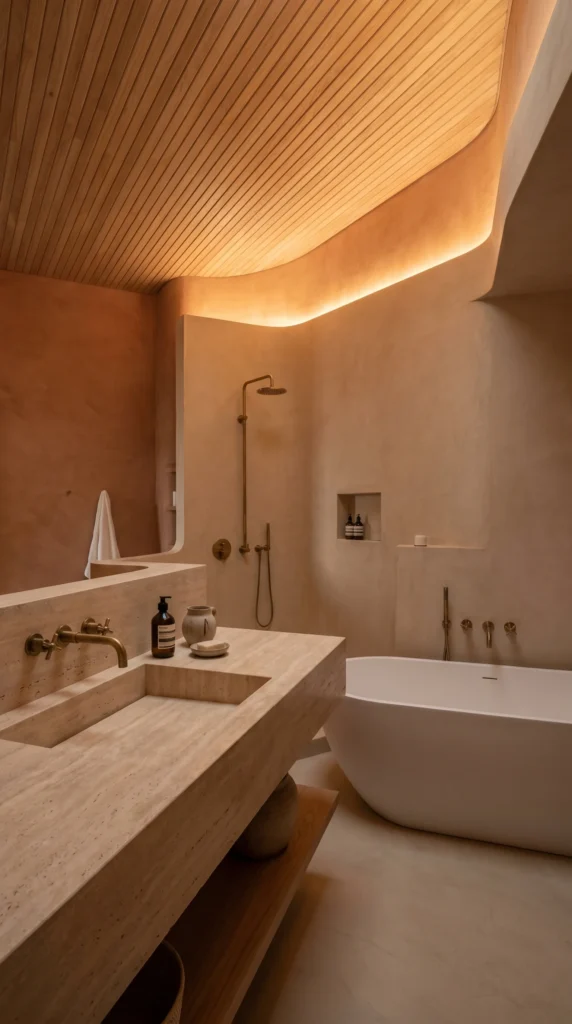
The plaster walls and curved wood-slat ceiling
If the travertine room is about one bold wall, this one is about wrapping you in warmth from every direction. The walls are textured plaster in a soft terracotta beige. The ceiling is the star: oak slats that curve down into the wall, with a strip of warm light tucked into the cove so the whole top of the room glows like late afternoon.
The vanity is one solid piece of travertine with the sink carved straight into it. No separate basin, no seam. Brass taps come straight out of the stone. Across the room sits a smooth white tub and a thin brass shower set against bare plaster. The materials repeat, the colors stay close, and nothing fights for attention.
The lighting is doing most of the emotional work in this photo, and that is worth copying even if you never build a curved ceiling. Hidden warm light bouncing off a textured surface is what gives these rooms that glow. Cool white ceiling cans would kill it instantly. If this soft, layered, lived-in feeling is what you are after, you will like these same ideas pushed further in our guide to cottagecore bathroom decor, which leans into texture and warmth the same way.
Mood: a cocoon. You want to sit in here for an hour.
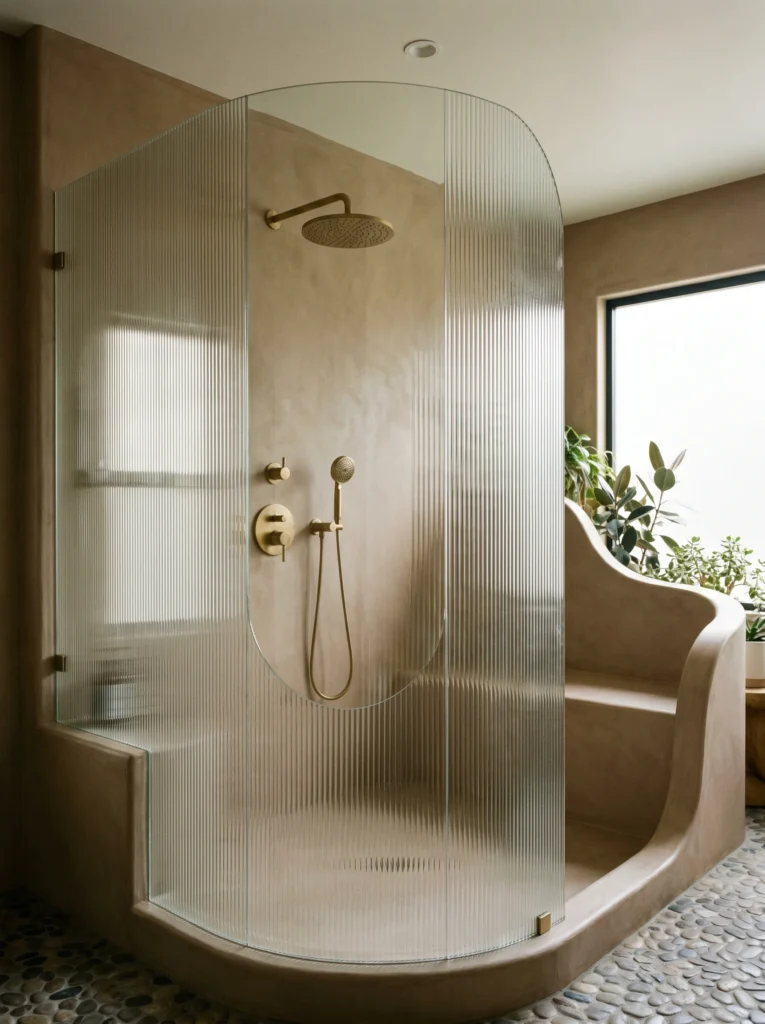
The curved fluted-glass shower screen
Here is where the curves really show up. Instead of a flat rectangle of glass with hard metal edges, this shower is wrapped in a rounded screen of ribbed, fluted glass. The ribs blur whatever is behind them into soft vertical lines, so the shower feels private without going dark. The whole enclosure bends in one smooth shape.
The walls inside are that same warm microcement. The floor switches to small rounded pebbles, which adds texture underfoot and a little spa feeling. A curved plaster bench flows out from the wall like it was poured, not built. Brass fixtures again: a round rainfall head up top and a slim handheld on a hook, both in that soft gold tone.
That rainfall head is an easy, high-impact swap if you want the look on a budget. A brushed gold round rain shower head costs a fraction of a full custom fitting and changes the whole feel of an existing shower the second you screw it on. Fluted glass is harder to fake cheaply, so if budget is tight, spend on the brass and keep your current clear glass for now.
Buy it on Amazon brushed gold round rain shower head
Mood: soft, rounded, a little playful. The opposite of a boxy builder shower.
The double floating vanity under one long mirror
This is the hotel-grade version, and it is all about symmetry. A wide oak vanity floats off the wall, so the floor runs underneath it and the whole thing feels lighter than a cabinet sitting on the ground. Two sinks, two brass taps, and one long mirror stretching the full width instead of two separate round ones.
The trick that makes this read as designer is the restraint. The wood is a plain, warm oak with no handles breaking up the front. The counter is a pale stone. The walls are smooth warm plaster, and a thin line of hidden light glows above the mirror. Two amber soap bottles sit on the counter and that is basically the only “stuff” in the frame. That emptiness is on purpose, and it is most of why it looks expensive.
If you have two sinks already, the cheapest way to chase this look is to ditch the busy frame and go with one clean span of mirror, plus warm wall-mounted brass taps. Swapping deck-mounted chrome for wall-mounted brass instantly lifts a vanity. You do not need to gut anything. You just need to calm it down and warm it up.
Mood: calm, balanced, grown-up. Feels like a nice boutique hotel.
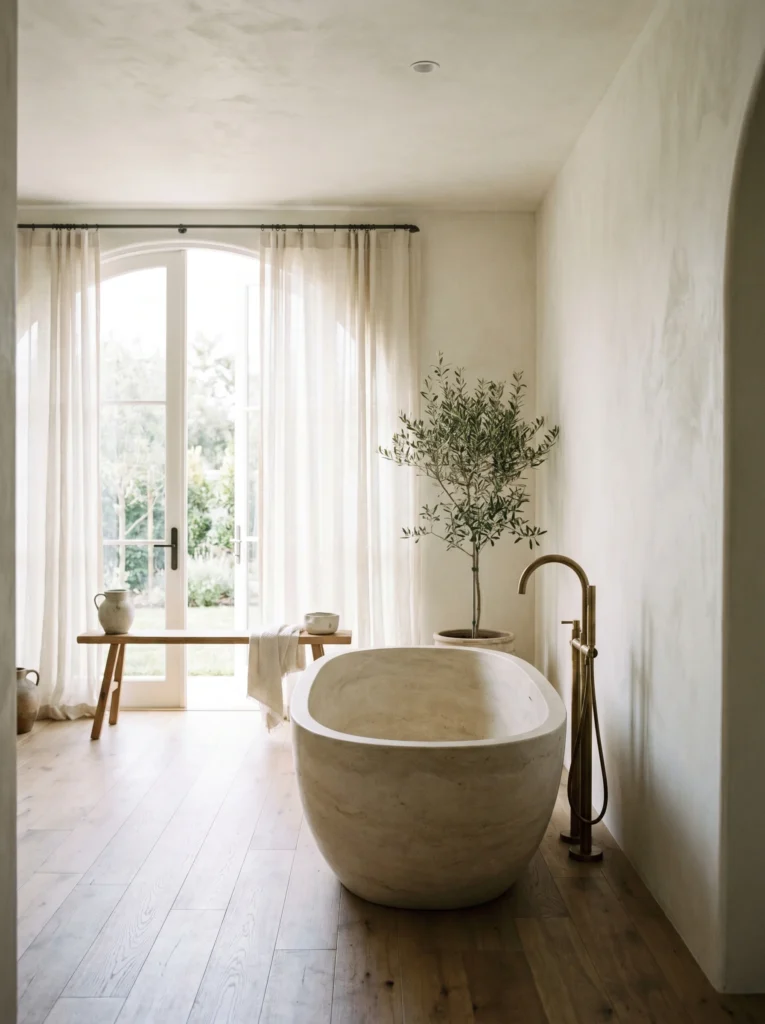
The limewash walls and freestanding stone tub
This is the lightest, airiest take on the whole list, and probably the most copied of all. The walls are limewashed in a soft chalky cream with that gentle cloudy texture you only get from real lime paint. A rounded stone tub sits in the middle of the room. Wide oak planks run across the floor. Sheer linen curtains float over arched garden doors.
It feels Mediterranean and easy, like a slow morning somewhere warm. The brass floor faucet is tall and simple. There is a little olive tree, a wood bench, a clay jug, and not much else. Everything is soft, pale, and natural. Even the towel looks casually tossed rather than styled.
The lesson here is that you do not need stone slabs or fluted glass to land this aesthetic. Limewash paint is cheap, you can roll it on yourself, and it gives you that warm depth flat builder paint never will. Pair pale walls with one real wood element and one brass piece and you are most of the way there. This breezy, sun-washed direction overlaps a lot with our coastal bathroom decor themes in neutral tones if you want to push it a little more toward the sea.
Mood: bright, slow, lived-in. The vacation-house bathroom.
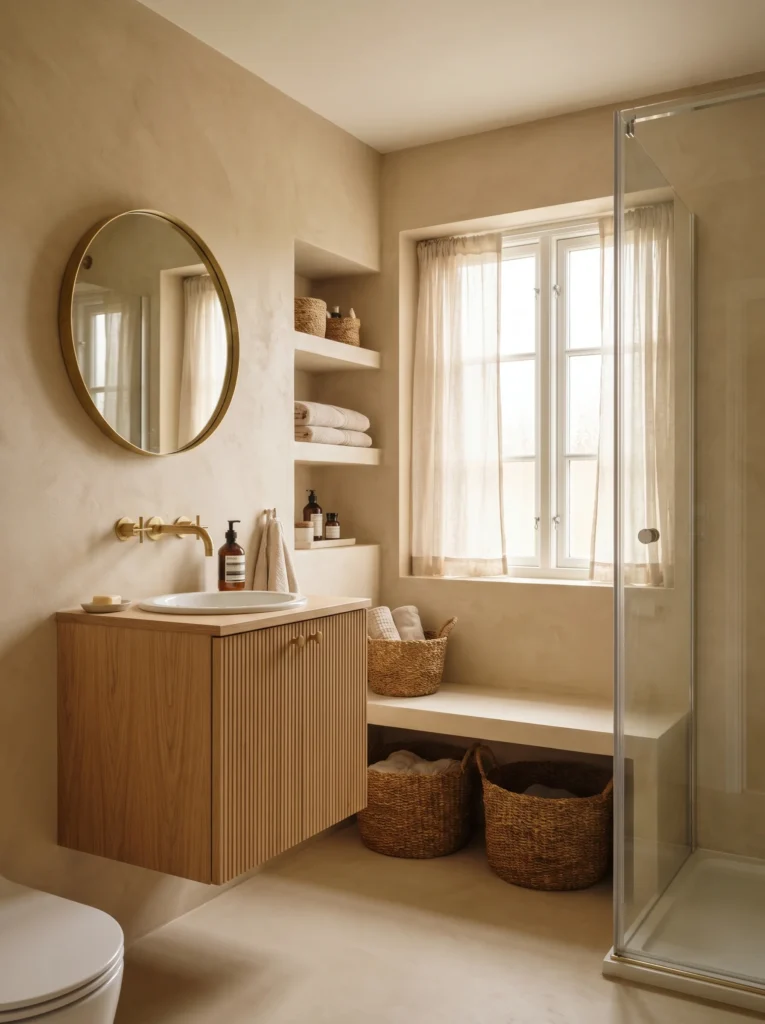
The small primary bathroom that still pulls it off
Proof that you do not need a giant room. This bathroom is small, and it still nails the look completely. The walls are warm plaster. The vanity is a compact fluted oak cabinet floating off the floor. Above it hangs a round brass-framed mirror. Brass taps come out of the wall.
What makes a small space like this work is built-in storage instead of freestanding furniture. See those recessed niches carved into the wall holding folded towels and little woven baskets? That keeps the floor clear and the room feeling bigger than it is. A bench under the window does double duty as a seat and a spot for baskets underneath. Sheer curtains soften the light without blocking it.
A round brass mirror is one of the highest-impact, lowest-cost pieces you can add, and it works in almost any size bathroom. A round brass-framed wall mirror in brushed gold pulls the warm metal up to eye level and instantly reads as part of this aesthetic. In a small room especially, that one circle of warm metal does a lot of heavy lifting.
Mood: cozy and clever. Small, but it never feels cramped.
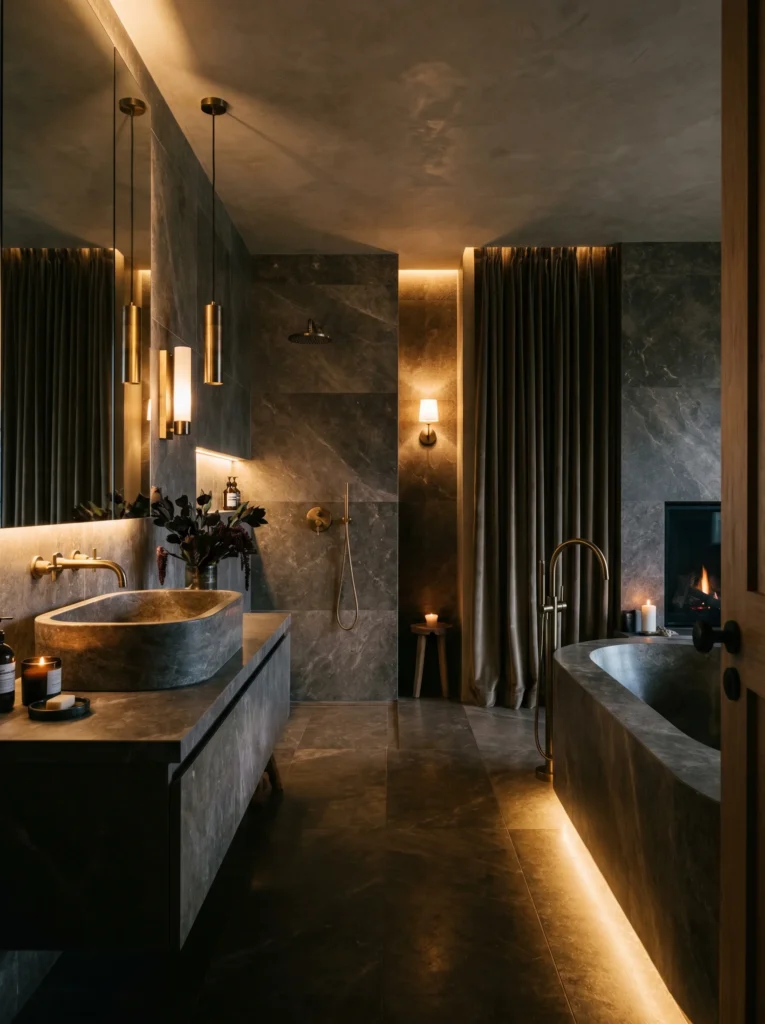
The moody dark stone-and-brass version

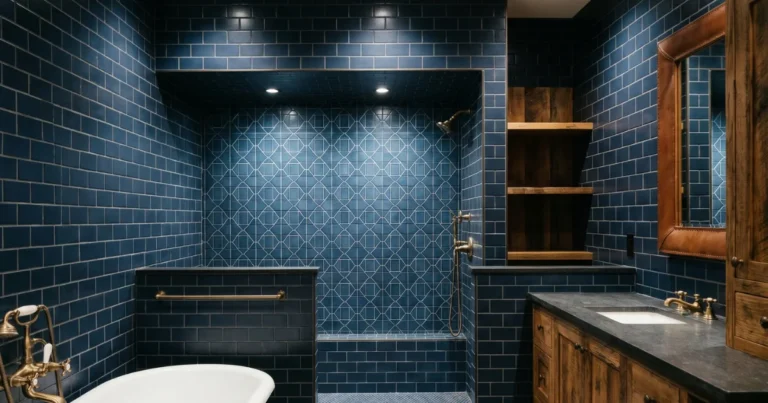
Not everyone wants all beige, and this is the answer for them. Same recipe, flipped dark. The walls and floor are wrapped in charcoal grey stone-look tile with soft veining. The vanity floats, topped with a heavy stone vessel sink. Brass shows up everywhere: pendant lights, taps, the tall tub filler.
The lighting here is a whole mood. Warm pendants hang low over the sink, a wall sconce glows in the corner, candles flicker, and there is a strip of hidden light running under the tub so it looks like it is floating. A small fireplace burns at the far end. It is dramatic and intimate, more like a spa at night than a bright morning bathroom.
The reason it works and does not feel like a cave is the brass. Against all that dark stone, the warm gold metal gives your eye something to land on and keeps the room from going flat. If you love this direction, we go deep on exactly how to balance darkness and warmth in our guide to the dark moody minimal bathroom aesthetic, which is basically this photo taken apart piece by piece.
Mood: dramatic, warm, sultry. A bathroom for the evening.
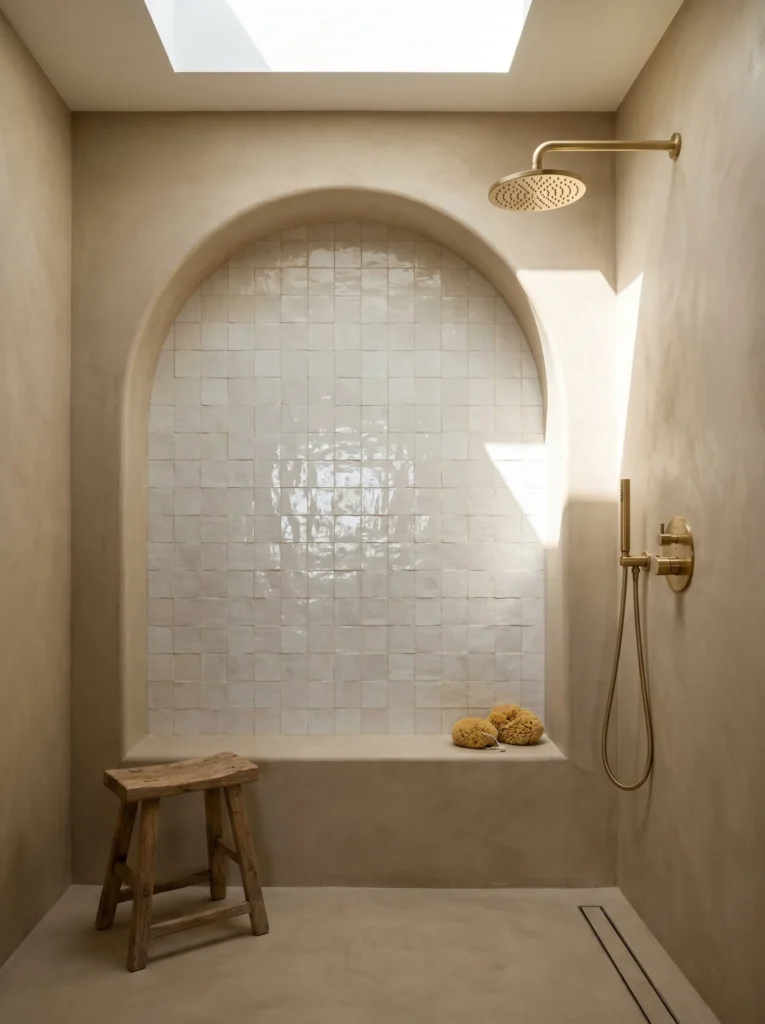
The arched zellige niche under a skylight
This is the small architectural moment that makes people stop scrolling. Inside a warm microcement shower, there is an arched niche set into the wall, and the inside of that arch is lined with handmade white zellige tile. The tiles are slightly uneven and glossy, so they catch the light differently across the whole surface. That little wobble is the point. Perfect machine tile would look dead here.
A skylight pours daylight straight down onto the tile, which is what makes it shimmer. Below the arch runs a built-in ledge holding natural sponges. A rough little wood stool sits on the floor. Brass rainfall head, brass handheld, warm beige everywhere else. The arch shape softens the whole room and gives it that hand-built, old-world feeling.
You cannot really fake zellige, but you do not need much of it. A single arched niche or one small accent panel gives you all the texture and character without tiling a whole room. It is one of the best-value moves in this entire aesthetic: a small amount of the real handmade tile, placed where the light hits it.
Mood: serene, sunlit, hand-touched. Like a quiet riad.
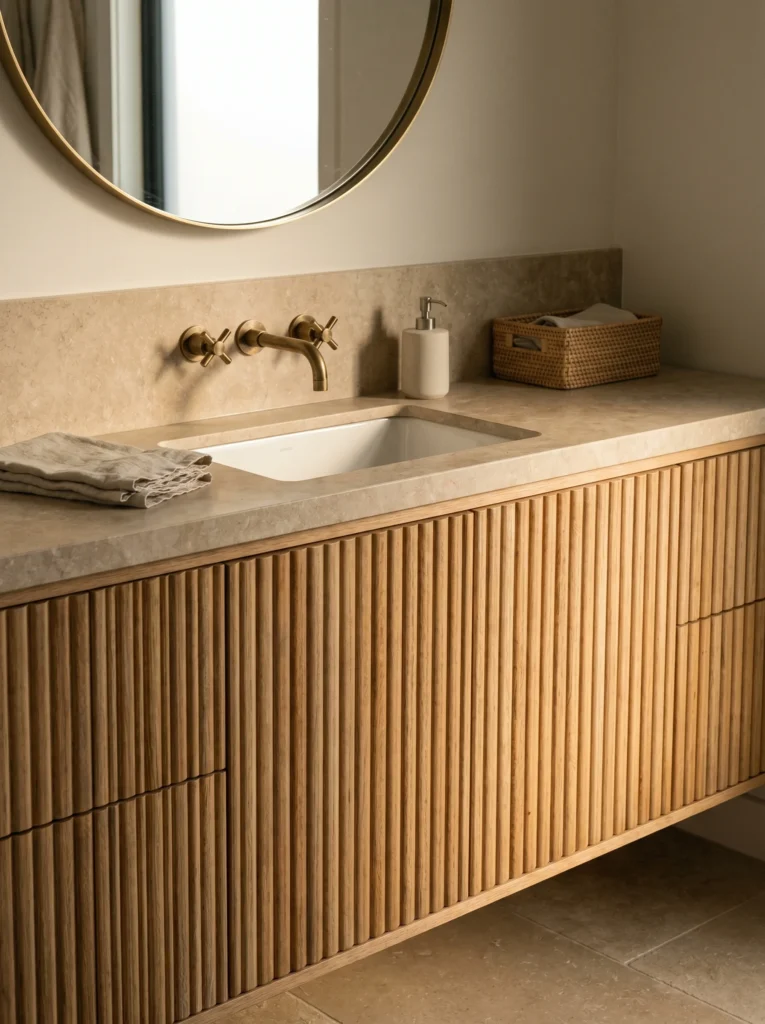
The fluted oak vanity with unlacquered brass
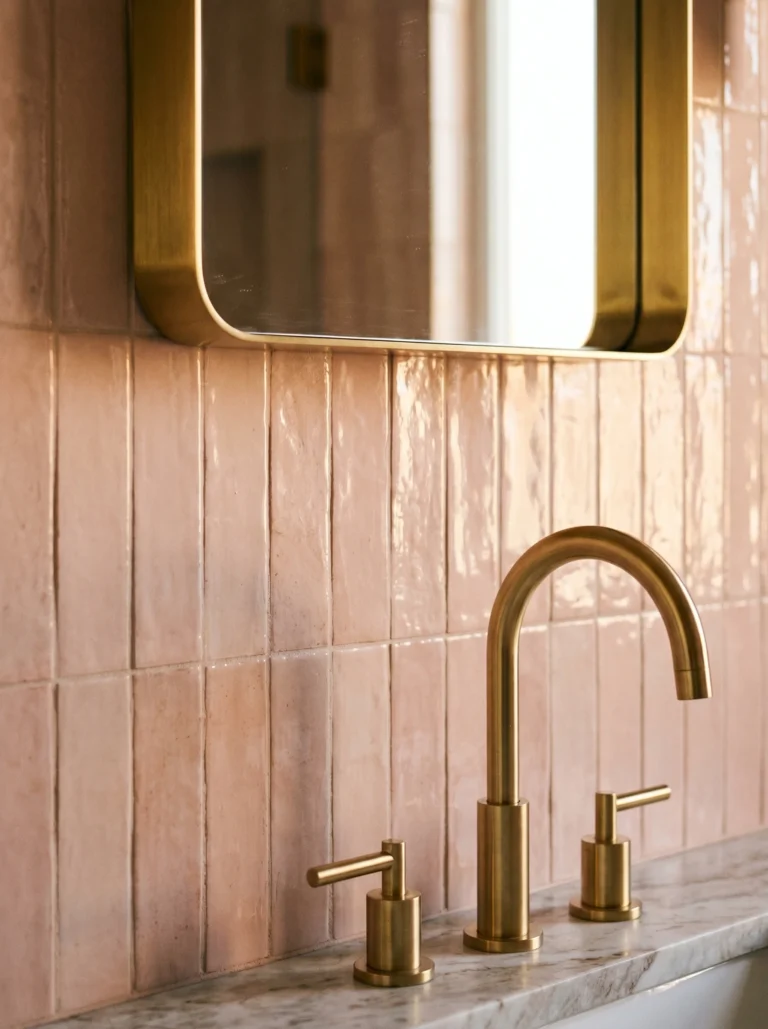
This is the single most-copied detail of the whole trend, shot up close so you can really see it. Vertical fluted oak across the vanity front. A honed stone counter on top. An undermount sink. And those brass cross-handle taps coming straight out of the wall.
The fluting is what does it. Those thin vertical grooves catch light and shadow and give the wood a rhythm that a flat cabinet just does not have. Paired with the warm grain of the oak and the soft stone counter, it hits the exact “expensive but cozy” note this whole aesthetic is going for. A round brass mirror sits above, a linen towel is folded on the counter, a small woven basket holds the clutter. Restraint again.
The brass taps are the affordable hero here. Wall-mounted brushed brass cross-handle taps instantly age up a plain vanity and read as the real, costly thing even when they are not. If you can only change one item on your existing vanity, change the faucet to warm brass and watch how much the whole piece lifts. Fluted MDF panels, by the way, are a cheap way to fake the wood fluting if real oak is out of budget. Most people will never know.
Mood: warm, tactile, refined. The detail everyone wants.
The microcement wet room that started it all
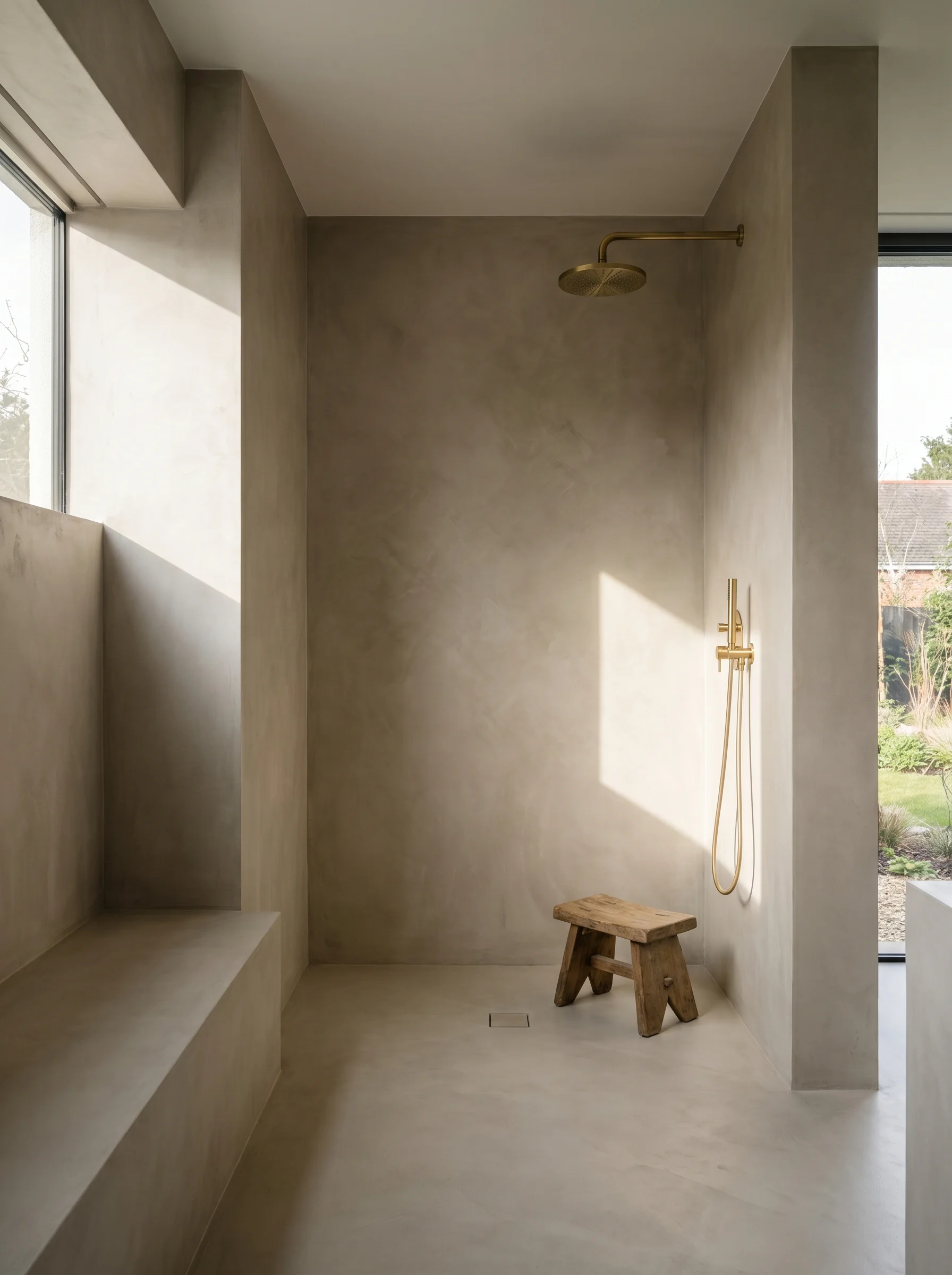
We end on the purest version of the whole look, the one everything else grows out of. A wet room with no tile, no grout lines, no visual noise. Just seamless warm microcement poured over every surface, wall to wall to floor, in one soft taupe tone. It is about as minimal as a bathroom gets, and it is stunning.
With nothing else competing, the texture of the microcement becomes the entire design. Watch how the daylight rakes across the wall from that tall garden window and picks up every subtle ripple in the surface. A low built-in bench grows out of one wall. A small wood stool sits in the corner. The only metal in the room is the brass shower set, warm against the soft neutral walls.
This is subtraction as a design strategy, and it is the heart of why these bathrooms feel like spas. Most rooms feel busy because of too much: too many materials, too much hardware, too much stuff on the counter. Strip it back to one surface, one wood piece, and one warm metal, and the calm takes care of itself. If you build nothing else from this list, build this idea into your head. Less, warmer, softer.
Mood: pure, calm, monastic. The blueprint for all the rest.
How to get the aesthetic primary bathroom look in your own home
Now the practical part. After staring at ten of these, the shared recipe is obvious, and it is short. Five materials carry the entire aesthetic: warm microcement or limewash on the walls, fluted oak wood, unlacquered brass that ages, handmade zellige tile, and a piece of honed stone. Get those tones to agree with each other and you are basically done.
The single rule that separates the expensive-looking versions from the cheap ones is undertone. Everything has to be warm. Warm beige walls, warm gold brass, warm oak, warm stone. The second you drop in something cool, like a bright chrome tap or a grey-blue tile or a stark white quartz counter, the whole room goes flat and a little sad. Hold a warm white next to a cool white sometime and you will see it immediately. So pick your warm neutral first, then make every other choice agree with it.
Lighting matters almost as much as the materials, and it is the thing copycats skip. None of these rooms use a single cold ceiling light. They use warm bulbs, hidden cove strips, and light that grazes across textured walls so you can actually see the plaster and the wood grain. Swap your bulbs to a warm color temperature, add one soft light source low in the room, and aim light along your textured surfaces instead of flooding straight down. That alone changes everything.
Then decide where to spend and where to fake it. Spend on the things you touch and see up close: real brass fixtures, the one piece of real zellige in a niche, a genuine stone counter if you can swing it. Fake the rest without guilt. Microcement-look paint instead of poured microcement. Fluted MDF instead of solid oak. Brass-toned fittings instead of solid unlacquered brass. The eye reads the overall warmth and texture long before it audits whether your wood is real.
Why this bathroom will still look good in five years
The honest worry with anything this popular is that it ages badly. Fair concern. Plenty of trends look dated within two years. I do not think this one will, and the reason is what it is built from.
This look rests on natural materials and restraint, not on a gimmick. Stone, wood, lime, clay, and brass have looked good in homes for literally thousands of years. They are not a 2025 fad color or a shape that will feel tired by 2027. The warm neutral palette is quiet enough that it does not fight you, and the aged brass and limewash actually improve with time instead of wearing out. The curves and arches are soft enough to stay friendly rather than reading as a dated signature.
Could the exact styling shift? Sure. In a few years people might swap the olive tree for something else and style the counter differently. But the bones, warm materials kept simple and lit well, are about as safe a bet as bathroom design offers. Build your aesthetic primary bathroom on real materials and good light, and you can update the small stuff whenever you feel like it without touching the room itself.
Loved these ten? Save this pin so you have the whole recipe in one place when you are ready to start your own primary bathroom. Pin it now, then come back when the renovation bug bites.
Navigation
For more bathroom color palettes and design aesthetics to pull inspiration from, see our guide on brown and beige warm neutrals that actually work.