How to Get Your Bathroom Basin Design Right the First Time (Measure Before You Buy)
Getting a bathroom basin design right starts with measuring your waste pipe position, available width, and tap reach before you shop, not after. Those three numbers eliminate most of the basins you are looking at. Style comes last, once you know what physically fits and what your plumbing already supports. One caveat: if you plan to move the waste, budget for a plumber and the wall repair.
Most people shop the other way around. They save twenty wash basin design photos, fall for a round countertop bowl on a walnut vanity, order it, and only then discover the waste pipe sits in the floor instead of the wall. Returns on sanitaryware are expensive and awkward. Some suppliers will not take a basin back once the box has been opened or a tap hole drilled.
Showrooms and photo galleries skip the boring part on purpose. Nobody pins a tape measure. Almost every bathroom basin design that gets returned or fitted badly traces back to one of four things: the waste position, the width, the tap hole count, or the bowl depth. Each of those is checkable in about ten minutes with a tape measure and a torch.
Below, you will work through those checks in the order that actually matters, starting with the pipe you cannot move cheaply and ending with the order-form details that cause most returns. Bring a tape measure. Numbers are given in both millimetres and inches.
This post contains affiliate links. If you buy through one, I may earn a small commission at no extra cost to you.
Start with your waste pipe, not your basin
Look under your existing basin before you look at a single new one. Whether the waste pipe disappears into the wall behind it or drops through the floor decides which designs are even possible for you without new plumbing.
Pipes that exit through the wall give you the most freedom. Wall-hung basins, pedestal basins, and most vanity units all work with that arrangement, because the trap can hide behind the bowl or inside the cabinet. Floor waste is more limiting. It suits pedestals and full-depth vanity units, which have somewhere to conceal the vertical pipe run.
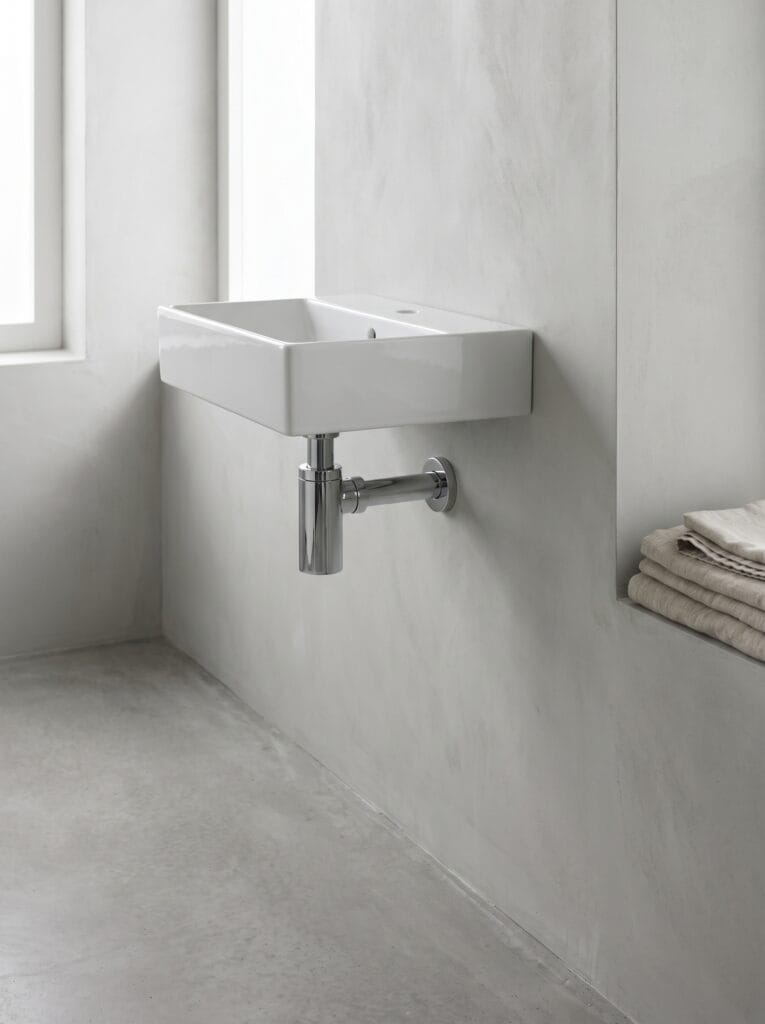
Traps come in two shapes worth knowing. A bottle trap is compact and often chrome, designed to be seen under a wall-hung basin. P-traps are bulkier and meant to stay hidden inside a cabinet. Swapping one for the other is cheap. Moving the waste itself is not, since it usually means opening a wall or lifting floor tiles.
Take a photo of what sits under there right now. Suppliers can tell you in seconds whether a basin will connect to it.
The four measurements that decide which basins fit
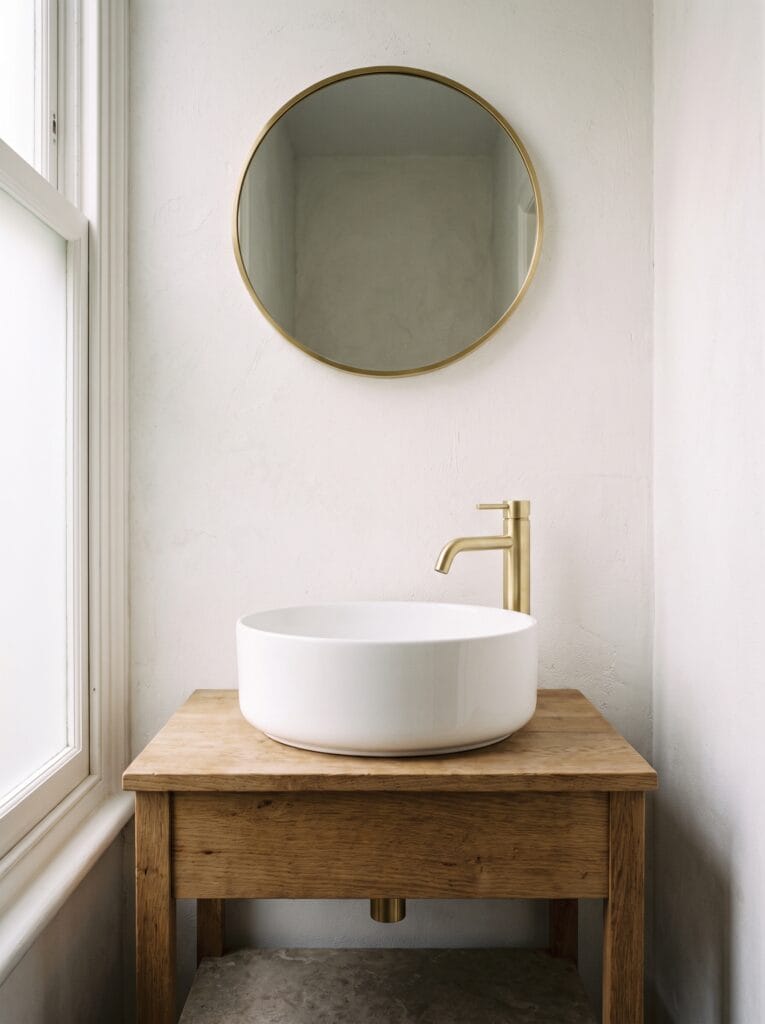
Four numbers decide every bathroom basin design, and you can collect them in ten minutes.
Width comes first. Measure the wall space the basin will sit in, then subtract clearance on both sides so you can actually clean around it. Cloakroom and small-bathroom basins typically start around 350mm (14in) wide, standard basins run roughly 500 to 650mm (20 to 26in), and double setups need 1200mm (47in) or more before two people stop knocking elbows.
Projection matters just as much and gets ignored constantly. That is how far the basin sticks out from the wall into the room. Compact basins project around 250 to 300mm (10 to 12in). Full-size ones reach 400 to 550mm (16 to 22in). Pace out your floor space, then stand where you would stand and lean forward as if you were washing your face.
Rim height is the third number. Around 800 to 850mm (31 to 33in) suits most adults, and a wall-hung basin lets you set it to whoever uses the room most. Taller households can go higher. Homes with young children usually want it lower, or want a step stool that tucks away.
Clearance in front is the one people forget until the door will not open. The National Kitchen and Bath Association recommends at least 760mm (30in) of clear floor space in front of a basin, while building codes often permit as little as 533mm (21in). Between those two numbers sits the difference between comfortable and merely legal.
Mark all four onto the floor and wall with painter’s tape before you buy. Seeing the footprint at full size catches problems a drawing never will.
Basin types compared: what each one costs you in space or storage

Every bathroom basin design trades one thing for another. Space, storage, plumbing work, and cleaning time are the four currencies, and no design wins all four.
Pedestal basins
Cheapest to buy and to fit, and the column hides pipework without needing a cabinet. Storage is zero. Cleaning around the base is fiddly. Best for guest cloakrooms and period bathrooms where the plumbing already runs central and low.
Wall-hung basins
Clear floor underneath makes a small room read larger and turns mopping into a ten-second job. You get no storage, and the wall has to be strong enough or braced behind the plasterboard. Right for small bathrooms and wet rooms that already have a wall waste.
Countertop (vessel) basins
Maximum design freedom, since the bowl sits on any surface you like and the vanity below stays fully usable. Height at the rim climbs by the full depth of the bowl, so the counter underneath has to sit lower than standard. Splashing rises too. Suits anyone who wants a statement piece and picks the tap to match it.
Semi-recessed basins
Part of the bowl overhangs the front of the vanity, so a cabinet as shallow as 300mm (12in) can still carry a full-size basin. Drawers survive in a narrow room. Awkward to seal well, and the range is smaller. Made for rooms where the walking space is tight but you refuse to give up drawers.
Inset and integrated vanity basins
Holds more than any other type, and the top is the easiest to wipe, especially integrated versions with no rim seam for mould to grow in. Footprint is the largest of any option here. Worth it in family bathrooms and anywhere the clutter genuinely has to go somewhere.
Deciding between them comes down to one question: does this room need storage more than it needs floor space? Small bathrooms with storage elsewhere favour wall-hung. Rooms where the basin wall is the only storage favour a vanity, and it pays to read how the basin sits inside the whole plan in our guide to master bathroom layout ideas before committing to either.
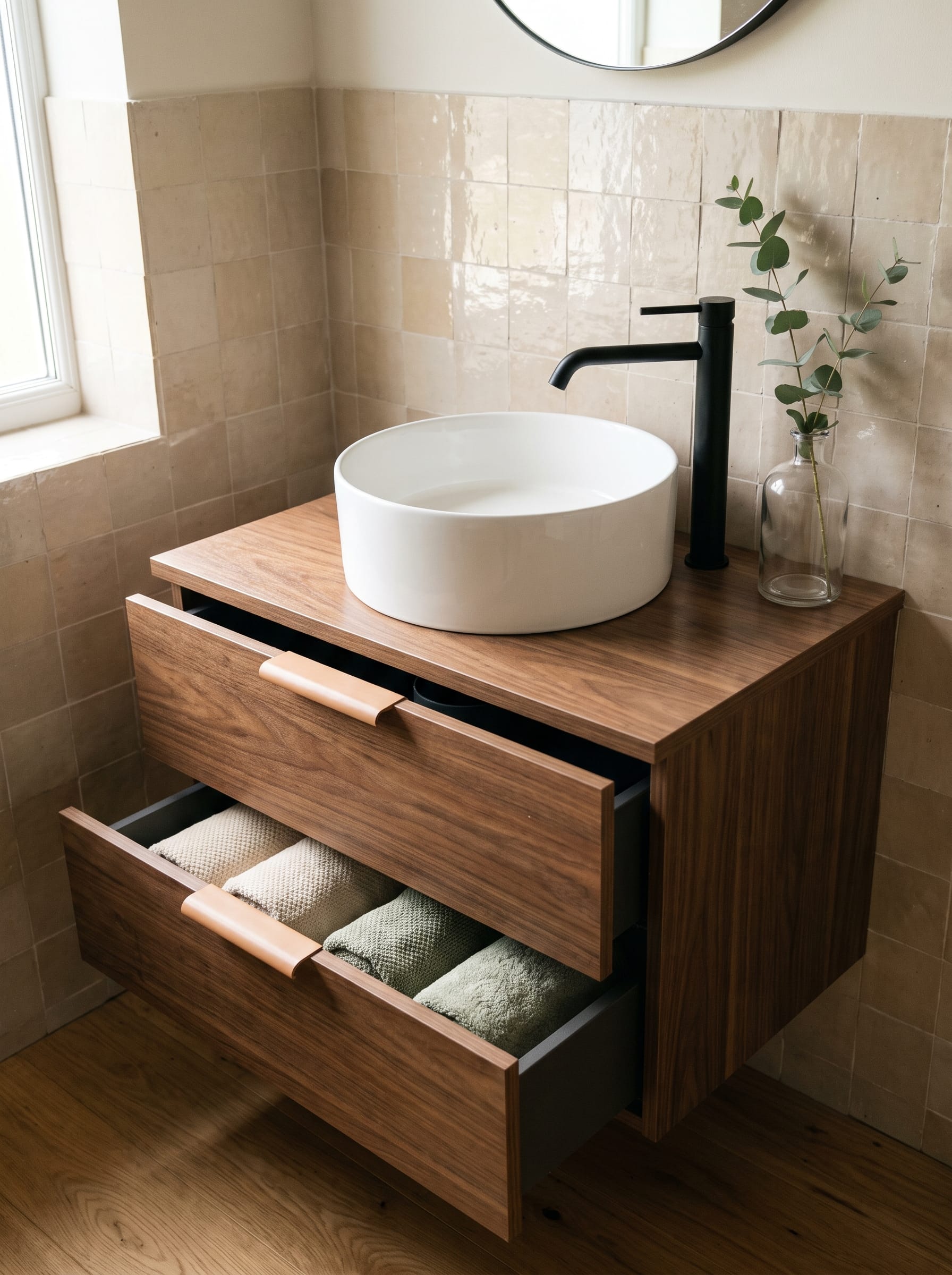
Round vessel basins like this one sit on any flat surface and leave the cabinet below fully usable, which is the main reason people take the countertop route.
Shop it on Amazon : KES Round Vessel Sink, 16 Inch White Ceramic Above Counter Basin
Tap holes are a spec, not a style choice
Count the holes first. Do it before you fall in love with a tap. Basins arrive drilled with zero, one, or three holes, and that drilling decides which taps will ever fit.
Single-hole basins take a monobloc mixer, the one-spout tap most people picture. Three holes take a widespread set with separate hot and cold handles, which suits traditional and period looks. Zero holes means the tap has to come from the wall or from the countertop beside the basin, and wall-mounted taps need pipework buried in the wall before any tiling goes on.
Buyers get caught out by that last one constantly. Ordering a hole-free basin because it looked cleaner in the photo, then finding the wall behind it has no plumbing and is already tiled, turns a simple swap into a proper job.
Certain ceramic basins ship with a knock-out section you can tap through yourself. Others do not. Descriptions rarely say so clearly. Verify it in the listing before you assume you have options, and never drill a finished ceramic basin freehand.
Why basin depth and tap reach decide how wet your floor gets
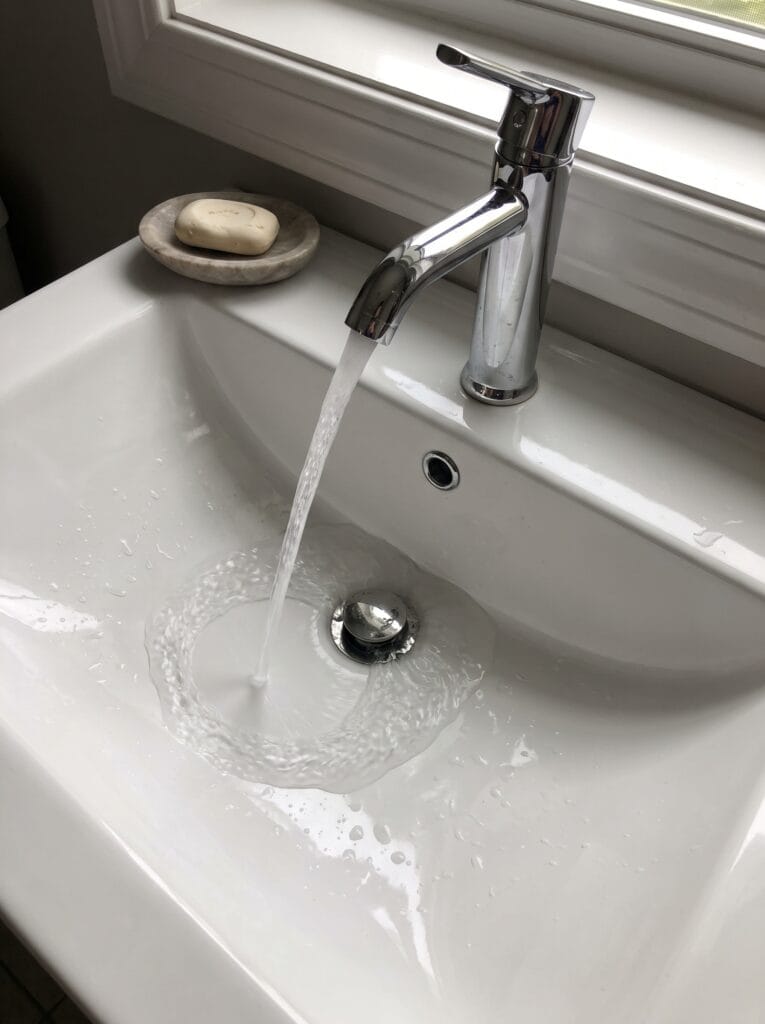
Water lands where the spout points, and a shallow bowl under a tall tap sends it straight back at you. Countertop basins produce this regret more than any other type, and it never shows up in the product photos.
Two measurements control it. Spout reach is how far the outlet extends over the bowl, and spout height is how far above the bowl base the water starts. Streams landing near the centre of the bowl stay put. Hit close to the front rim instead and the water runs down the outside onto your floor.
Deeper bowls forgive more. Shallow, wide, flat basins look beautiful and splash badly, especially with a high-arc tap and mains pressure behind it, which is exactly the combination most showroom displays put together. Pair a shallow bowl with a lower spout and a gentler flow rate rather than reaching for the tallest tap in the range.
Run this check before ordering. Hold a pencil where the spout will sit, drop a straight line down to the bowl, and see where it lands. Anything forward of the centre point is a wet floor waiting to happen.
Find the spout reach measurement in the listing before you buy, since most tap descriptions skip it entirely. Its listed 6 inch reach and 11.2 inch height give you enough detail to run the pencil test on paper first.
Shop it on Amazon : Single Hole Vessel Sink Faucet with Long Reach Spout, Matte Black
Matching basin material to how hard your water is
Hard water decides which bathroom basin design still looks new in a year. Limescale shows fastest on dark, glossy, and transparent surfaces, and slowest on white glazed ceramic.
Vitreous china and fireclay are the default for good reason. Their glaze is hard, non-porous, and shrugs off most bathroom cleaners. Fireclay is the tougher of the two and costs more.
Solid surface and mineral composite give you matte finishes and warmer colours. Stains take hold more readily than on glaze, but light scratches and marks can often be sanded out, which ceramic cannot do at all once its glaze has chipped. Read the maker’s cleaning guidance, because abrasive creams that are fine on ceramic will dull a composite.
Natural stone is porous. Marble and travertine need sealing on a schedule and will etch dull wherever toothpaste, acidic cleaners, or citrus sit on them. Glass looks incredible for about a day. Spots show up within hours.
Choose the material for the water coming out of your tap, not for the photo. White glazed basins in a hard-water area still look new after a year of quick wipes. Black composite or clear glass in the same house needs drying after every single use to hold that same look.
Where your storage actually goes once the basin is in
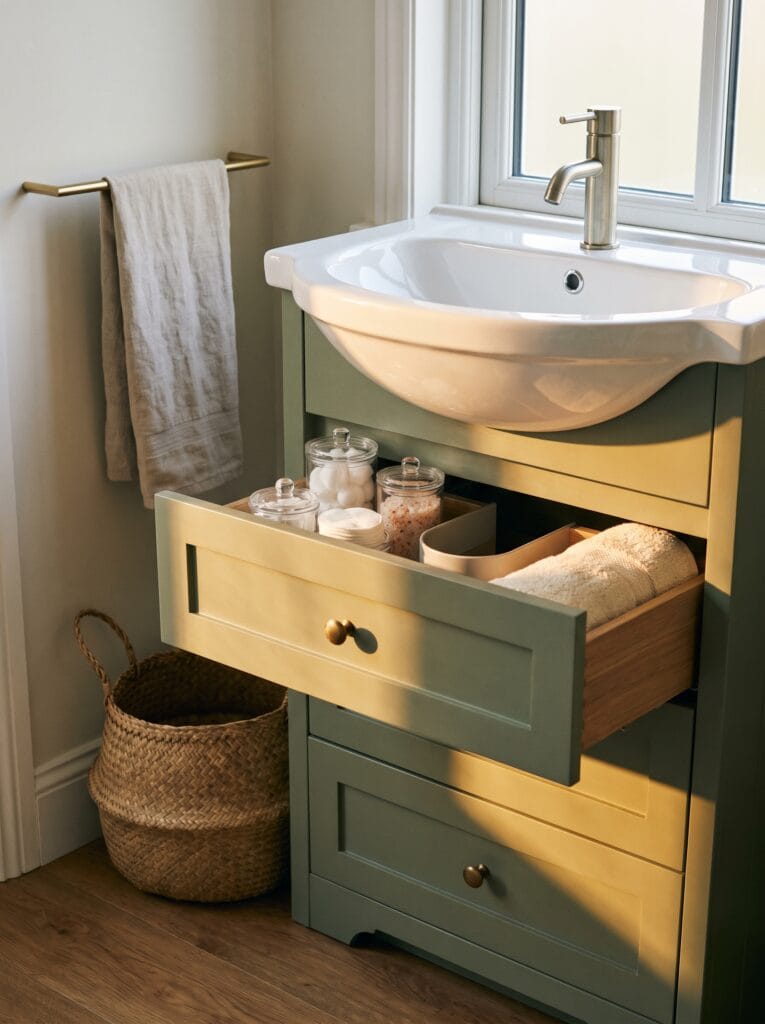
Gaining floor space under a slim basin costs you something elsewhere. Few people price that trade before ordering a wall-hung or pedestal basin.
List what currently lives under your basin. Sprays, spare toilet rolls, backup shampoo, the hairdryer, and the bin all need a home if the cabinet disappears from under there. Losing the cabinet without a plan for that lot just moves clutter onto the floor and the windowsill. Nothing vanishes on its own.
Good replacements come in three forms. Tall narrow cabinets take up around 300mm (12in) of wall and hold more than most vanities. Shelving above the toilet uses dead wall nobody misses. Mirrored cabinets above the basin handle daily items and cost no floor space at all.
Semi-recessed basins deserve another mention here, because they are the only design that gives you a full-size bowl and a working drawer in a room too narrow for a standard vanity.
Slim towers like this one measure under 12 inches wide and hold what a vanity would have, which is exactly the swap a wall-hung basin forces you to make.
Shop it on Amazon : HOOBRO Slim Tall Bathroom Storage Cabinet, 11.8 x 7.9 x 63.8 Inches
The order checks that prevent a return
Check the overflow before anything else. Overflow holes require a slotted waste; basins without one require an unslotted waste, and the wrong pairing either leaks or drains slowly.
Confirm the tap hole count against the tap you have chosen, and confirm that tap’s reach against the bowl you have chosen. Both, not one.
Ask whether a fixing kit and a paper template come in the box. Brackets rated for the weight matter most on wall-hung basins, and a template makes marking the wall far easier than measuring twice.
Inspect the box on delivery, before the driver leaves. Ceramic chips at the rim and hairline cracks in the glaze are far simpler to claim on the day than a week later. Photograph any damage immediately.
Keep the packaging until the basin is fitted and running. Without it, most suppliers refuse a return.
Go and look under your basin tonight. Whatever you find there, wall waste or floor waste, narrows the list before you open a single shopping tab, and every other decision on this page gets easier from that point. Looks still matter. Your bathroom basin design just works out better when style is the last call you make, not the first.
Save this to your Pinterest board so the four measurements and the order checklist are easy to find again when you are ready to shop.