16 Genius Bathroom Ceiling Ideas for a Taller, Calmer Room
Paint it, clad it, or light it. Those are the three moves behind all good bathroom ceiling ideas, and the cheapest one is paint in a satin or eggshell finish, which also survives steam better than the flat white almost every builder uses. Cladding hides a cracked surface. Lighting changes the shape of the room. The caveat: anything directly above a shower needs a moisture rating, not just a nice finish.
The ceiling is the largest unbroken surface in a bathroom and the only one nothing ever covers. No towel rail, no vanity, no mirror competes with it, and everyone lying in the bath looks straight at it.
Most bathrooms waste it on flat white paint that goes patchy within two winters. The bathroom ceiling ideas below use that surface instead, and they’re ordered from a weekend of paint through to structural work.
You’ll find options here for flat ceilings, sloped attic rooms, windowless boxes, and full renovations, at every budget from a stencil to a skylight.
This post contains affiliate links. If you buy through them, I may earn a small commission at no extra cost to you.
Light the ceiling instead of lighting from it
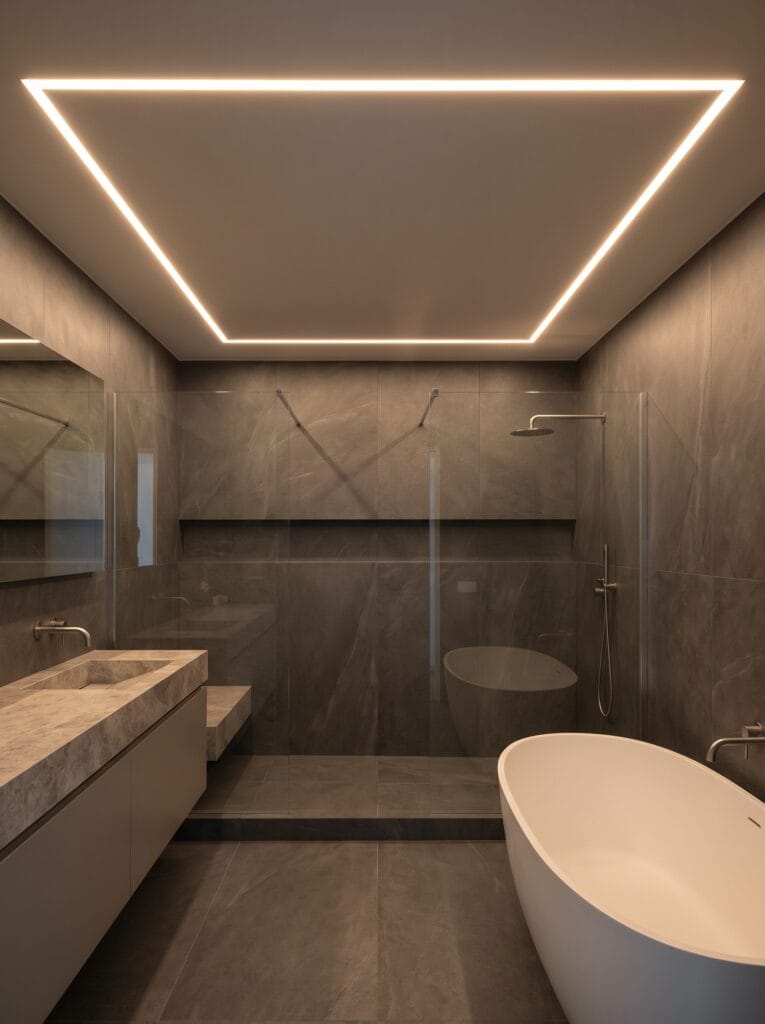
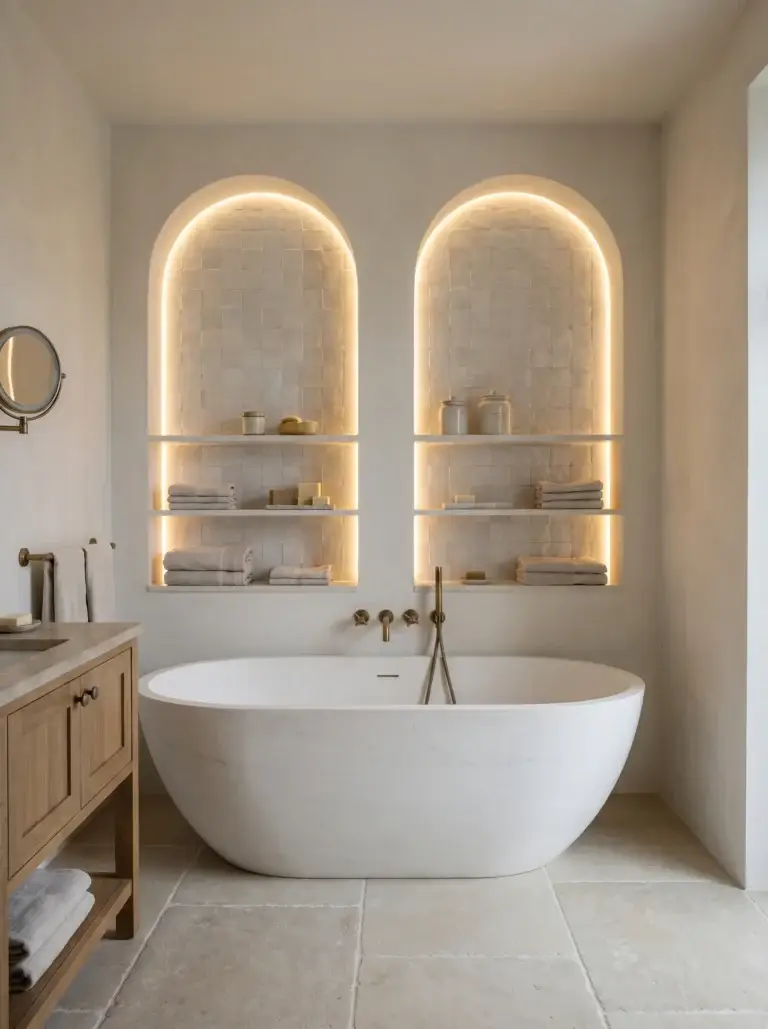
Indirect light is the fastest way to make a low ceiling feel higher. A strip hidden in a perimeter recess throws light across the surface rather than down at your head, and the plane appears to lift away from the walls.
The trick works because the eye reads a lit surface as further away than a dark one. Nothing else in the room has to change for that illusion to hold.
Keep the strip out of sight. A recess of at least 2 inches, or a plaster shadow gap, is what separates a soft glow from a row of visible dots reflected in the mirror. Choose a warm temperature and put it on a dimmer. Cove light at 4000K reads like an office corridor, while 2700K reads like a hotel, and the hardware costs the same.
Send the pattern overhead, not onto the walls
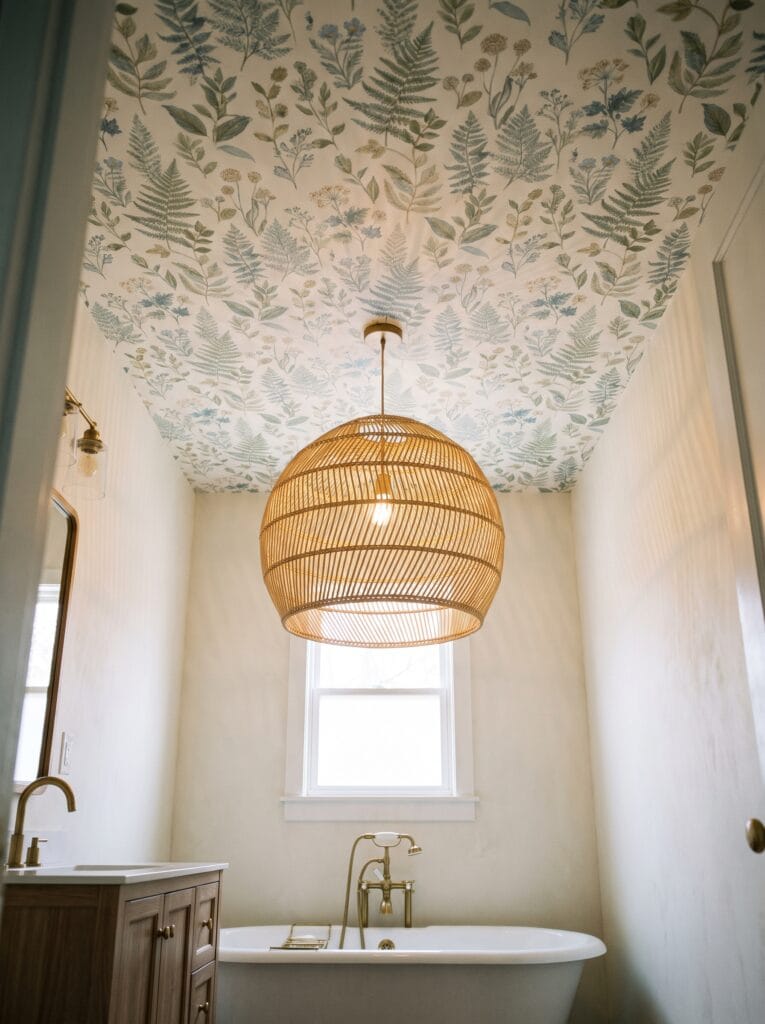
Bold pattern on bathroom walls gets overwhelming because you stand close to it. Overhead, the same pattern sits eight feet away and only appears when you choose to look up, which makes a busy print far easier to live with.
Bathroom ceiling design gets easier overhead for another reason: it is the one surface no fixture interrupts. A wallpaper that would be cut to pieces around a mirror, a cabinet, and a towel rail runs uninterrupted across the top of the room.
Leave the walls plain when you do this. Pattern above and pattern beside each other cancel out, and the whole point is the surprise of looking up. Use a paste-the-wall or peel-and-stick vinyl rather than traditional paper, and prime a glossy old ceiling first so the adhesive has something to grip.
Shop it on Amazon: JiffDiff Botanical Fern Peel and Stick Wallpaper
Clad over a bad ceiling rather than repairing it
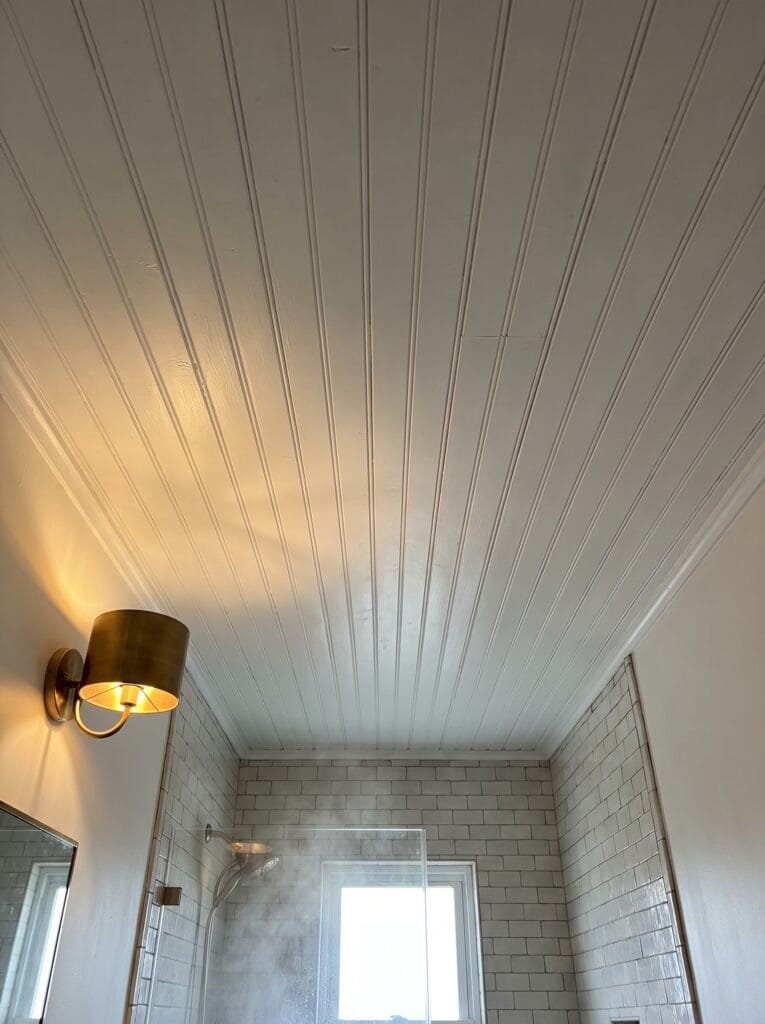
Cracked plaster, old artex, and a patchwork of previous repairs cost more to fix properly than to cover. Cladding solves the appearance and the underlying movement at the same time.
Narrow boards handle a bathroom better than a flat sheet does. Every joint between them absorbs the seasonal movement that opens hairline cracks in plaster, so a planked surface stays looking sound for years longer.
Run the boards along the room’s longest dimension. Lines drawn the long way stretch a narrow bathroom visually, and running them the short way does the reverse. Prime every face and edge before fitting, including the tongues you’ll never see again. Moisture enters cladding through unsealed end grain, not through the painted face.
Go dark above light walls

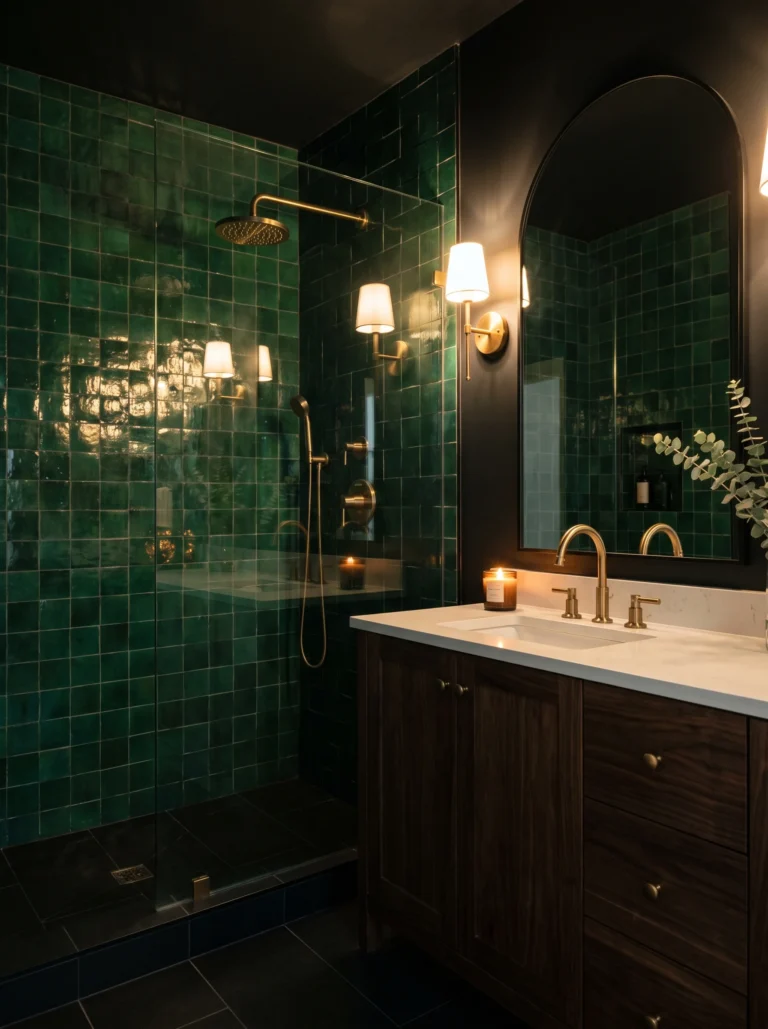
A painted bathroom ceiling almost always ends up the lightest colour in the room. Reversing that gives you a far more finished result, because a dark plane on top reads as a deliberate decision where white reads as a default.
A dark ceiling also fixes a proportion problem. Rooms with high ceilings and a small footprint feel like shafts, and dropping the value overhead brings the top of the room down to a comfortable height.
Contrast is what makes it work. Dark above white tile or pale plaster is crisp, while dark above mid-tone walls just looks muddy. Pick one simple light fitting and let it stand out. A white opal globe against a near-black surface does more than a cluster of spots ever will.
Bring the ceiling colour down to a rail

Stopping colour exactly at the wall-ceiling junction costs you height. That hard line tells the eye precisely where the room ends, and in a narrow bathroom it reads as a lid pressing down.
Carrying the ceiling colour down the upper wall to a picture rail removes the line. The band of colour above the rail merges with the ceiling into one shape, and the room reads taller than a tape measure says it is. Set the rail higher than you think, around one fifth of the wall height from the top. Too low and the effect flips, making the room feel squat.
Choosing a bathroom ceiling paint color for this treatment is easier than it looks, because muted, slightly greyed shades suit it best. Sage, clay, and dusty blues hold their character under artificial light where clean bright shades turn acidic after dark.
Position downlights around the mirror, not the room
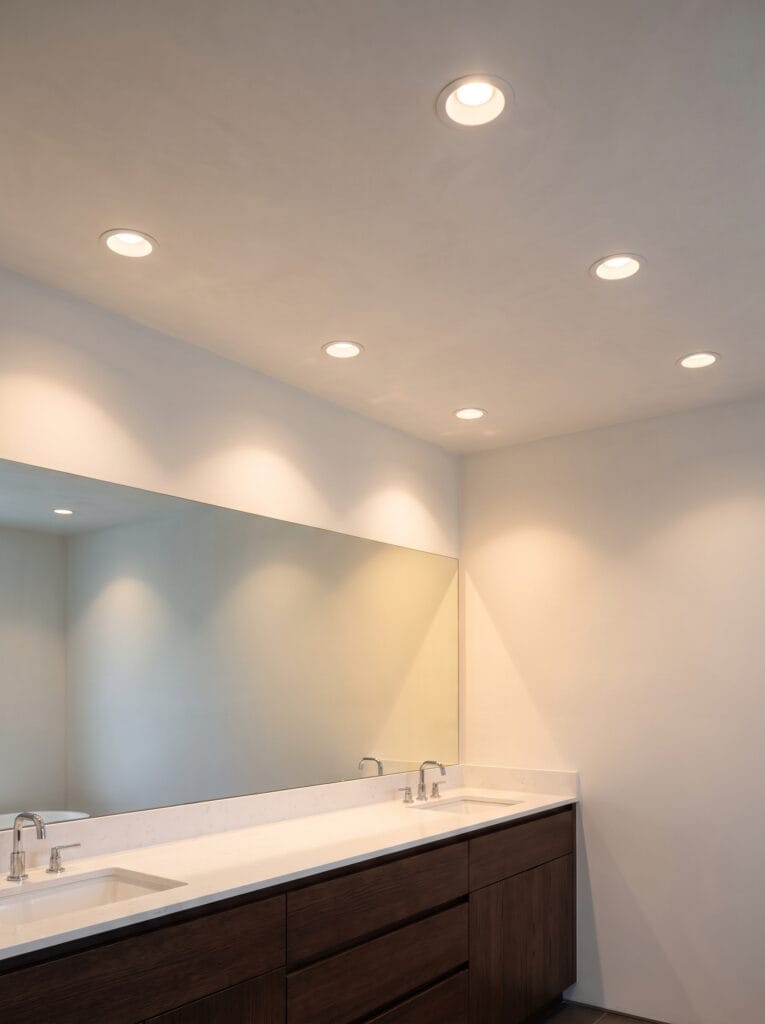
Anyone who has shaved or done makeup under a single central light knows the problem. A fixture directly overhead throws every shadow downward, straight into the eye sockets and under the chin, which is the worst possible light for a face.
Plan the ceiling as a lighting layout rather than a surface. Put the downlights slightly in front of where you stand at the basin, not behind you, so light reaches the face rather than the back of your head.
Spacing matters more than quantity. Fittings at roughly two thirds of the ceiling height apart give even coverage without the runway effect of a dozen spots in a row. Add a second circuit if the budget allows. One bright layer for cleaning and one low layer for baths turns a functional bathroom into a room you want to be in.
Shop it on Amazon: Jadssox IP65 Waterproof LED Downlights, 4 Pack
Match the trim of your spots to a dark ceiling
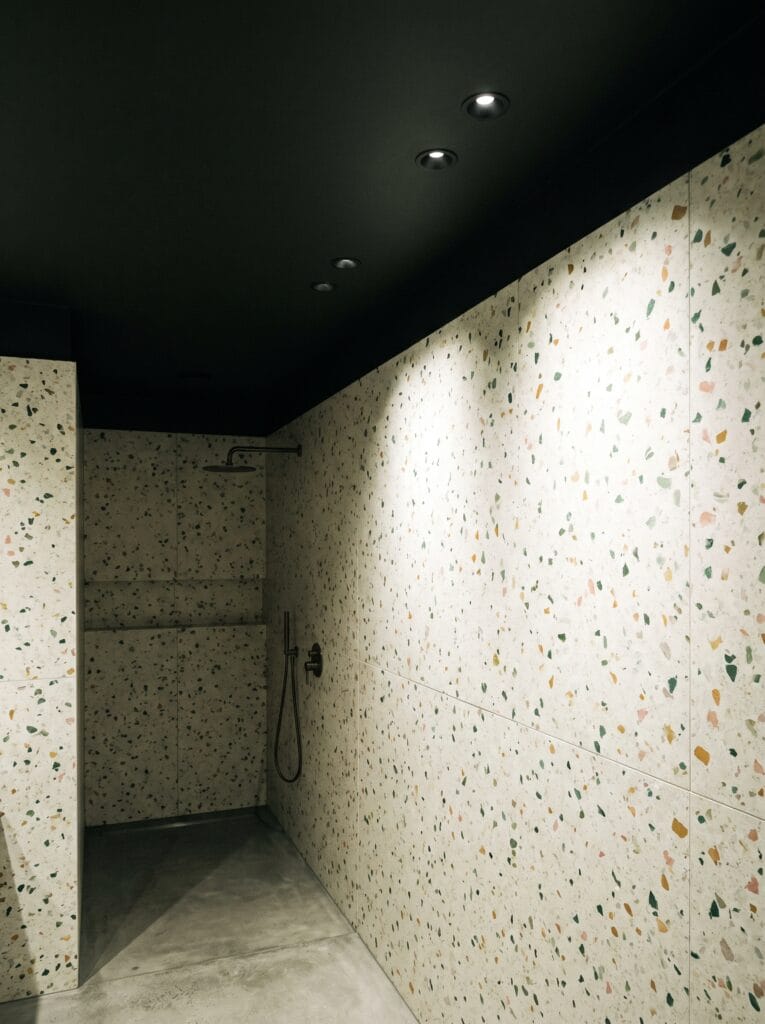
Order black or bronze trims whenever the ceiling is dark. White trims on a dark surface read as a row of holes punched in the plane, and they pull the eye straight to the hardware instead of the room.
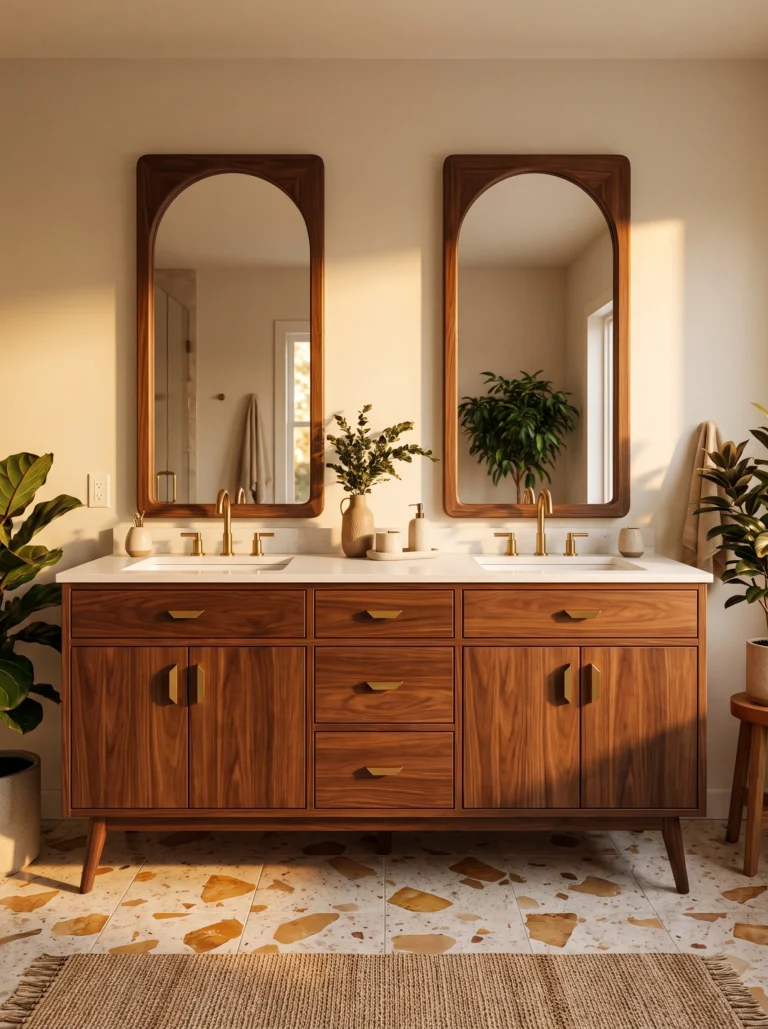
A dark ceiling has a second use worth knowing. Busy walls, whether terrazzo, heavy veining, or strong pattern, become much easier to live with when the surface above them is quiet and dark, because the eye gets somewhere to rest.
Recessed fittings suit this better than surface-mounted ones. Anything that projects downward casts its own shadow onto a dark surface and breaks the illusion of a single continuous plane.
Put the daylight in the ceiling when the walls have none

Internal bathrooms and loft conversions rarely have room for a window in a wall, and a bathroom with no daylight always feels like a cupboard no matter how well it’s finished.
Overhead glazing solves what a wall window can’t. Light from above falls evenly across the whole room rather than streaming in from one side, and a rooflight gives roughly twice the light of a wall window of the same size.
Position it over the wet zone if you can. Daylight above a shower makes tile look alive rather than flat, and an opening rooflight doubles as the most effective steam extraction you can fit. Specify laminated glass and a blind from the start. Retrofitting either one means scaffolding twice.
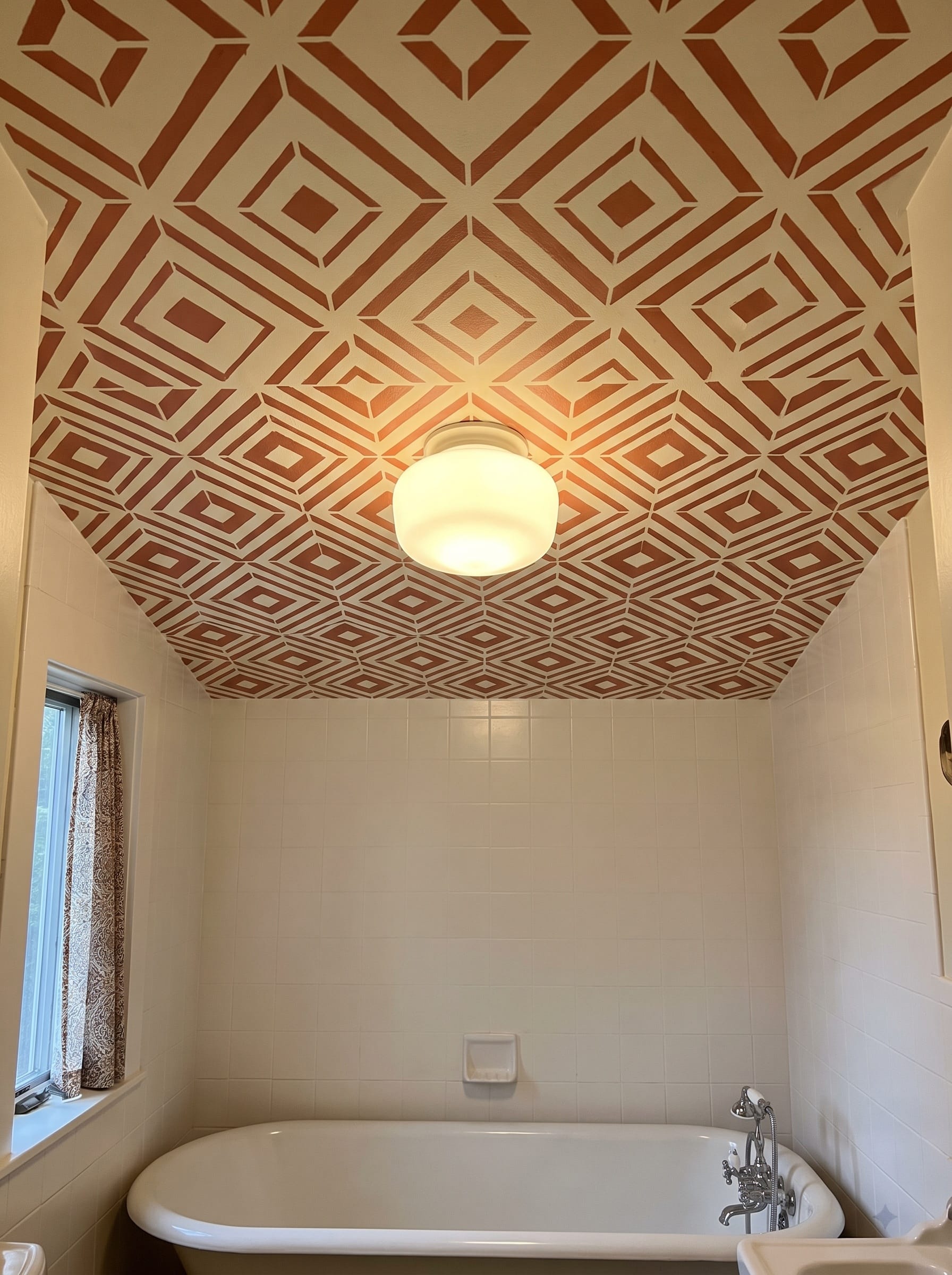
Stencil a pattern when wallpaper won’t work
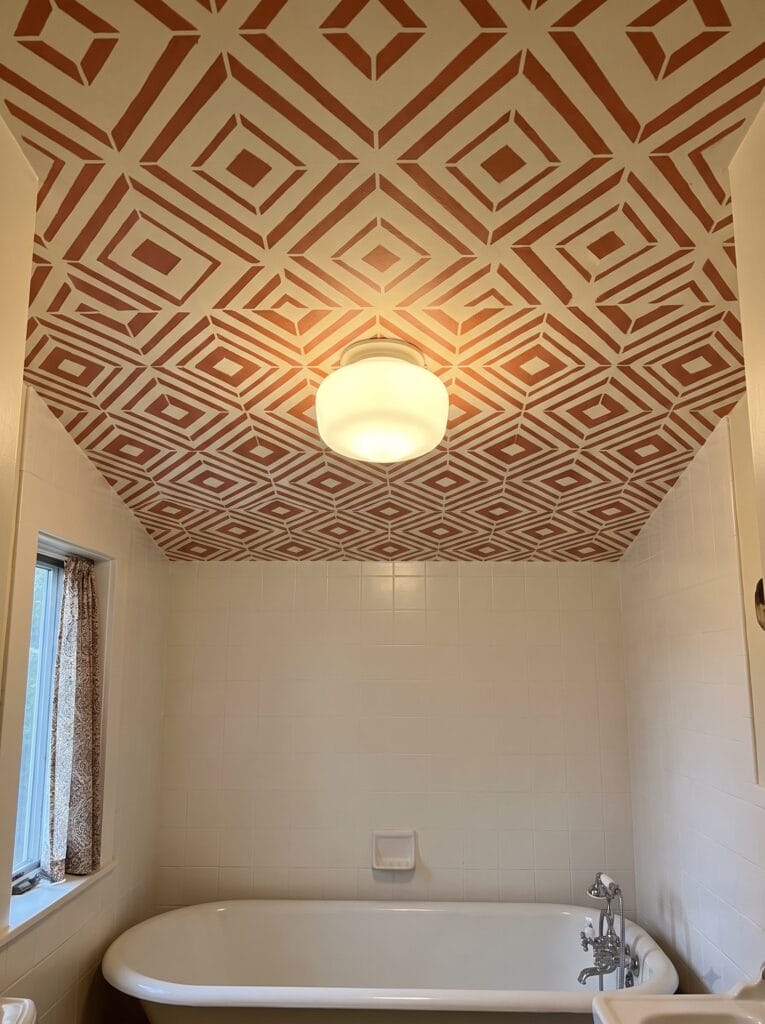
A stencil costs about twenty dollars and a weekend, against a couple of hundred for paper and paste. For a surface most people never touch, that trade lands firmly on the side of paint.
Paint also goes where paper struggles. Textured ceilings, awkward slopes, and the tight alcove above a tub all take a stencil happily and would defeat a roll of wallpaper. Start in the centre and work outward so the partial repeats land in the corners. Beginning at one edge leaves an obvious cut-off row in the most visible part of the ceiling.
Keep the palette to two colours. Multi-colour stencils on a ceiling read as busy from below, where you see the whole surface at once rather than a section at a time.
Expose the beams and keep the plaster pale
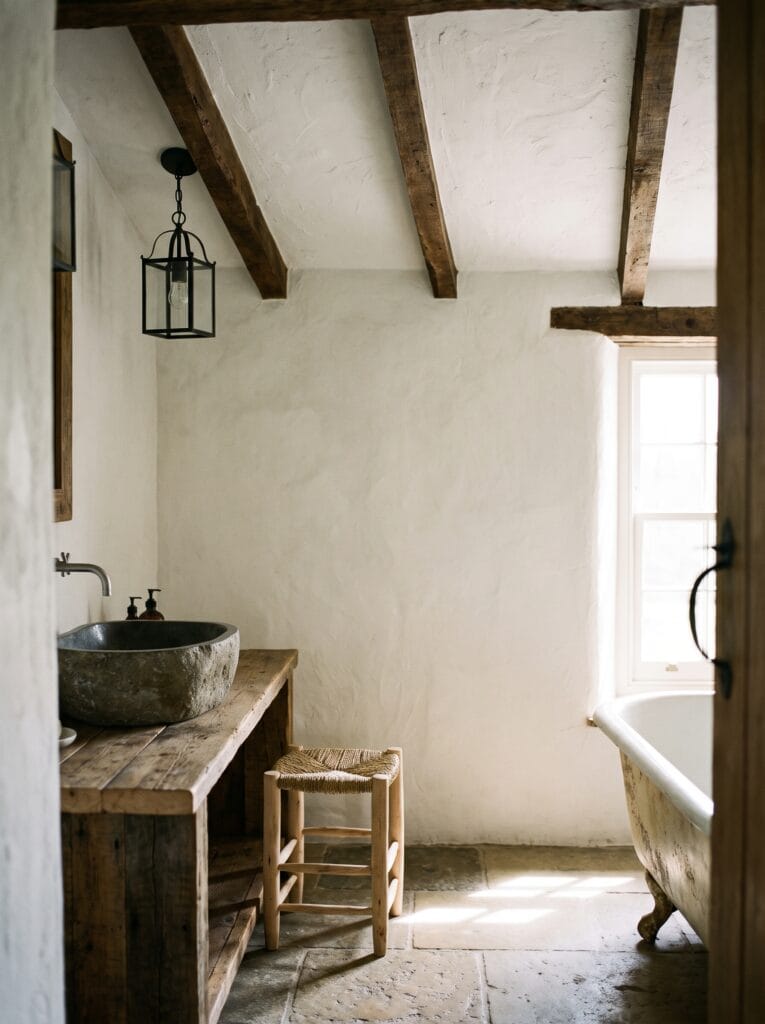
Older houses often hide real structure above a flat modern ceiling. Opening that up gives a bathroom genuine character that no applied finish can imitate.
Contrast is what keeps beams from feeling heavy. Pale plaster between dark timbers lets each beam read as a line, while darkening both the timber and the surface between turns the whole ceiling into a low, oppressive mass.
Hang one fitting between the beams rather than on them. A lantern or pendant on a chain drops into the void and lights the plaster, which is what makes the structure visible at night. Treat old timber before you celebrate it. Bathrooms accelerate woodworm and rot, and a beam that’s been dry for a century behaves differently once it lives in steam.
Use a pale tint with a crisp white edge
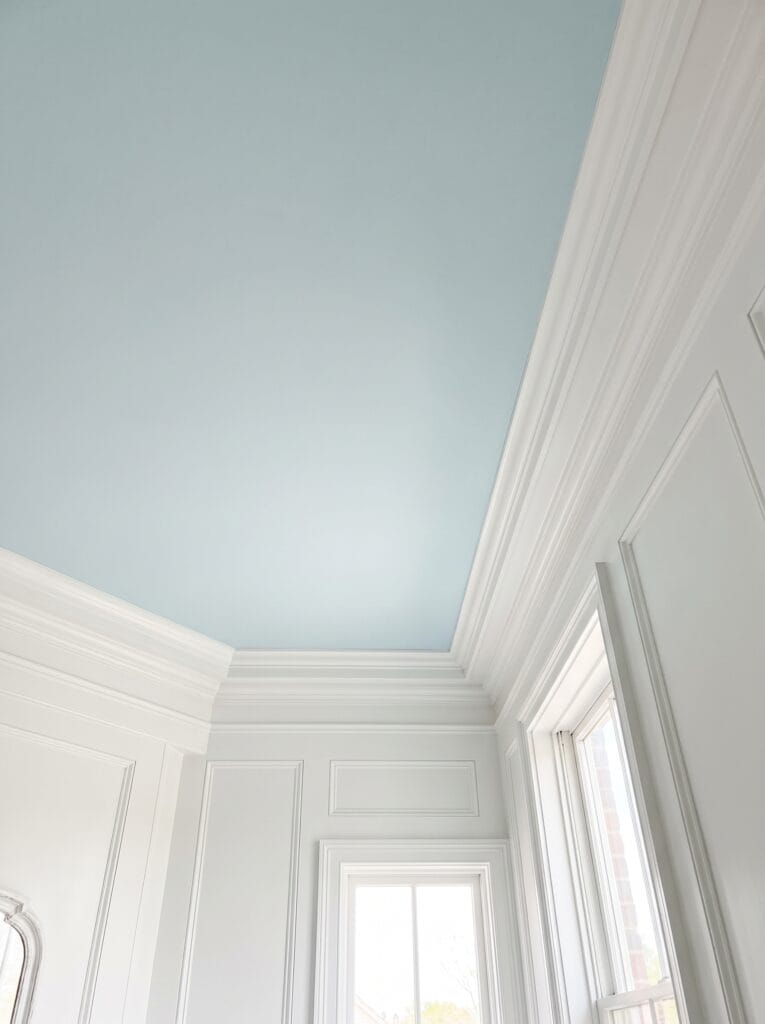
Soft colour overhead reads as sky, and that association does real work in a room with no view. A barely-there blue, green, or pink lifts the top of a room without anybody consciously registering a coloured ceiling.
The edge is what makes it look intentional. White crown moulding between a tinted ceiling and white walls gives the colour a clean boundary, and without that frame a pale tint just looks like the white went wrong.
Go paler than your instinct says. Colour on a ceiling reads roughly twice as strong as the same shade on a wall, because it receives no direct light and the whole plane is visible at once. Keep the walls white when the ceiling is tinted. Two soft colours in one small room fight, and the ceiling loses.
Specify the wet zone separately from the room
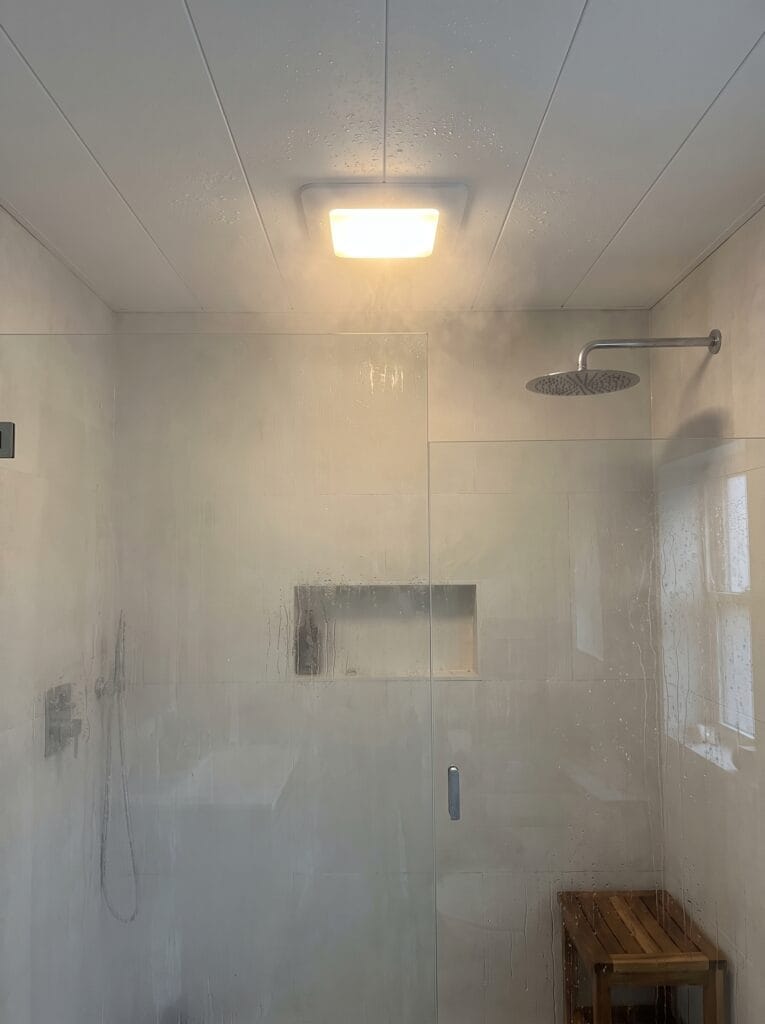
Directly above a shower is a different environment from the rest of the bathroom, and treating both the same is why so many ceilings fail within a couple of years. Paint that copes fine over the basin will not cope over the shower head.
Bathroom ceiling panels solve it without a full re-plaster. Sheets clip together with no joint for moisture to enter and wipe clean, which matters in the one part of a bathroom that gets a daily steam bath.
Fittings above a shower need an IP rating, not just a damp-location label. IP65 means sealed against water jets, and it’s the minimum worth fitting where water lands. Run extraction from the wet zone, not the far corner. A fan above the door pulls steam through the whole room before removing it, which is exactly the wrong path.
Shop it on Amazon: Peel and Stick Waterproof PVC Wall and Ceiling Panels
Lacquer a dark ceiling to a high gloss
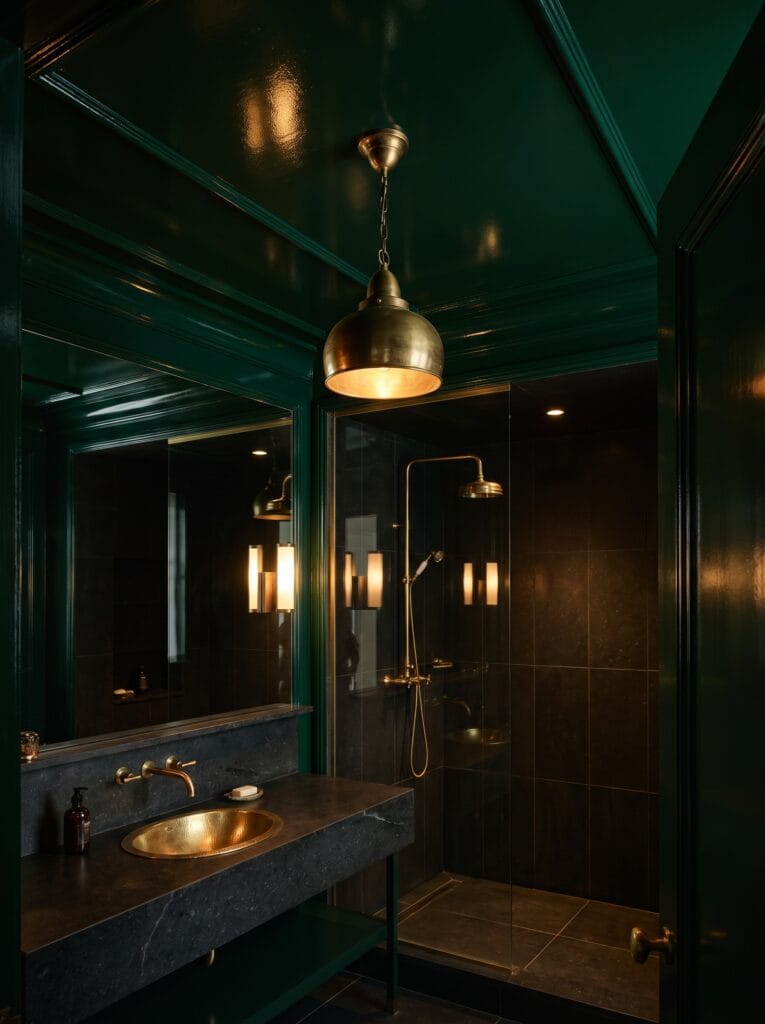
Gloss is supposed to expose every flaw, and on a ceiling it mostly does the opposite. A reflective surface bounces light back into the room, so a dark colour that would swallow a windowless bathroom in matte becomes deep and liquid instead.
Reflection also doubles your light. Every fitting appears twice, once directly and once in the surface above, which is why lacquered ceilings suit rooms with a single good light rather than many weak ones.
The finish demands preparation, and that’s the real cost. Filling, sanding, and several thin coats take far longer than the paint itself, because gloss shows any ripple you leave behind. Small rooms are the place to try it. A powder room ceiling is a few square metres of work, where a family bathroom is a project.
Line a vaulted ceiling with pale timber
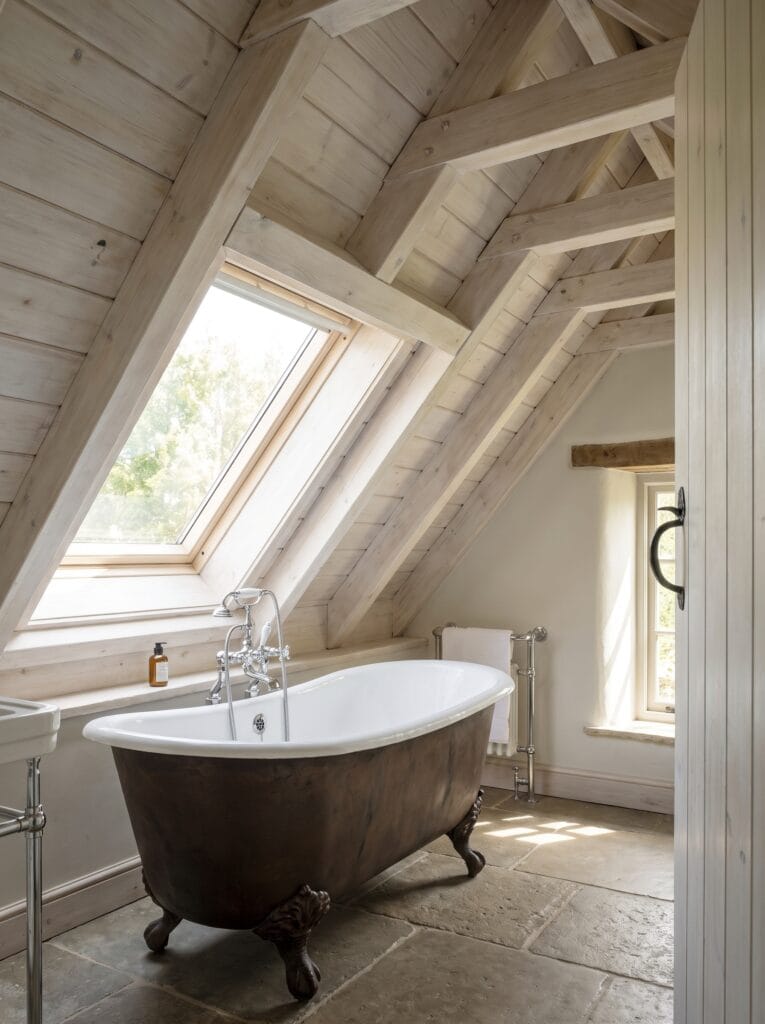
Anyone converting a loft ends up with volume they don’t know what to do with. Plasterboarding a vault flat throws away the best feature the room has.
Timber cladding keeps the height and adds the warmth that height takes away. Tall rooms feel cool and echoing in plaster, while a limed or whitewashed board finish gives the surface texture and stops sound bouncing.
Leave the trusses visible where the structure allows. Boxing them in costs money to lose the thing that made the ceiling interesting. Pale finishes beat natural wood overhead. Raw timber across a whole vault reads as a sauna, and liming or whitewashing keeps the grain while holding the light.
Add coffers to a plain square ceiling
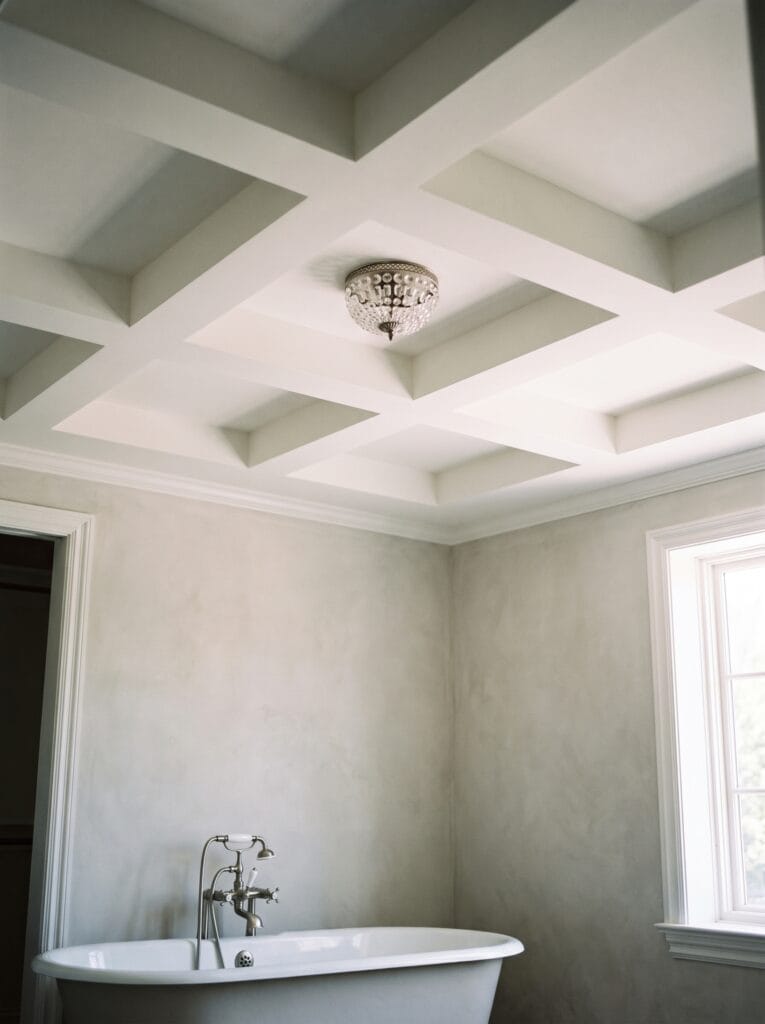
Depth is the one quality a flat ceiling can never have. Coffering casts real shadows that change through the day, which is why a white coffered surface still reads as architecture while flat white reads as nothing.
Square rooms benefit most. A grid of panels gives a featureless box a centre and a rhythm, and the pattern itself creates a natural position for the light.
Centre the fitting in a panel, never on a beam. A pendant hanging off a coffer edge looks like a mistake that nobody noticed. Check your height before committing. Coffers eat 4 to 6 inches, so under about 8 feet the room loses more in headroom than it gains in character.
Leave a sloped ceiling alone
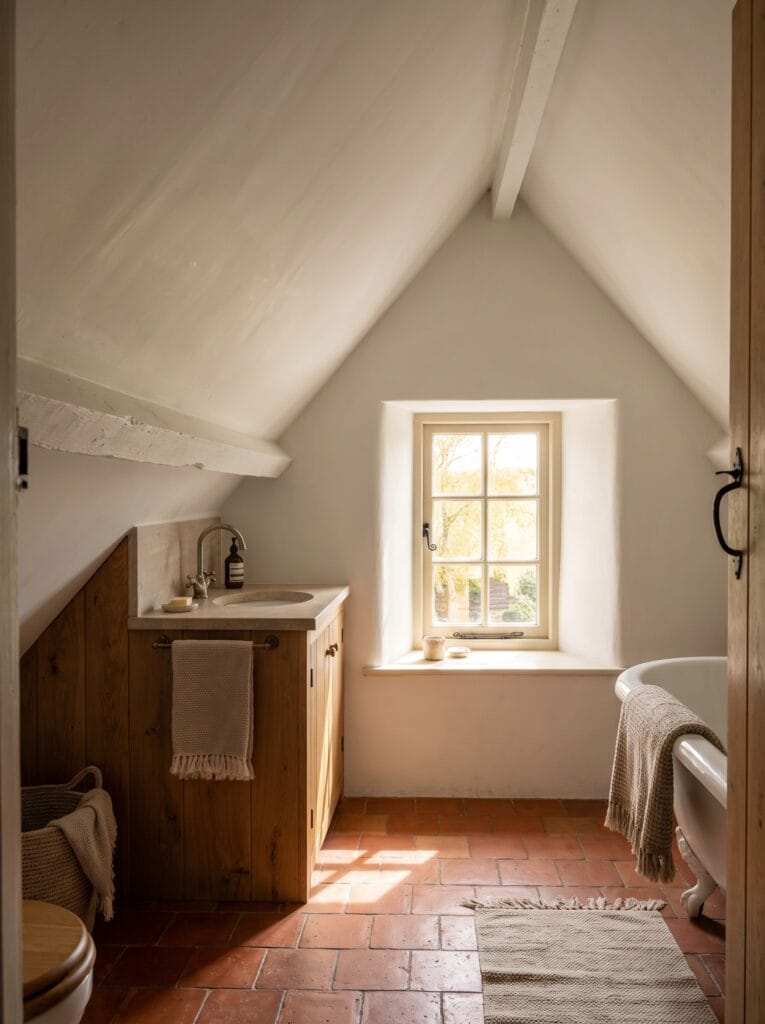
Sloped and vaulted ceilings already have the thing everyone else is trying to add. The shape is the feature, and decorating it usually competes with it rather than helping.
Plain plaster in a soft white lets the geometry read clearly. Pattern, cladding, or strong colour on an irregular surface fragments the shape into pieces, and the room feels smaller than a flat ceiling would.
Angles collect shadow naturally, which is doing free work for you. Light falling across a slope gives tonal variation no paint effect can match. Spend the saved money at floor level instead. Terracotta, stone, or a good rug under a plain sloped ceiling gets you further than anything you could paint above.
What actually fails on a bathroom ceiling, and when
Every idea above assumes the surface survives. Bathroom ceilings fail in predictable ways, on a predictable schedule, and almost all of it comes down to two things: the finish you chose and whether the steam has somewhere to go.
| What fails | When | Why it happens | What prevents it |
|---|---|---|---|
| Flat matte paint goes patchy | 12 to 24 months | Matte is porous, so steam soaks in and dries unevenly | Satin or eggshell, or a dedicated bathroom emulsion |
| Black spots in the corners | First damp winter | Still air where extraction doesn’t reach | Fan sized to the room, running 20 minutes after the shower |
| Paint peels above the shower | 2 to 3 years | Water lands on a surface specified for the rest of the room | Waterproof panel or a moisture-rated system over the wet zone |
| Hairline cracks return | Every season | Plaster moves with temperature and humidity swings | Cladding with joints, or a flexible filler and a mesh tape repair |
| Rust marks around a downlight | 3 to 5 years | Non-rated fitting in a wet location | IP65 minimum where water can reach |
| Cladding swells at the edges | 2 to 4 years | Unsealed end grain absorbs moisture | Prime every face and edge, tongues included, before fitting |
| Beams split or show worm | Years, then suddenly | Old dry timber meeting daily steam | Treat and seal before exposing, and keep humidity controlled |
Read that table before choosing from the list above, not after. The finish decision and the extraction decision together account for nearly every bathroom ceiling that looks tired within five years, and neither one is expensive at the point you make it.
Bathroom ceiling ideas start with the ceiling you already have
Look up and decide which category yours falls into. Sound and flat means paint or paper is enough, and you can have it done this weekend. Cracked or textured means cladding will cost less than making good. Sloped or vaulted means the shape is already doing the work, so light it well and leave it be.
Then handle the wet zone separately from everything else, because that single distinction is what decides whether the rest of the work lasts. For rooms with no window at all, our bathroom lighting ideas for rooms with no window cover the fittings that do the heavy lifting, and slanted ceilings and tight corners has more on working with awkward loft geometry.
Small rooms reward this more than large ones, which is why so many of these bathroom ceiling ideas turn up in a tiny powder room first. More on surfaces and layout sits in our materials, fixtures and layout guides.
Save this pin to keep these bathroom ceiling ideas handy when you’re ready to look up.