Bathroom Essentials Checklist: 20 Easy Buys, 8 to Skip
Most bathroom essentials lists run to forty items and assume you need all of them. You need about twenty. The ones that earn a place are what you touch daily or what stops water damage: towels, a fast-drying mat, a real liner, enclosed toilet tools, and storage that fits your plumbing. Buy the liner before the curtain.
The trouble with the usual checklist is that it was written to sell you the whole list, so nothing on it ever gets ruled out. Nobody separates the things that survive a wet room from the things that quietly rot in it, and those two groups are not obvious from the packaging. They look identical in the aisle.
This one is split in two. Twenty bathroom essentials worth buying, each with a quantity and the one spec that actually matters, then eight sold as bathroom essentials that end up in a cupboard inside a year. Those eight mostly fail for the same reason, which is that a bathroom is wetter than the product assumed.
It covers a first flat, a family bathroom, and a rental where you cannot drill a single hole. Where a bathroom essential changes for a room under forty square feet, that gets flagged in the section itself rather than buried in a note at the end. Nothing here needs a renovation or a plumber.
This post contains affiliate links. If you buy through them, I may earn a small commission at no extra cost to you.
Table of Contents
Two bath towels per person, not four
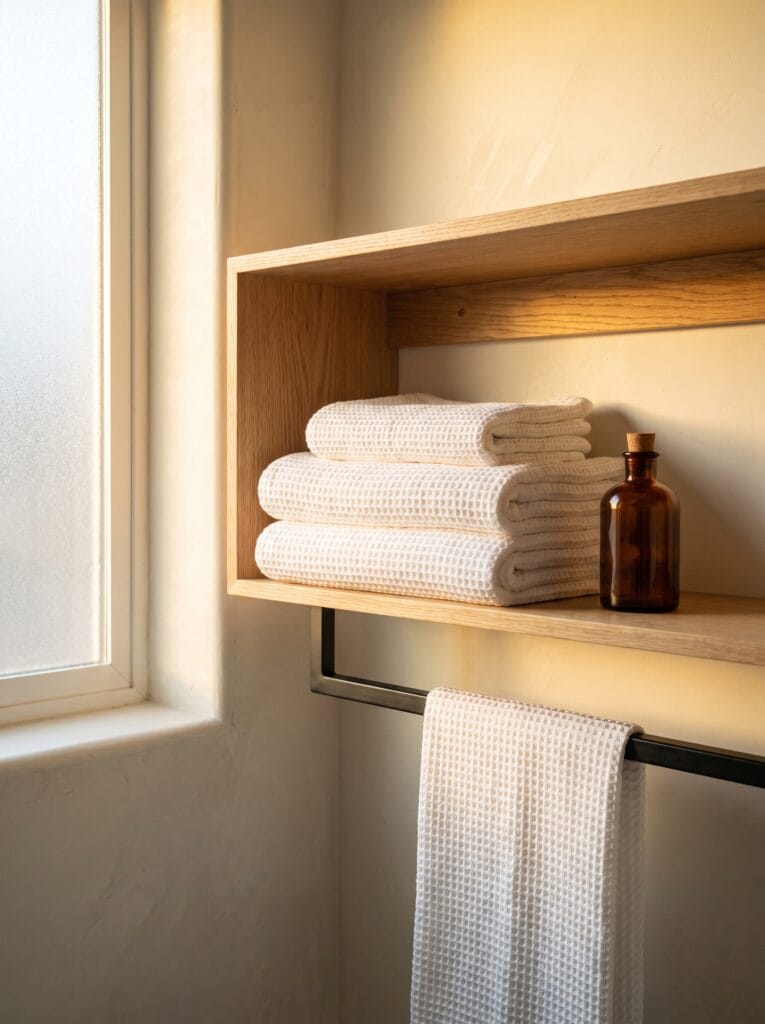
Buy two per person, and a third only if your laundry runs weekly rather than twice a week. Towels are the bathroom essentials people overbuy hardest, usually because a sale makes six feel sensible at the time. Four per person fills a cupboard and never gets used, because the bottom two stay folded for years.
Weight is the spec worth checking, and it is the one nobody reads on the label. Between 500 and 600 GSM dries you properly and still dries itself out overnight in an average bathroom. Anything from 700 GSM up feels luxurious in the shop and then stays damp for a day and a half in a room with poor ventilation.
That is how a new towel starts to smell.
Hang a hand towel separately or guests will use the bath towel

If your basin has no hand towel within arm’s reach, everyone dries their hands on whatever hangs closest. That is how a bath towel ends up damp by noon, and it is the most common reason a household gets through more laundry than it expects. Two hand towels per bathroom covers it.
Swap them every three days in a family bathroom, and more often if small children use the room. Hang them on a ring rather than a bar, since a ring holds a small towel open to the air while a bar makes it bunch into a wet lump against the wall. The towel then dries in about half the time.
Buy washcloths in one colour so you stop sorting them
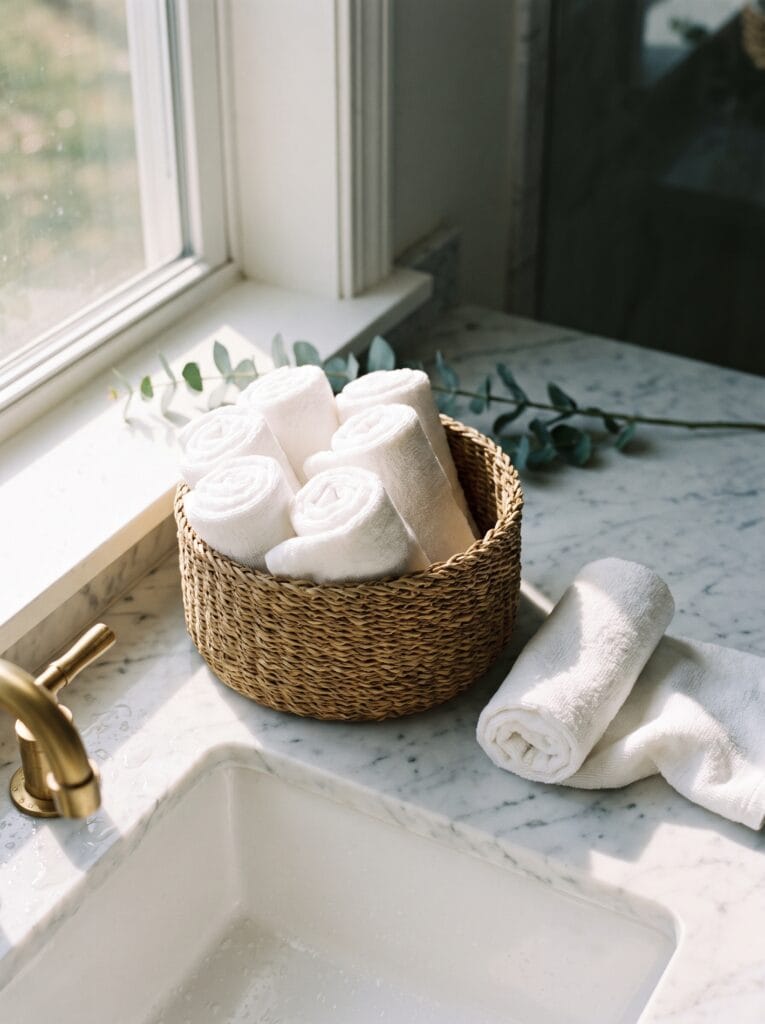
Six is the working number for a household of two, and washcloths are the cheapest bathroom essentials to get right. You use one and wash one without ever running out, and buying them all in a single colour removes the small daily question of whose is whose. That sounds trivial until there are four patterns in a drawer and nobody wants the green one.
Cotton terry around 400 GSM is the sweet spot for a washcloth. Thinner ones go stiff after a dozen washes and stop holding lather, while thicker ones hold water long enough to smell before the next wash comes round. Keep them off the towel rail too, because stacking them damp is what turns a clean cloth musty overnight.
A mat that dries between showers beats a plush one
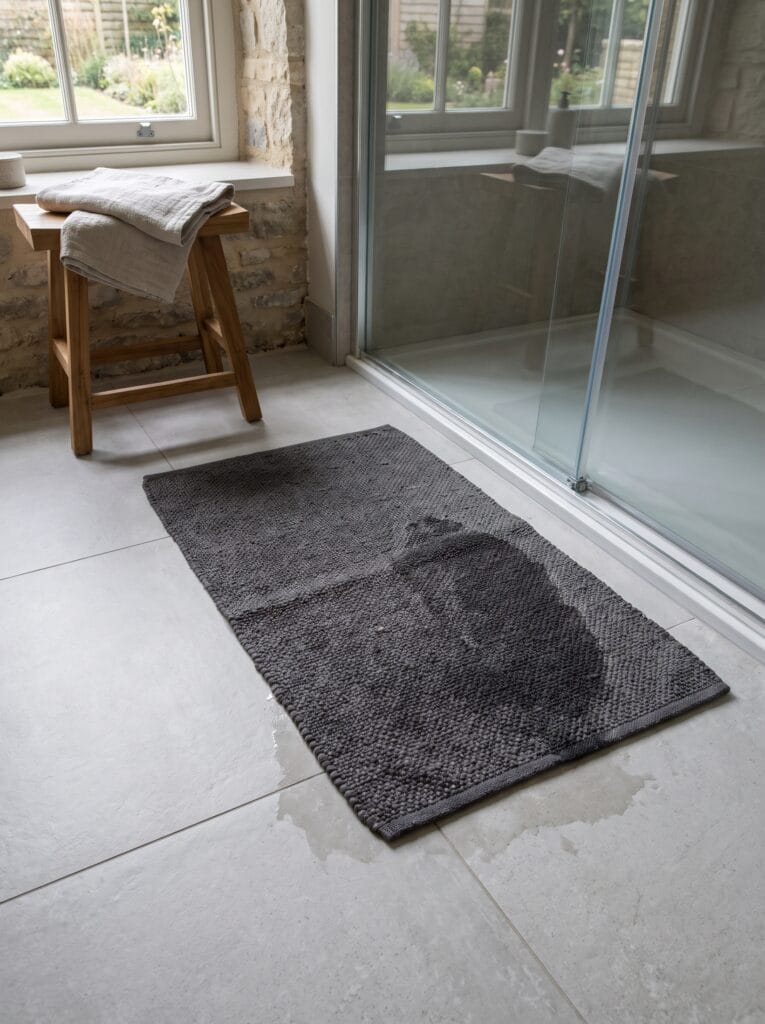
If two people shower back to back every morning, a cotton mat never gets a chance to dry and starts to smell by day three. A diatomaceous earth stone mat solves that by drying in well under a minute, and it is the one bathroom essential I would replace first in a room with no window.
They are rigid rather than foldable, so measure the floor before ordering. The common size runs roughly 23.6 by 15.4 inches, which suits a standard tub but overhangs awkwardly in a small cloakroom. A quick sand with the included pad restores absorbency once it starts to slow down. *
Shop it on Amazon: SUTERA Stone Bath Mat, Diatomaceous Earth
The mat inside the tub matters more than the one outside it
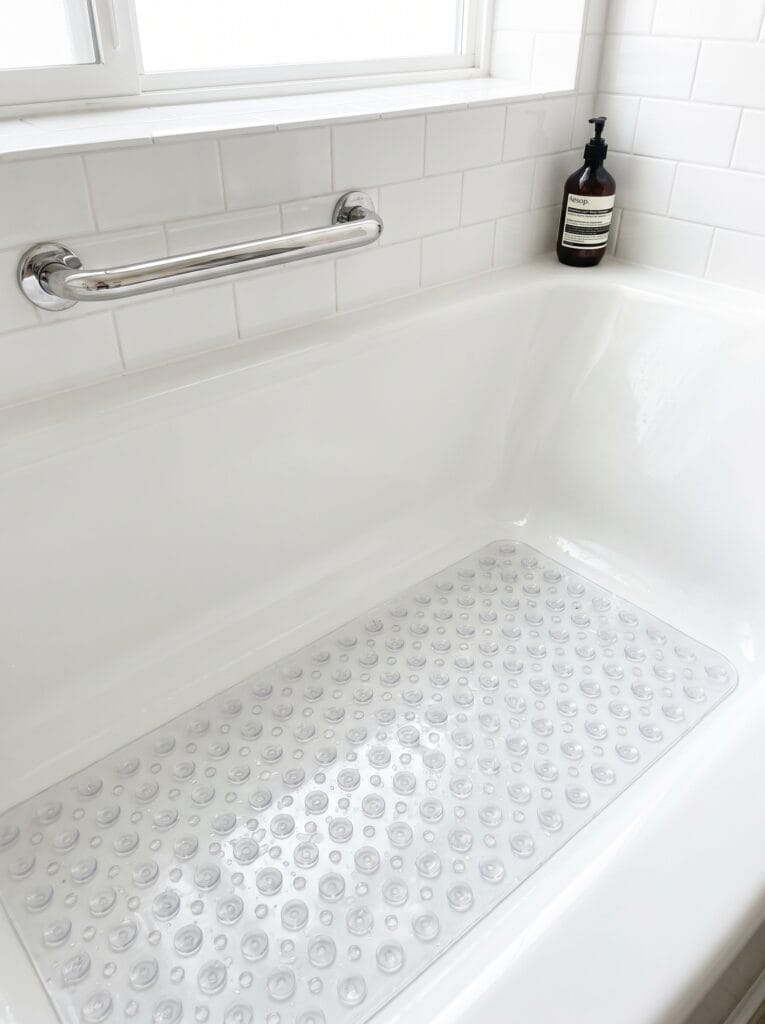
Wet enamel is far more slippery than a wet tile floor, so the mat inside the tub is the safety item and the one outside it is the comfort item. People buy them the other way round, spending on the plush one by the door and leaving the tub base bare. Reverse that order.
Look for suction cups across the whole underside rather than only around the rim, and lift the mat every few uses so water cannot sit underneath and go black. Textured enamel and stone resin tubs are the exception here, because suction will not grip a rough base at all. Those need an adhesive anti-slip strip instead.
The liner is what keeps water in, not the curtain

A fabric curtain on its own wicks water straight onto the floor, which is the most common reason a new bathroom develops a soft patch of flooring by the door. The liner does the actual work here, hanging inside the tub while the decorative curtain hangs outside it. They are two separate purchases.
Gauge is the spec that matters and the one most listings bury. A 10-gauge PEVA liner has enough weight to stay put instead of billowing against your legs mid-shower, and magnets in the bottom hem hold the seal along the tub edge. Replace it yearly and the outer curtain will outlast three of them.
Shop it on Amazon: LiBa PEVA 10G Shower Curtain Liner, 72×72
Let the outer curtain be the only decorative thing you buy
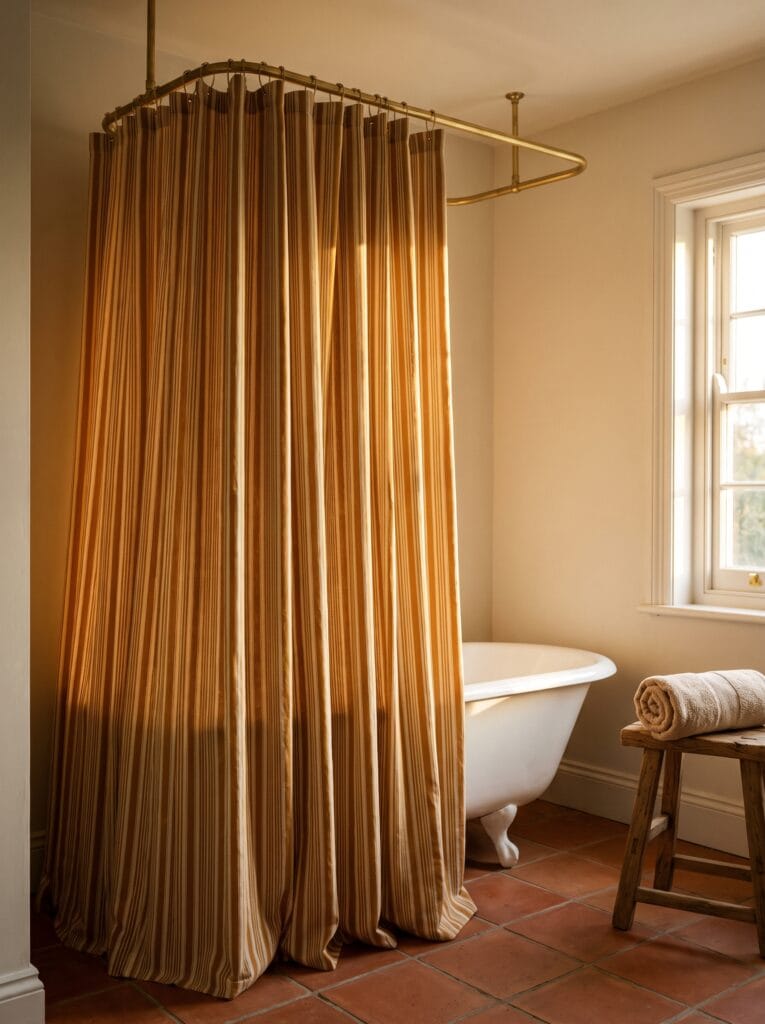
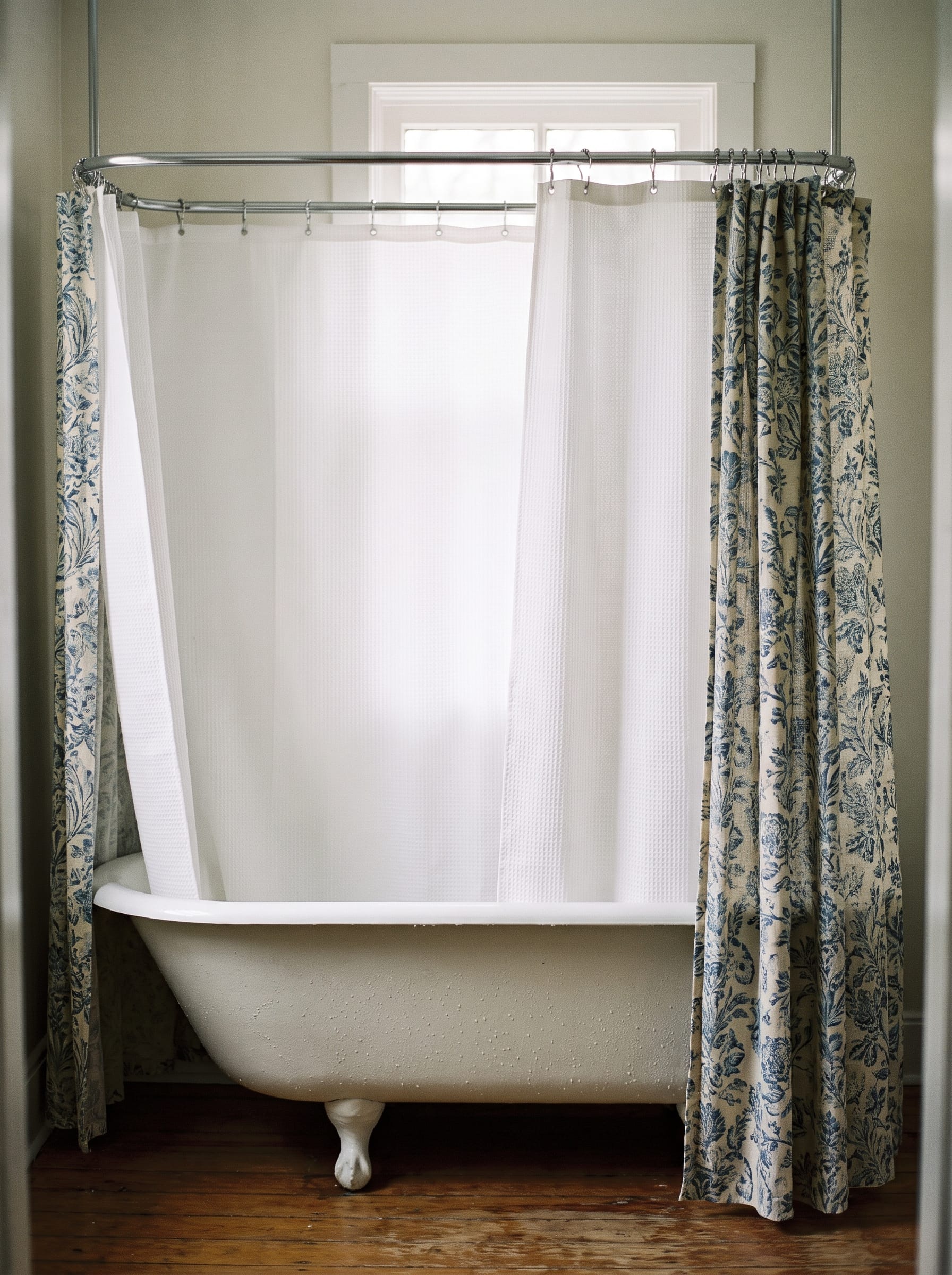
Since the liner handles the water, the outer curtain is free to be pure pattern, and it is the cheapest way to change how the whole room reads. One curtain does more visually than a shelf of ornaments, and it is the only decorative item on this list I would spend real money on.
Standard is 72 by 72 inches, which fits most tubs without adjustment and is the one measurement worth memorising before you shop for bathroom essentials online. Measure from the rod to the floor if your rod sits high or you have a clawfoot tub, because a curtain that stops three inches short looks like a mistake from the doorway. Cotton and linen blends wash better than polyester and hang with more weight.
Roller hooks stop the daily yank that tears the header
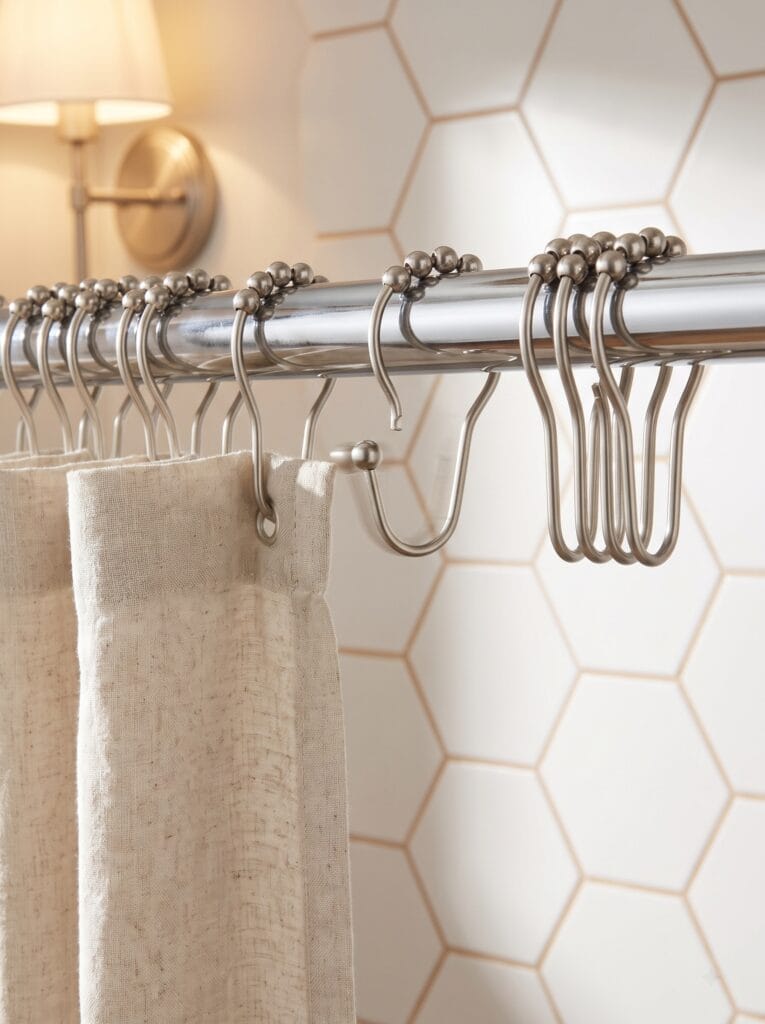
Flat plastic hooks catch on the rod every time you pull the curtain across, so you pull harder, and the grommets tear out of the header within a year. Roller ball hooks glide instead, and that two dollar difference quietly decides whether the curtain lasts one season or five.
Buy twelve rather than ten so the spacing stays even across a standard curtain. Check they are stainless or nickel rather than plated steel. Plated hooks rust at the contact point where the finish wears through, and then stain a white curtain orange from the top down. That stain does not wash out.
Refillable beats whatever the hand soap came in
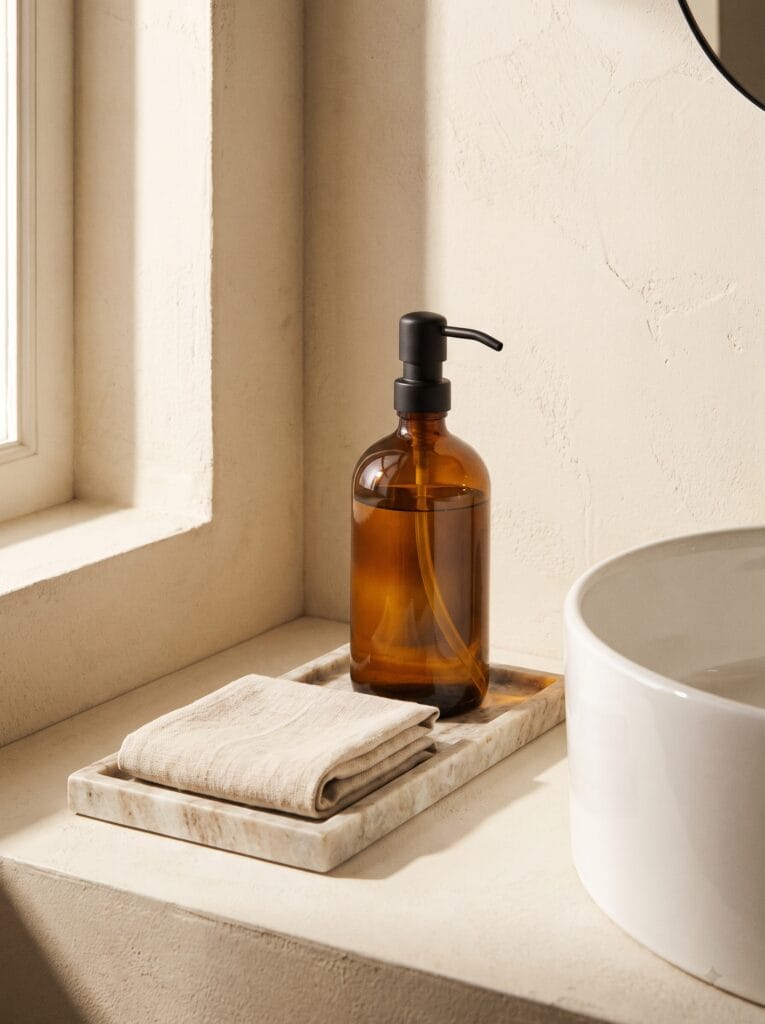
A dispenser you refill from a large bottle costs less per wash and stops the row of mismatched plastic bottles that makes an otherwise tidy basin look cluttered. It is the smallest change on this list with the most visible result, and it takes about a minute to set up.
Glass or stainless with a metal pump lasts for years. Plastic pumps are the part that fails, usually seizing after six months of hard water, and by then the empty bottle is worth less than the refill inside it. For more on building a basin setup cheaply, there is a whole roundup of bathroom essentials under $30.
Pick a holder you can actually put in the dishwasher

Whatever you buy will collect a ring of grey residue at the bottom within a month, because that is what happens when wet bristles drain into an enclosed space. The only question that matters is whether cleaning it takes two seconds or a cotton bud and a good deal of patience.
Ceramic or stainless with a wide opening goes straight in the dishwasher. Narrow tubes and anything with a sealed base never really come clean, so you end up replacing the holder instead of washing it. Buy one holder per two people, or the brushes touch and you have solved nothing.
Keep the backup rolls where you can reach them sitting down
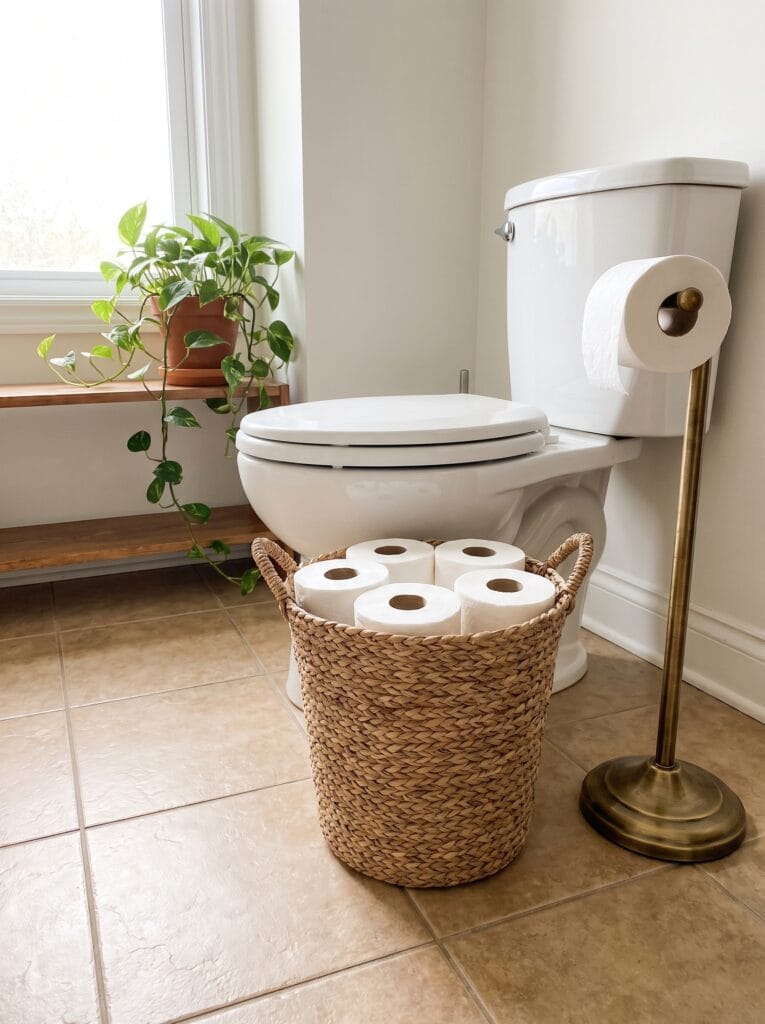
The point of a basket beside the toilet is not tidiness, it is that the spare roll is reachable from where you actually need it. A cupboard across the room does not count, and neither does a high shelf you have to stand up to reach. Six rolls is the right amount to keep out.
A basket about 12 inches across holds that without looking like a stockpile, and a lined one stops the cardboard ends fraying against the weave. Keep the bulk of it out of the bathroom entirely, because paper stored in a humid room goes soft and loses its texture. A hall cupboard suits the other twenty rolls better.
Get an enclosed brush holder or it will look grim in a month
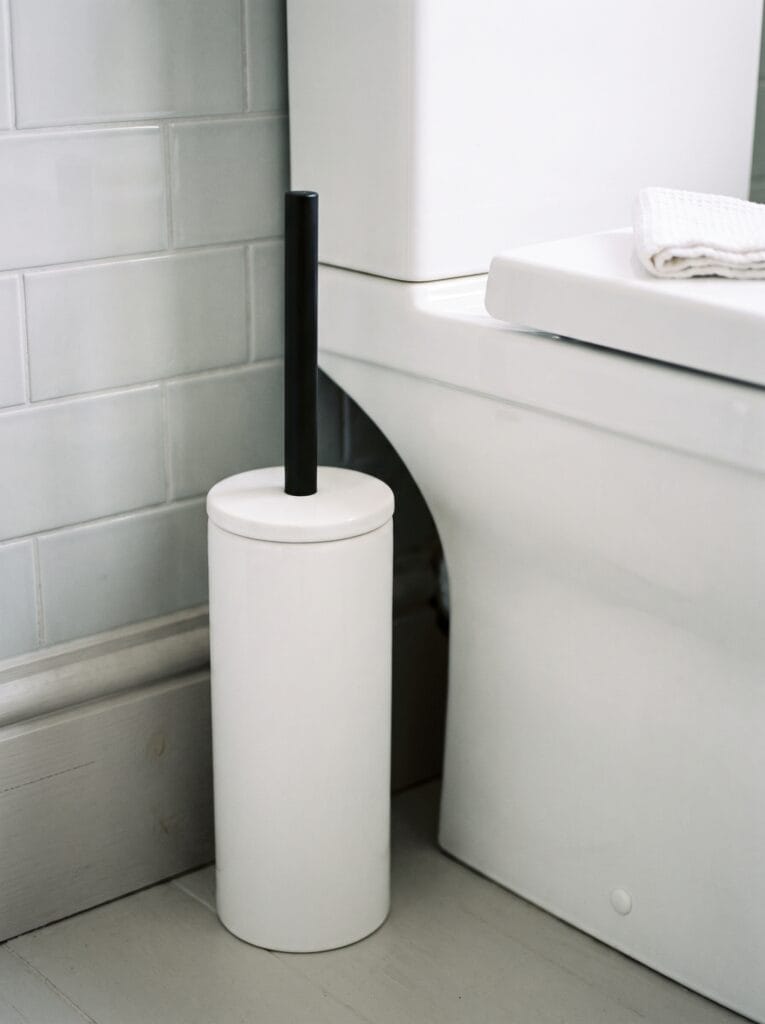
An open holder shows exactly what it has been used for, and it drips onto the floor between the toilet and the wall, which is the one strip of floor nobody ever mops. A fitted lid solves both problems at once and costs almost nothing over the open version.
Choose one with a removable inner cup. The cup is the part you actually rinse out, and holders without one trap water around the base where it cannot be reached or dried properly. Those are the ones that go brown at the bottom and get thrown out inside a year.
A flange plunger is the one that works on a toilet
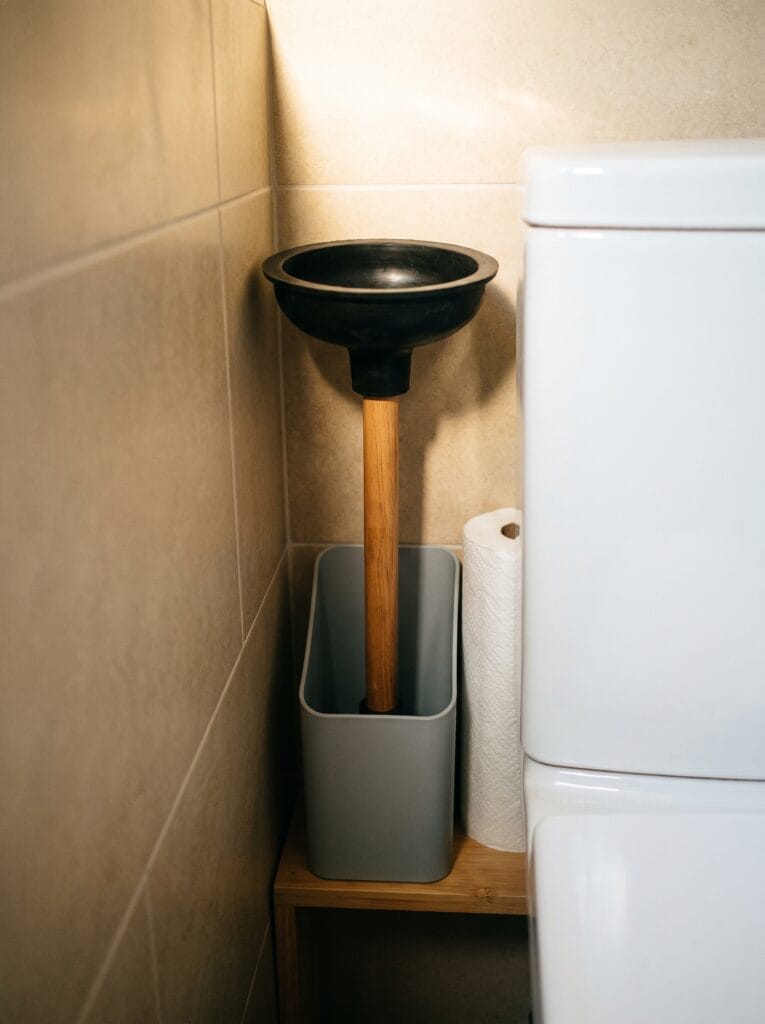
The red cup plunger most people own is built for flat drains like a sink or a bath. On a toilet it cannot seal against the curved outlet, which is why it slips sideways, splashes, and achieves nothing while you get steadily more annoyed with it.
A flange plunger has a soft rubber sleeve that folds out and seats into the bowl, giving it something solid to push against. Keep the cup one under the kitchen sink where it belongs, and store the toilet plunger in a slim caddy so the wet end never touches the floor between uses.
A lid is the difference between a bin and a smell
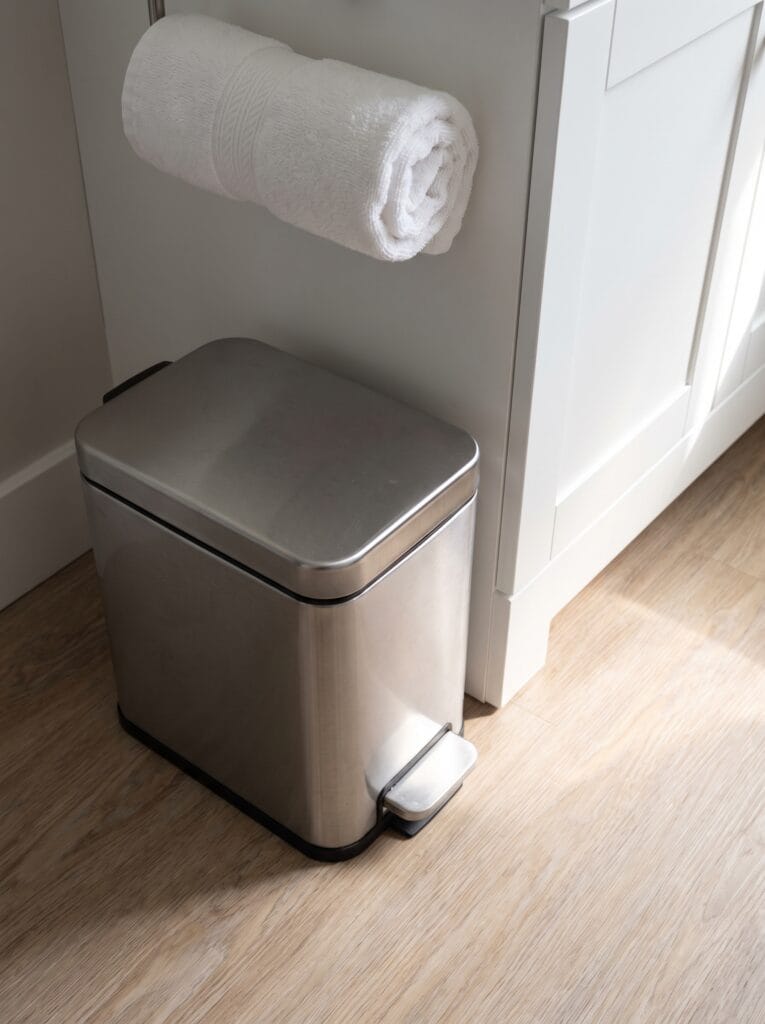
Bathroom waste is mostly damp, so an open bin becomes noticeable within two days in a room with no extractor. A step lid also means you are not touching it with clean hands on the way out, which is rather the point of having washed them. It is one of the few bathroom essentials where the mechanism matters more than the material.
Five to eight litres is plenty for a bathroom, and anything larger just takes floor space you need. A bin that takes a fortnight to fill is a bin that starts to smell before it is emptied. Look for a removable plastic inner bucket, because the outer body otherwise rusts from the inside where you cannot see it.
Hang the caddy from the shower arm instead of the wall

Renters and anyone who would rather not drill into tile can hang storage from the shower arm, which carries the weight without a single hole. It is the rare fix that costs nothing and voids no deposit. It also lifts bottles off the tub rim where they leave rings, and off the shower floor where they collect scum around the base.
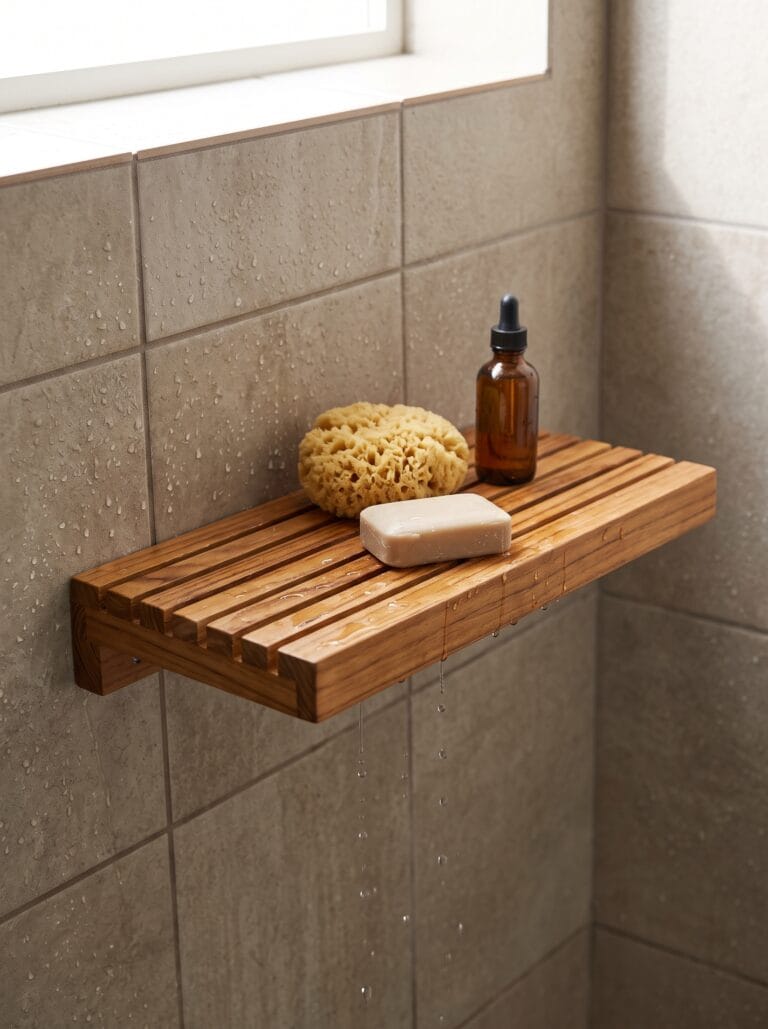
Teak is the material that survives this environment. It holds up in constant humidity without rusting the way a plated wire caddy does after about a year, and it will still look right when the shower eventually gets retiled.
Shop it on Amazon: AquaTeak Moa Oval Teak Shower Organizer
Hooks take wet towels that a rail never dries

A rail holds one towel properly and two badly, because the second hangs over the first and neither side gets air. Hooks let a damp towel hang open with air on both sides, which is the whole reason a towel dries overnight or is still clammy in the morning.
Mount them about 60 inches from the floor so a full bath towel clears the ground, and put three in a row to handle a family bathroom. Adhesive hooks rated for humidity work on tile when drilling is not an option, though they need a genuinely clean, dry surface to hold. Wipe the spot with alcohol first.
Measure around the pipe before buying a single bin

The waste pipe under a basin sits somewhere different in almost every unit, which is why most under sink organisers arrive and then do not fit. Measure the clear width on each side of the trap before ordering anything, then buy to the smaller of those two numbers.
An L shaped pull out sits around the pipe instead of fighting it, and sliding tiers mean the things at the back stop being invisible. A mirrored cabinet above the basin takes the personal care items that will not fit below, and more options sit in the bathroom decor and storage guides.
Sixty seconds with a squeegee saves the deep clean

Limescale forms as water dries on glass, so removing the water removes the problem before it has a chance to start. This single habit decides whether a glass shower still looks clear in two years or has gone permanently cloudy along the bottom third of every panel.
A 10 inch blade covers a standard panel in about four passes, and the same blade clears a fogged mirror faster than a cloth does. Hang it inside the enclosure on an adhesive hook, because a squeegee kept in a cupboard is a squeegee nobody uses.
Shop it on Amazon: Hiware All-Purpose Shower Squeegee, 10 Inch
Keep the cleaning supplies in the room they clean

Cleaning happens when the supplies are already there. Carrying a bucket up the stairs is enough friction to postpone it another week. Cleaning products count as bathroom essentials in their own right, not something borrowed from under the kitchen sink when you finally get round to it.
Three products cover a bathroom properly: an all purpose spray, a glass cleaner, and a toilet bowl cleaner with an acid that handles limescale. Add a scrub brush and a few microfibre cloths, then keep the whole set in a caddy that fits inside the vanity so it stays out of sight but still in the room.
A hamper in the bathroom stops the floor pile
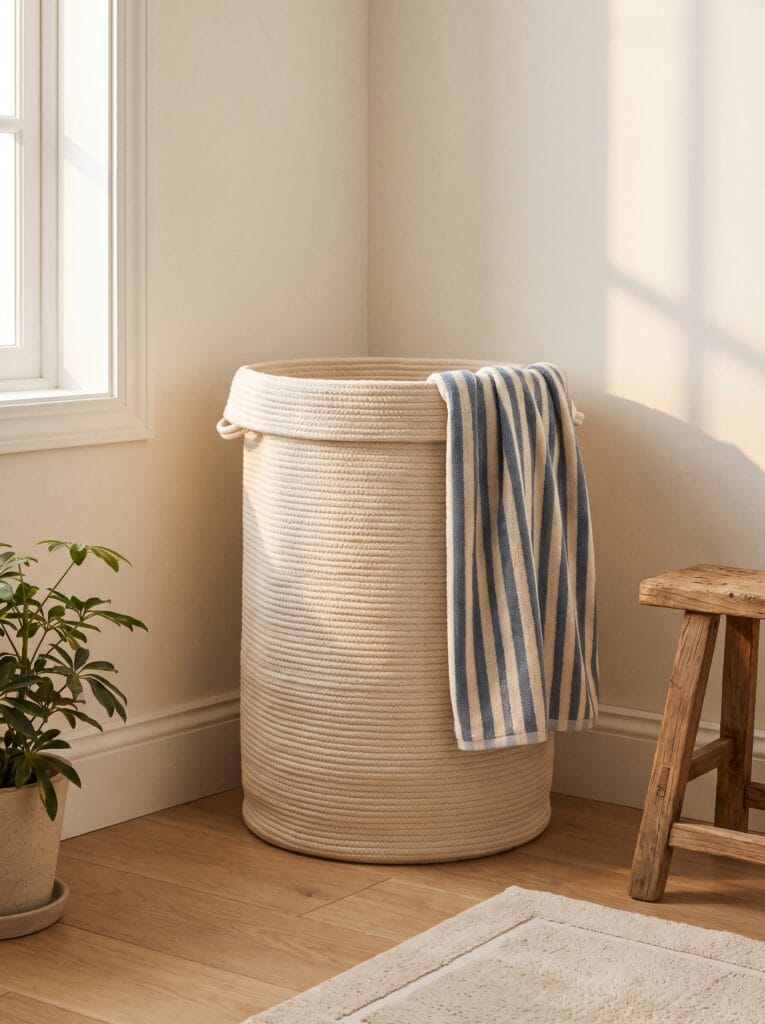
Clothes end up on the bathroom floor because that is where they come off. A hamper in the bedroom is solving the problem in the wrong room, and it is why the same pile reappears every morning however often you clear it. Put the hamper where the clothes actually land.
Pick a breathable one. A sealed plastic hamper holds damp towels against each other and they sour within a day, while cotton rope or a slatted frame lets air move through the pile. A tall narrow shape fits the dead corner behind a door, and two compartments beat one once more than two people share the room.
Eight things sold as bathroom essentials that are not
Almost everything below fails for the same reason. It was designed for a dry room and then put in a wet one, and the failure shows up somewhere between three and twelve months after purchase. That is long enough that most people blame themselves rather than the product.
None of these are bad objects in isolation, and some work perfectly well in a dry room. They are bathroom essentials in the marketing sense rather than the practical one, and every single one has a cheaper or more durable answer already sitting on the list above.
Suction cup shower caddies
They hold until the silicone warms up in the steam, then drop a full bottle of shampoo into the tub at six in the morning. Grout lines break the seal too, so they only ever grip properly on large format tile or glass. Hang the weight off the shower arm instead, or use a tension pole in the corner, since both carry far more than suction ever will.
Chenille and shag bath mats
Deep pile holds water in the base long after the surface feels dry to the hand, and that trapped moisture is exactly where the smell comes from. A mat that cannot dry between two morning showers will never stop smelling, whatever you wash it with. If you already own one, wash it weekly and treat it as laundry rather than as furniture.
Matching five piece resin vanity sets
The tumbler, soap dish, tray and lidded jar look coordinated in the product photo and then sit unused on the counter. Nobody drinks from a bathroom tumbler, and bar soap dissolves into sludge in a flat dish with no drainage. Buy the dispenser on its own and skip the other four pieces entirely.
Rubber backed bath rugs
The backing is what makes them non slip and it is also what disintegrates in a warm dryer, shedding grey crumbs through the whole load and clogging the lint trap. Latex backing has a two to three year life at best, and rather less if you wash it hot. Air dry it, or accept from the start that it is disposable.
Untreated wicker and seagrass baskets
Natural fibre in a humid room goes brittle first and then spots with mildew from the inside out, usually starting where the weave is tightest and air cannot reach. Use plastic, coated metal or lined fabric bins in a bathroom and save the wicker for a bedroom. Sealed rattan with a lacquer finish is the exception, though it costs roughly what three unsealed baskets do.
Bulk toiletry multipacks bought before you move in
Buy twelve of anything before you know the water hardness, the storage depth, or whose shampoo everyone likes, and the cupboard fills with almost empty bottles of the wrong thing. Buy one of each instead, live with the room for a month, then restock in bulk only the things that survived it.
Hand towels bought purely to look at
The rule that guests may not use the good towel means you own a towel that does no work at all, and a guest who dries their hands on their jeans rather than risk it. One good hand towel in daily use beats a decorative pair that never moves off the rail. Buy the nice one, then actually use it.
Plug in air fresheners
A bathroom that smells needs air moving, not fragrance layered on top of the smell. If the odour returns within an hour of the freshener running out, the real fix is the extractor rather than another refill. There is a full guide to ventilating a bathroom with no window.
What changes if the room is small or rented
The twenty bathroom essentials above assume a room you can drill into and roughly sixty square feet of space. Neither of those is a given, and most of the list survives the constraint unchanged. Here is what actually shifts, and what to buy instead.
Under forty square feet, drop the hamper and the freestanding basket entirely, because floor items are what make a small bathroom feel full. Move that storage up the wall instead, where it costs you nothing in usable space. A wall shelf over the door is the last piece of free room most small bathrooms have.
If you are renting, skip the wall hooks and the drilled caddy and use the shower arm plus adhesive mounts rated for humidity. Test one mount with a light towel for a week before you trust it with a full robe. Adhesive that survives seven days of steam will usually survive the tenancy.
With no extractor fan, the stone mat and the 10 gauge liner stop being optional, because nothing else in the room dries on its own. Everything you buy has to shed water by itself rather than wait for the air to do it. That rules out deep pile, untreated wood and anything with a sealed base.
Sharing with kids means buying the enclosed toilet brush, the lidded bin and a second hand towel first, and delaying the decorative curtain entirely. The curtain will be pulled on, so let the cheap liner take that year on its own. Add the nice one once everybody is tall enough to reach the rail.
Tiled floor to ceiling? Adhesive mounts hold on tile faces but not across grout lines, so plan every position before you peel anything. One misplaced mount usually means buying a replacement rather than repositioning it, since the pad rarely survives being lifted off a glazed surface.
In a hard water area, move the toilet bowl cleaner and the squeegee to the top of the list, ahead of anything decorative. Limescale will beat you to every other surface in the room if you let it get a month’s head start. Glass and chrome show it first, and both are far harder to recover than to maintain.
Where your first hundred dollars should go
Starting with an empty room, four bathroom essentials make it usable and protect the floor: the liner, a stone mat, two bath towels per person, and an enclosed toilet brush. Everything else here can wait a month without costing you anything, and buying it slowly is how you end up with the version that fits rather than the version that was in stock.
The eight to skip are worth remembering mostly because they are what the bathroom aisle pushes hardest. Every one of them sells on how it looks in a dry showroom under good lighting, and the room you are actually buying for is wet twice a day. That is the whole difference.
Save this pin so you have the checklist when you are standing in the shop.