
15 Clever Bathroom Curtain Ideas That Beat Steam and Stares
The best bathroom curtain ideas start the same way: hang the rod high and treat the fabric and the waterproofing as two separate jobs. A cloth curtain on a near-ceiling rod with a clear liner behind it handles a shower. A sheer or café-height panel handles a window. The one caveat: if the window sits inside the splash zone, skip fabric entirely and fit a shade or shutter instead.
“Bathroom curtain” means two completely different products, and almost every guide picks one and ignores the other. You either get fifteen shower curtain ideas or fifteen bathroom window curtain ideas, never the two decisions side by side, even though most bathrooms need both.
They fail differently too. A shower curtain fails at mildew and length. A window curtain fails at privacy and light. Getting one right teaches you nothing about the other.
The bathroom curtain ideas below cover both, sorted so the shower decisions come first and the window decisions follow. Each one names the situation it solves, because the wrong curtain in the right bathroom still looks wrong.
This post contains affiliate links. If you buy through them, I may earn a small commission at no extra cost to you.
Table of Contents
Mount the rod near the ceiling, not just above the tub

Raise the rod to within four to six inches of the ceiling if your bathroom feels boxy. The eye follows an unbroken vertical line all the way up, and a rod sitting at the standard 72 inches chops the wall in half at exactly the height you least want it chopped. The room reads noticeably taller for the price of a longer curtain.
A curtain rod is the cheapest piece of a bathroom you can move, and relocating it upward costs you two new screw holes and about twenty minutes. Most builders set the rod at tub height purely out of habit, rather than because anything about the plumbing or the tub itself requires that particular number.
Tension rods handle this fine as long as the span stays under about 70 inches and the walls are true, but anything wider, or any tile that bows slightly, needs a fixed wall mount or the rod creeps down week by week.
Buy the 84-inch panel, because a high rod needs a long curtain
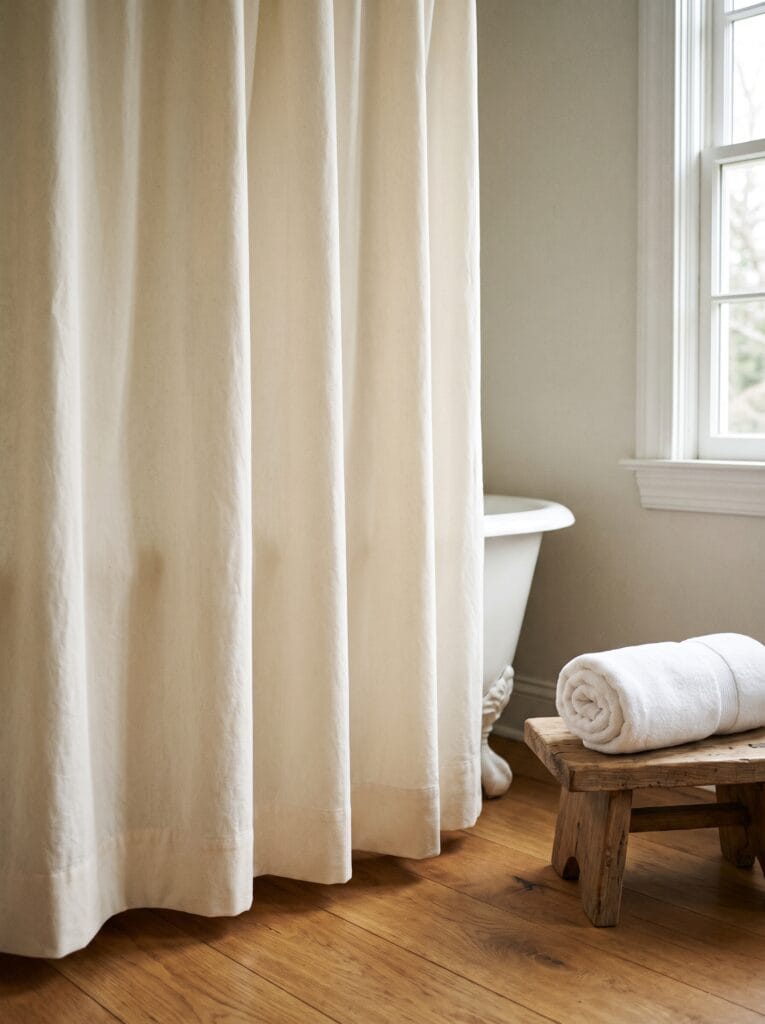
Raising the rod while keeping a standard 72-inch curtain leaves a gap at the floor that quietly undoes the whole effect you just paid for. The fix is simply a longer panel, and 84 inches covers most raised rods comfortably without the hem dragging across the tile.
Look for a weighted hem, or for magnets sewn into the bottom edge of the liner. A long curtain catches every draft coming under the door, and weight at the base is the only thing that stops it billowing inward and wrapping around your legs halfway through a shower.
Let the hem graze the floor rather than puddle on it, because fabric sitting in standing water wicks it upward through the weave, and that damp band along the bottom is exactly where staining starts.
The liner does the waterproofing, so the outer curtain doesn’t have to
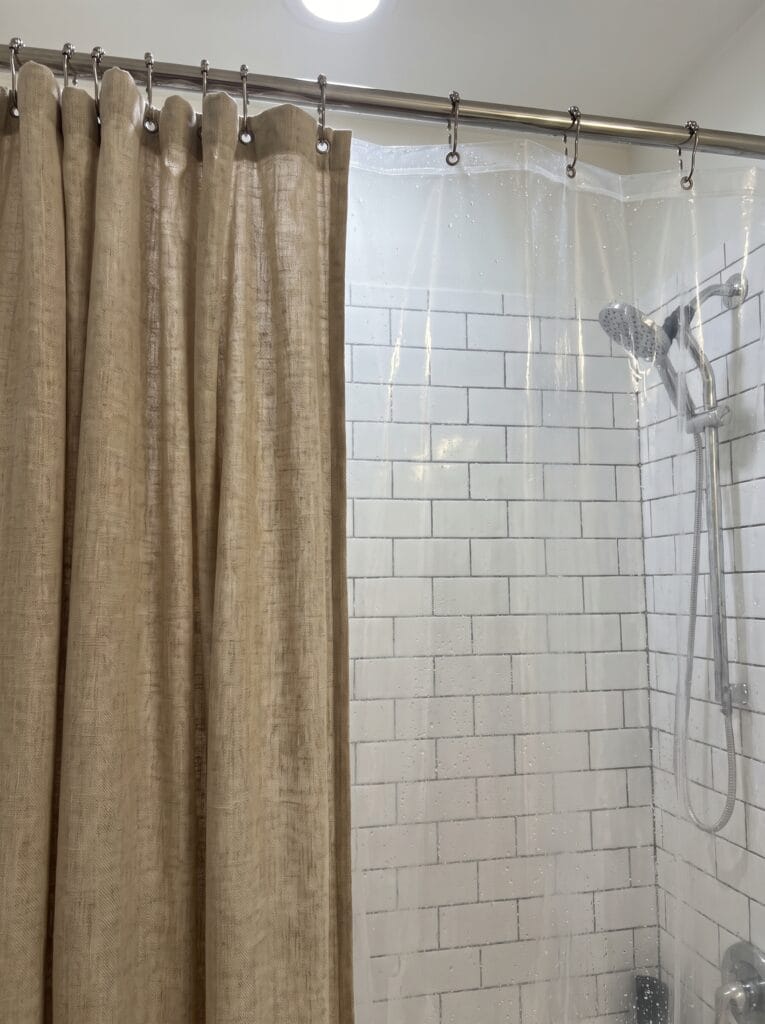
Most people shop for one curtain that is both attractive and waterproof, then end up settling for something that is neither. Running two separate layers on the same rod removes that compromise completely, and it is the single most useful change you can make to a shower curtain.
The inner layer is a clear liner made from PEVA or vinyl, and it takes every drop of the water. The outer layer then never needs to repel anything at all, which frees you to choose cotton, linen, or any print you actually like rather than whatever happens to come coated.
The split also makes cleaning straightforward, since the liner gets wiped down or swapped for a few dollars once it clouds over, while the outer panel goes through the wash twice a year.
Waffle weave is how an all-white bathroom gets texture without color
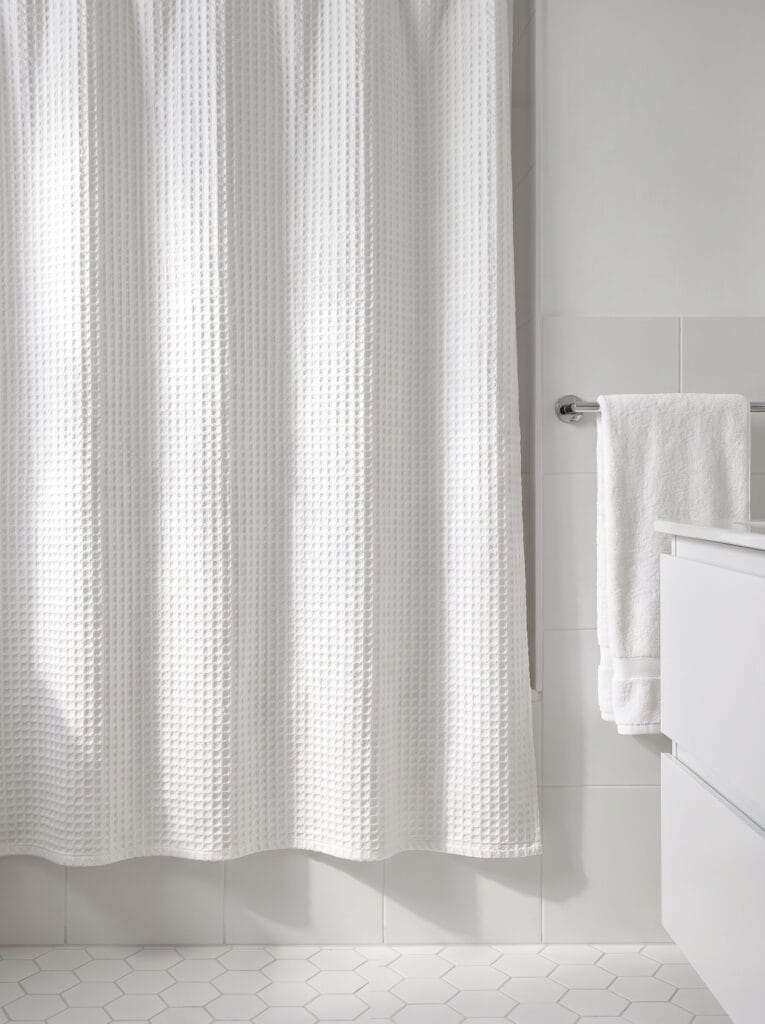
A white-on-white bathroom reads flat in photographs and flatter still in person, and adding colour is not the only way out of it. Waffle fabric solves the problem with a raised honeycomb grid that catches shadow, giving the eye something to land on without introducing a single new colour.
The weave is considerably thicker than a plain woven panel, so it hangs with more weight and creases far less readily. That extra body is also the reason it dries more slowly, which is worth knowing in advance if your bathroom has no window to help it along.
Pair it with a smooth surface nearby, like flat tile or a plain folded towel, so the texture has something to contrast against, because two textured surfaces sitting side by side simply cancel each other out.
Shop it on Amazon : Barossa Design Waffle Weave Extra Long Shower Curtain, 84 Inch
Sheer voile at the window keeps the daylight and loses the view in
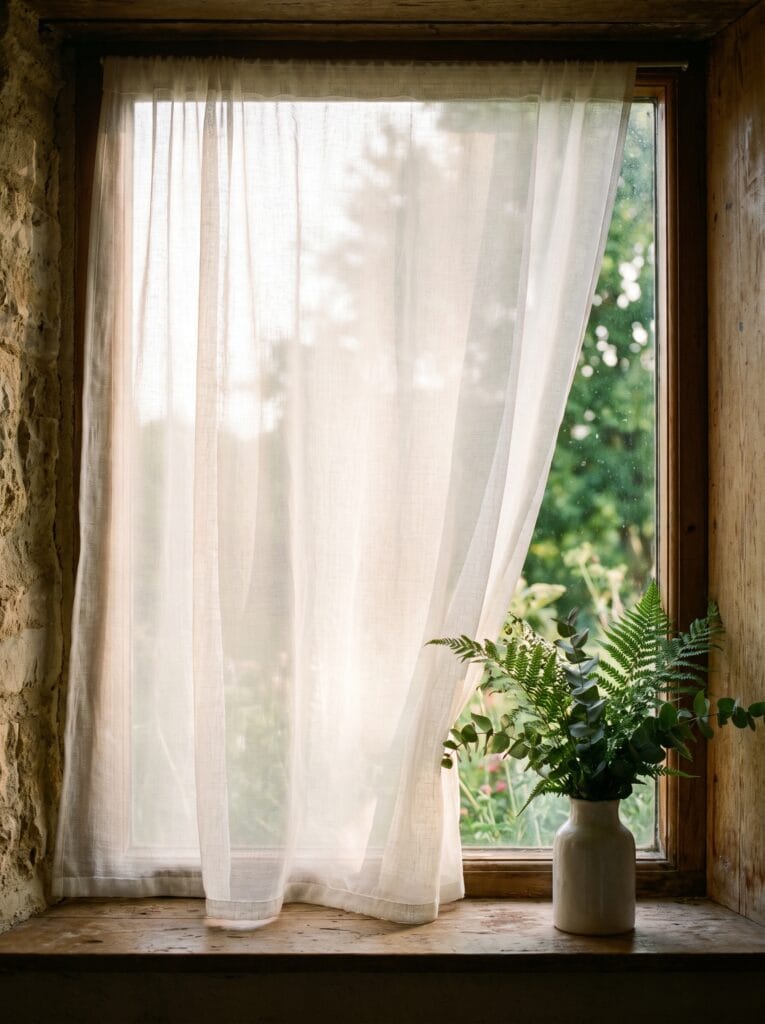
Anyone whose bathroom window faces a neighbour knows the standard trade: cover it and lose the light, or keep the light and get seen. Voile splits the difference by scattering light rather than blocking it, which is why it survives in bathrooms where a heavier fabric would not.
Voile is a fine plain-weave fabric, and the weave itself is doing all of the work. Light passes through and diffuses across the room, while anything more than a few feet behind the glass resolves into a vague shape with no usable detail for anyone looking in from outside.
It only works in daylight, though. Once a lamp is on inside after dark a sheer panel silhouettes you clearly, so pair it with a second layer if the room gets used at night. That same limit applies to frosted film, which we cover in our guide to bathroom blinds ideas.
Shop it on Amazon : Utopia Bedding Sheer Voile Curtain Panels, Set of 2
Cover the bottom half only and keep the top open
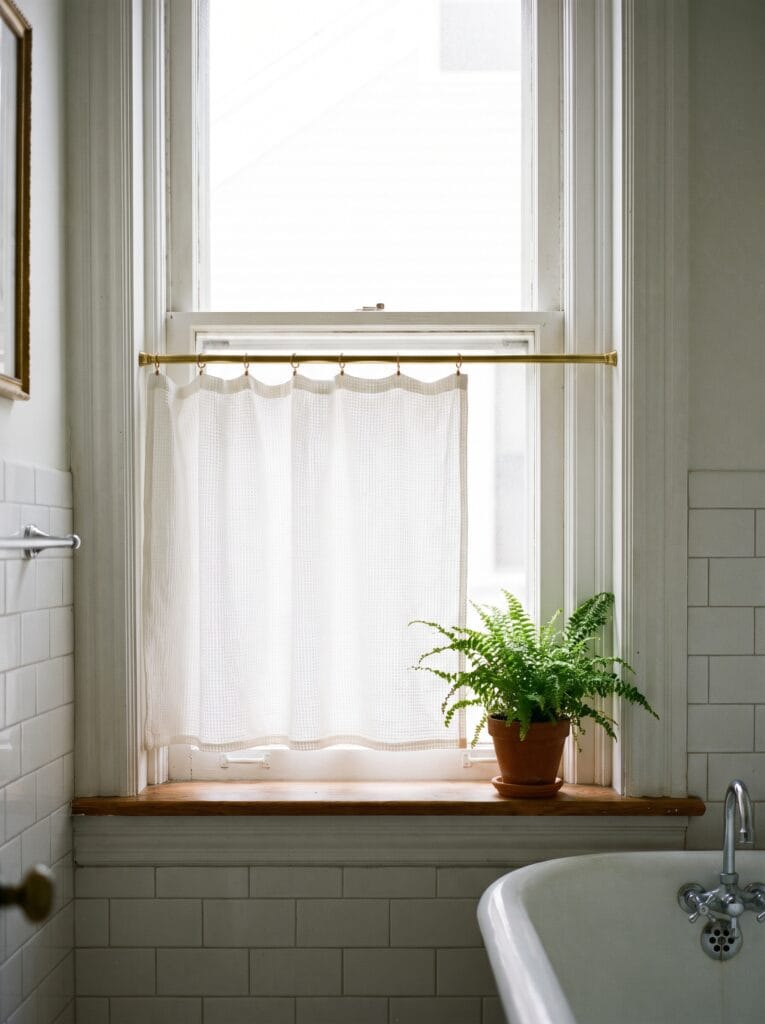
A cafe curtain uses less fabric than a full panel and solves more of the problem, provided your privacy issue sits at eye level rather than overhead. A rod fixed across the middle of the frame covers precisely the part people can see into, and everything above it stays completely clear.
That matters because the room keeps its brightest light source untouched. In a small bathroom that daylight is doing real work, and a full-length panel throws most of it away, which is what makes this the simplest bathroom window curtain to fit and the hardest one to get wrong.
Measure to the middle sash bar if your window has one and mount the rod there, since landing it on an existing horizontal line looks intentional rather than improvised. A slim brass rod suits this better than a chunky one, because at eye level it reads as trim.
Layer a sheer behind a solid panel for day and night control
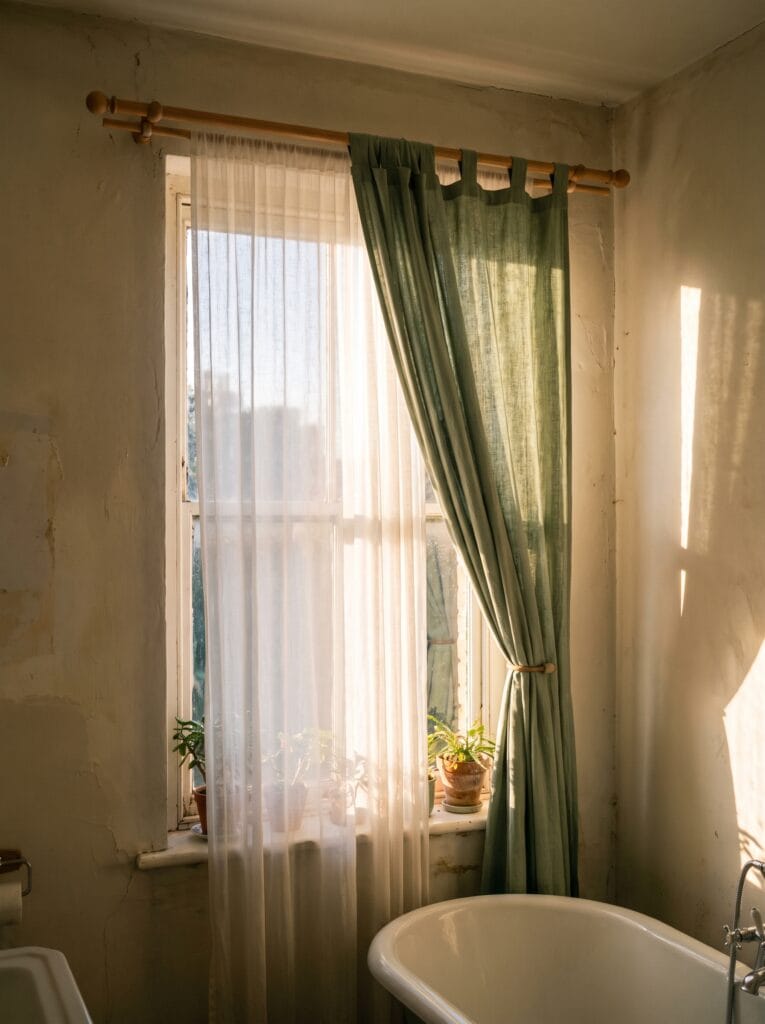
Run two panels on a double rod when your bathroom gets used around the clock rather than only in daylight hours. The sheer stays closed all day for soft diffused light, and the solid panel pulls across at night at exactly the point where a sheer stops working for you.
This is the only window setup that genuinely handles both conditions without a compromise somewhere. A single sheer fails completely after dark, and a single blackout panel turns the room into a cave at noon, so neither one on its own is really enough.
Keep the solid layer tied back during the day so it reads as a soft edge to the window rather than bulk, and set the holdback at roughly two-thirds height to give the fabric a curve instead of a straight column.
When the window is inside the shower, stop using fabric
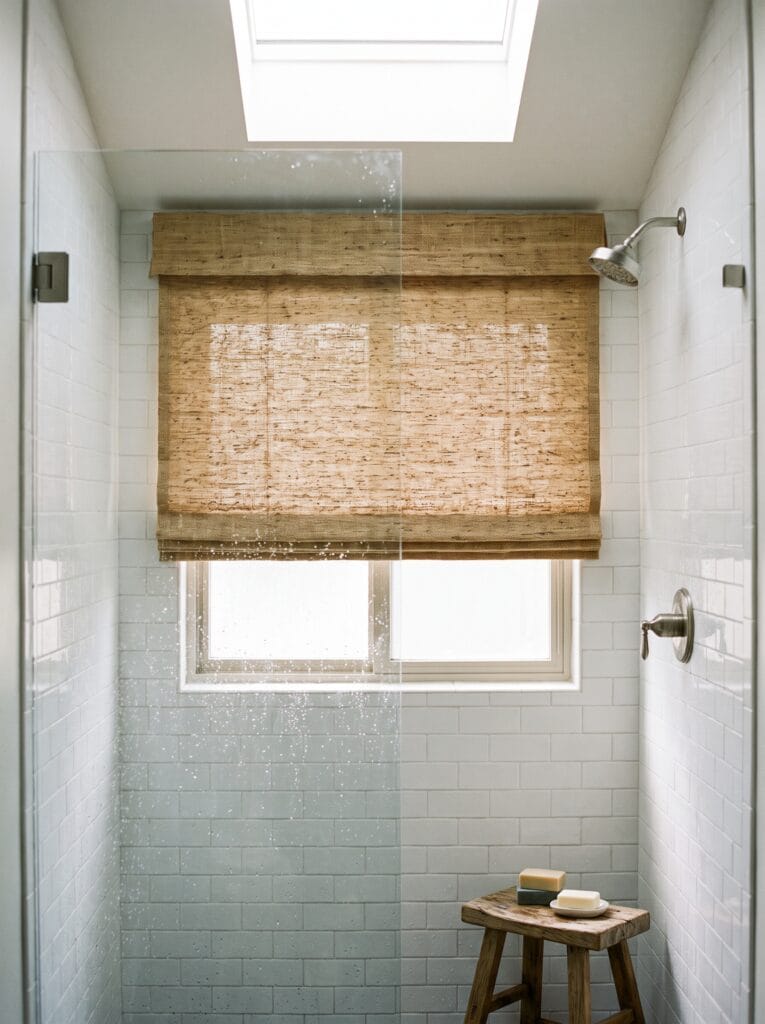
A window set within the wet zone soaks a fabric curtain every single shower, and no fabric survives that schedule for long. Switch to a window blind in a material that tolerates direct water instead, because this is the one place in a bathroom where the prettier option is simply the wrong one.
Woven wood, vinyl and faux-wood slats all handle the exposure without complaint. Real wood and unlined fabric shades do not, no matter how confidently the product page words it, so read the material specification rather than the marketing copy around it.
Mount it outside the tile recess wherever possible so the hardware sits back from the spray line, because fixing brackets into wet tile means drilling straight through your waterproofing.
Shutters make sense on a window that never really dries
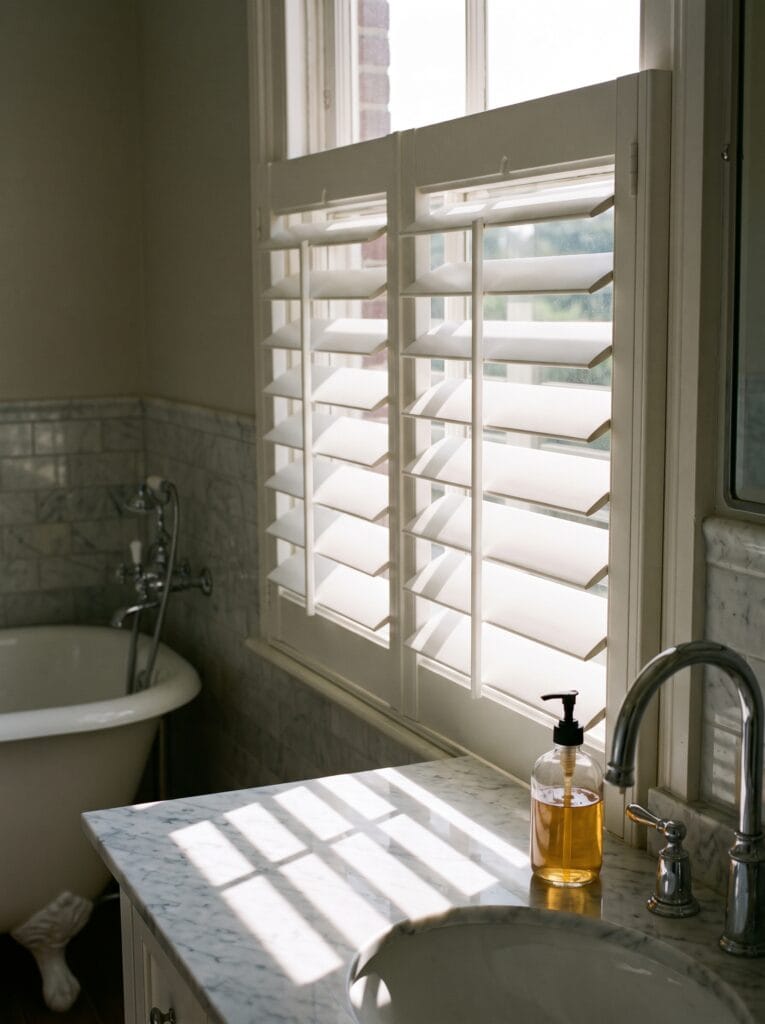
People skip shutters over the price, then replace a mildewed blind three times in five years and spend more than the shutters would have cost. A painted or vinyl window shutter outlasts every soft option in a bathroom that runs humid, and the maths works out sooner than most people expect.
Louvres tilt, which means you adjust privacy and light separately in a way that no curtain can manage. Angle them upward and daylight bounces off the ceiling into the room, while nobody standing at street level can see anything at all through the gaps.
They also wipe clean, and that single quality is what makes them worth the outlay in a bathroom with poor ventilation, where everything soft eventually grows something.
Gingham turns a plain builder bathroom into a cottage one
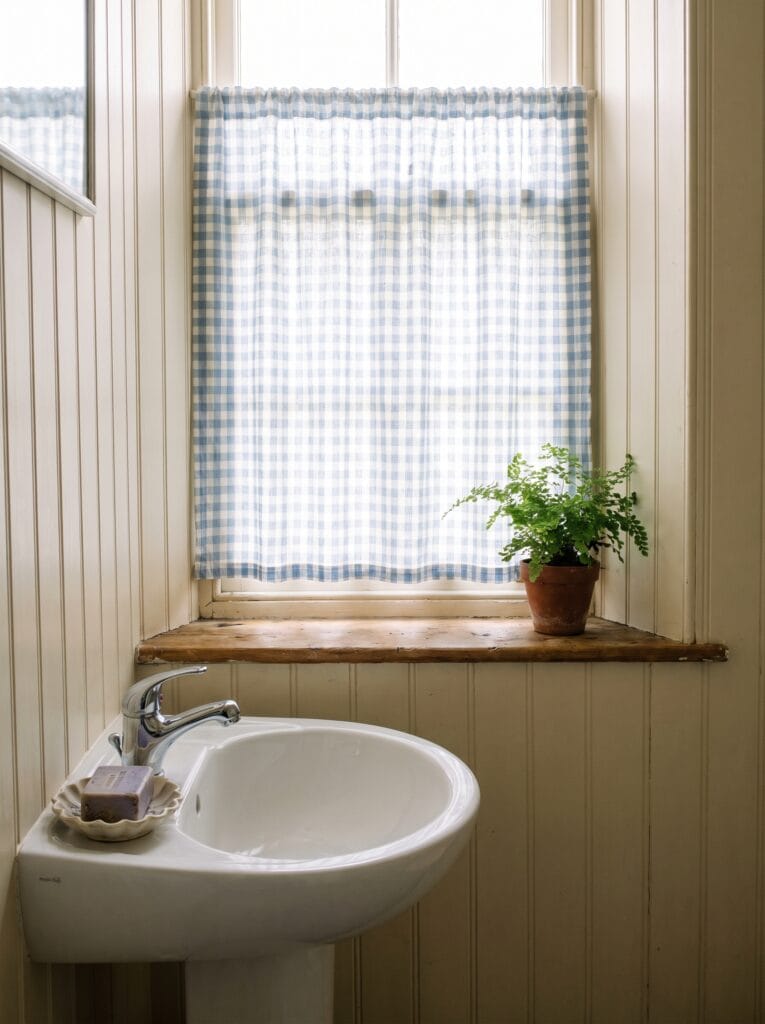
Gingham is the fastest way to signal cottage style, because the check pattern carries a century of association that a solid colour simply cannot. One small panel at the window does the job that a full redecoration would otherwise require, for the price of a metre of fabric.
Scale decides whether it reads as charming or childish, and the margin between the two is narrower than you would think. A check of roughly half an inch to an inch suits a bathroom window, while anything larger starts to look like a picnic blanket on a rod.
Blue and white is the safest pairing against the white sanitaryware most bathrooms already have, whereas red gingham is harder to place unless something else in the room is already warm.
Toile gives a modern bathroom a sense of history
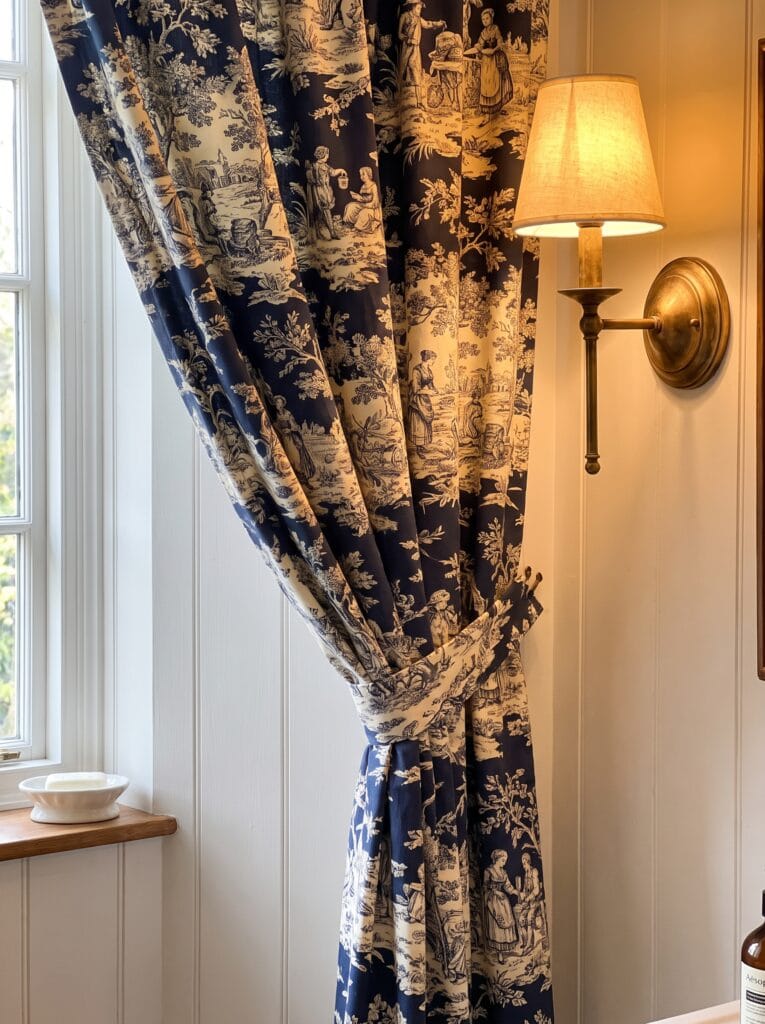
If your bathroom is a new build and feels characterless, pattern is a faster fix than moulding and a great deal cheaper to undo. Toile is the strongest option available, because its fine pictorial print reads as old even in a room that is demonstrably not, borrowing a history the architecture never had.
A single panel is plenty, and restraint is what keeps it looking deliberate. Toile is busy at close range, and covering a whole bathroom in it turns what should be a feature into wallpaper that nobody can rest their eyes on for long.
Hang it where a warm light source will hit it in the evening, because the print holds a lot of fine detail and flat overhead light flattens the whole thing into noise.
Macramé adds texture to a bright bathroom without blocking it
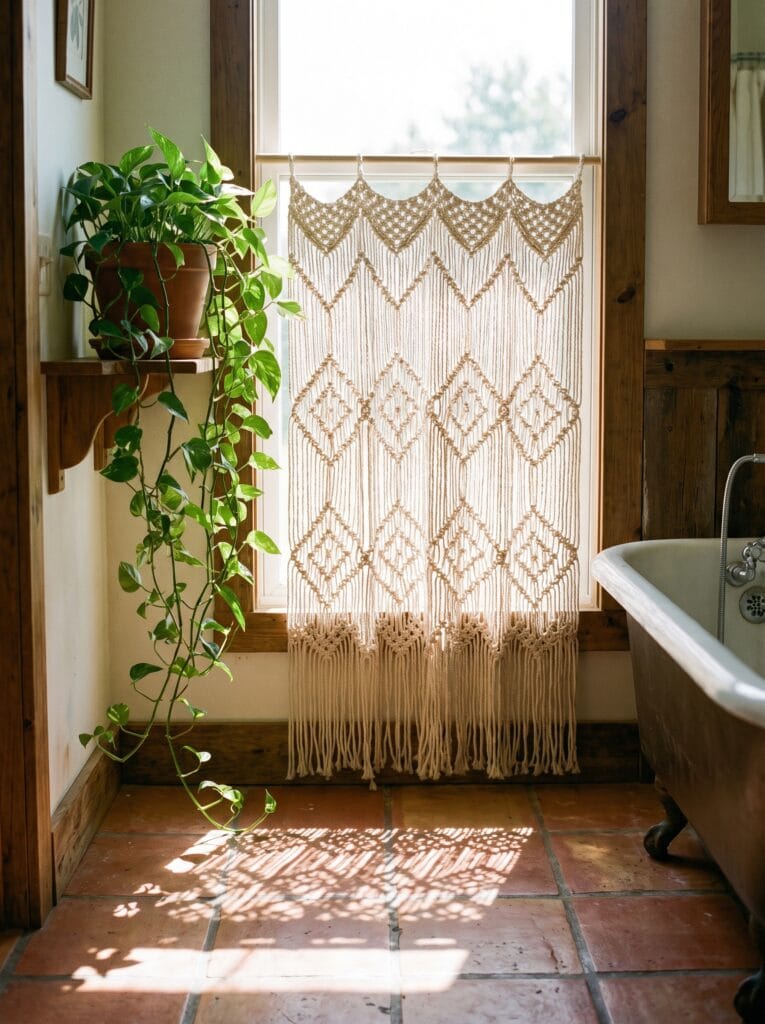
Macrame costs you almost no light while adding more visual interest than any solid fabric, which is an unusual trade to find in a bathroom window. Knotted cord is mostly open space, so it filters rather than covers, and very little of the glass is actually obstructed by it.
The real payoff is the shadow that it throws. Direct sun passing through knotted work casts a lace pattern onto the floor that shifts position through the day, and that moving pattern is the genuine reason to hang one at all.
Privacy is not what it does, so treat a macrame panel as decoration for a window that is already private, or layer it over a blind that handles the actual screening.
In a windowless bathroom, choose polyester over cotton
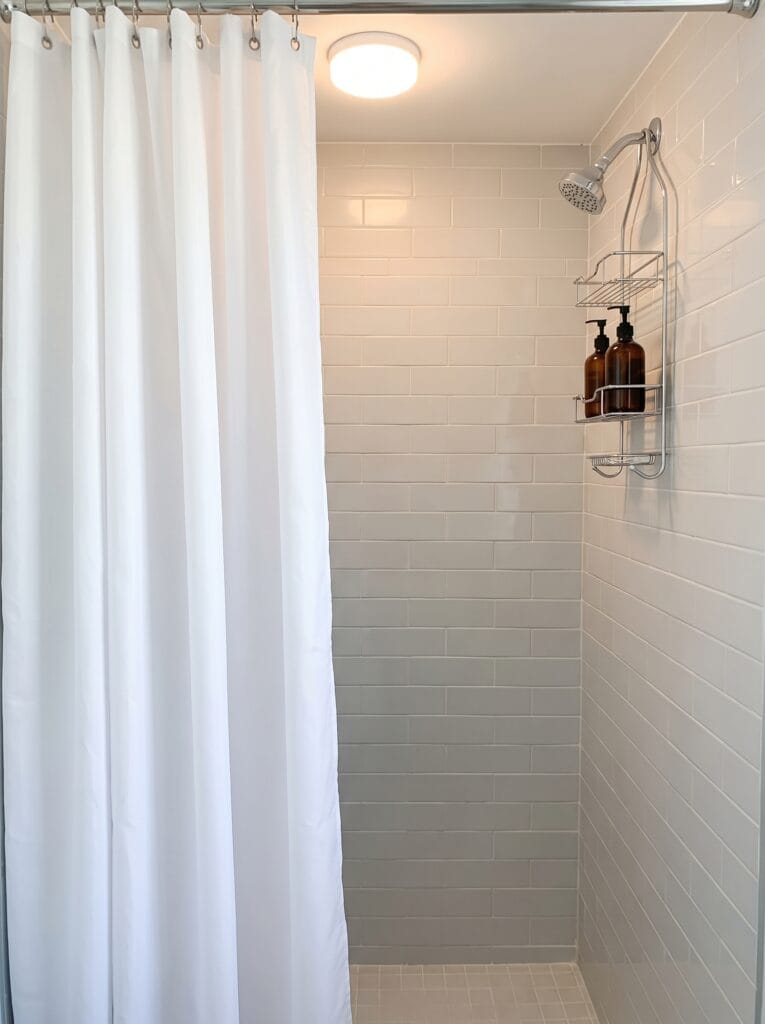
Cotton feels like the natural choice here and is exactly the wrong one. Natural fibres hold moisture far longer than synthetics do, and in a room with no window that damp period never really comes to an end between one shower and the next.
Mildew is a fungus, and what it needs is sustained moisture rather than the occasional splash. A polyester curtain sheds water and dries within a couple of hours, which keeps the fabric below the threshold at which anything can take hold and start growing.
Wash it warm every couple of months and hang it back up closed rather than bunched, because a curtain pushed to one end keeps folded-in damp pressed against itself, and that is where the black speckling always starts.
Shop it on Amazon : N&Y HOME Water-Repellent Fabric Shower Curtain, 72 x 84
Grommet tops give the cleanest folds of any heading
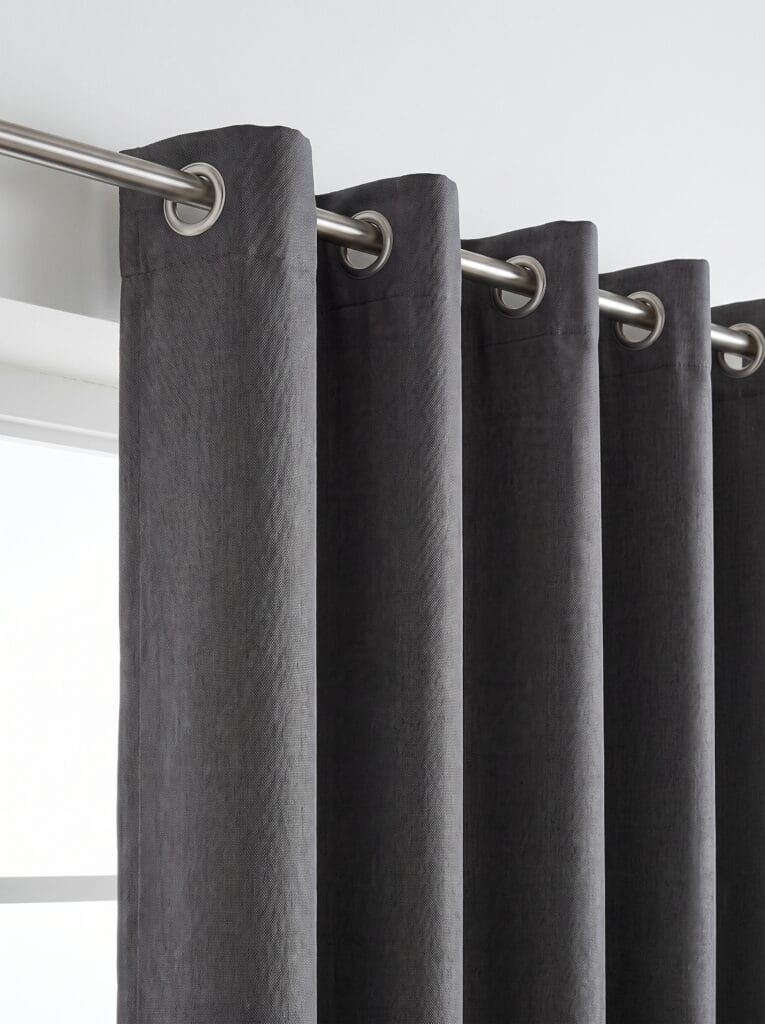
A grommet heading produces even, regular waves, because the metal rings space themselves along the rod at fixed intervals rather than gathering wherever they please. Rings and hooks bunch unevenly by comparison, and the difference shows most on a plain fabric with no pattern to hide it.
They glide better too, which matters on a shower curtain you open and close twice a day. Metal moving on metal runs more smoothly than a plastic hook dragging along a metal rod, and it is the kind of small friction you end up noticing every morning.
Check the grommet diameter against your rod before buying, because a ring that only just clears the rod binds every time you pull the curtain, and the fix is a new curtain rather than a new rod.
Wrap a freestanding tub with a ceiling-hung oval rod
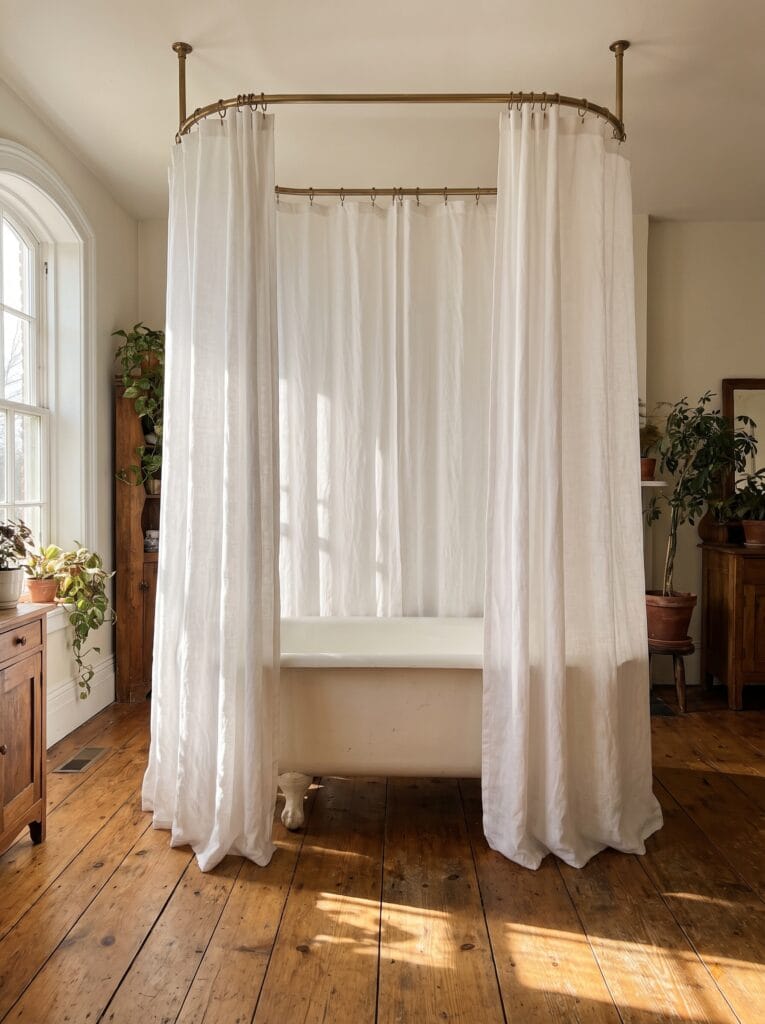
A freestanding bathtub in the middle of a room has no wall to mount anything to, which is why so many of them never get used for showering at all. An oval rod suspended from the ceiling solves that without touching a wall, so the tub keeps its position and gains a function it did not have before.
The curtain then does something a wall-mounted one simply cannot. Pulled closed it becomes a soft room around the bathtub, and pushed open it frames the tub like a canopy, which is a far better look than a rail bolted to the nearest wall.
You need ceiling joists to fix into, so locate them before ordering anything, which is worth checking early if you are still planning the layout, as we cover in our guide to fitting a tub and separate shower in a small bathroom.
Which of these bathroom curtain ideas should you pick?
Three options cover almost every bathroom window, and each of them fails in a different place. Compare them on privacy, on light, and on how long they actually survive the humidity, because those three questions decide it far more reliably than looks do.
Sheer or voile panel. Best for a window with distant neighbors and good daylight. Cheapest to try, easy to wash, and it keeps the room bright. Fails completely after dark with a light on inside, and holds damp if it sits near the shower.
Blind or woven shade. Best for a window close to the wet zone, or one you need to adjust often. Handles moisture well in vinyl or faux wood, and gives full blackout when you want it. Costs more than fabric, and collects dust along every slat.
Window shutter. Best for a humid bathroom with weak ventilation. Wipes clean, lasts decades, and tilts to separate light from privacy. The most expensive by a wide margin, and it permanently changes how the window looks.
Pick on the wet-zone question first, before you consider anything else. Anything within splash range rules out fabric entirely, and that single constraint decides more bathrooms than style ever does.
Start with the rod, not the fabric
Almost every curtain problem in a bathroom traces back to a decision made before the fabric was ever chosen. Rod height sets the proportions of the wall, the liner decides whether the outer layer can be anything you like, and the wet zone determines whether fabric belongs at that window at all.
Sort those three and the pattern becomes the easy part, because not one of them depends on taste. For more ways to pull a bathroom together, browse our full bathroom decor and storage collection.
Whichever of these bathroom curtain ideas you end up choosing, the fabric then has a much smaller job to do, since it only has to look right, which was never the difficult part of the decision.
Found an idea worth trying? Save this pin so you can find it again when you are standing in the aisle deciding.