
Bathroom Mood Board Ideas: Material Palettes You Can Copy
A good bathroom mood board has four parts: one hero surface, one metal, one textile and one wall finish. Choose those four, lay real samples together in your own light, and only then buy anything. Below are twelve material palettes you can copy, each with the sample to order first and the trap to avoid.
Most bathroom mood boards fail for one reason: they are built from photos, not from materials. A photo hides the exact tile, the tap finish and the grout color, which are the things that decide whether a room works in your own light.
So each board below is a flat lay of real samples, with the decision it makes and the trap it avoids. Some suit a bright room and some a dark one, and a few work for renters or a tight budget.
You do not need to copy a board whole. Keep the hero surface you like, the metal and the textile that go with it, and swap the rest. The section near the end shows the order to buy samples in, so you waste less on returns.
Affiliate disclosure: this post contains Amazon affiliate links. If you buy through one, we may earn a small commission at no extra cost to you.
Table of Contents
Anchor a warm spa bathroom mood board on one honed stone
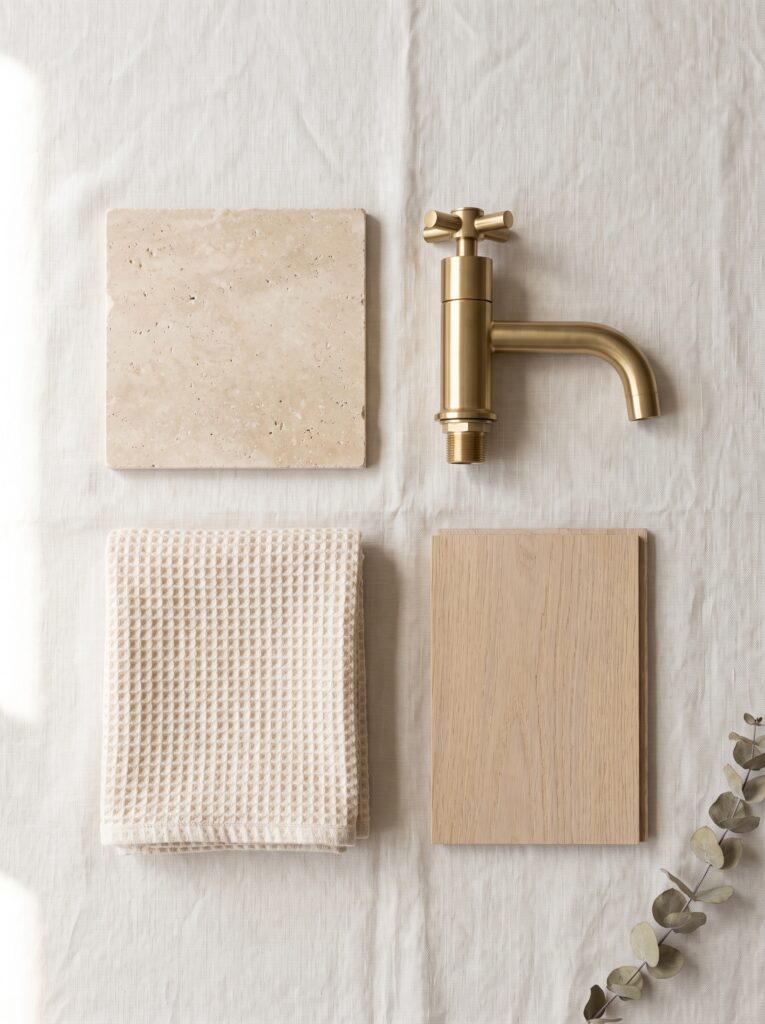
A spa bathroom mood board works when one natural stone sets the tone and everything else stays quiet. Honed travertine in cream or sand does this well, because its soft pits and veining add warmth without a pattern to fight.
Pair it with a brushed brass tap and pale oak, and the set reads as a warm bathroom material palette that is matte and calm. Keep the textile plain, like a cream waffle towel, so the stone stays the star.
Order a full tile sample, not a chip, and look at it in your real bathroom light. Travertine leans yellow under warm bulbs and gray in cool daylight, so check it at night as well.
Choose honed, not polished, for any floor that gets wet, since polished stone turns slick. Seal the stone before the grout goes in, because unsealed travertine picks up soap and hard-water stains.
Plan the grout color now, too. A grout one shade darker than the stone hides the joints, while white grout outlines every tile and makes the wall look busier than the sample did.
Go cool and quiet with powder blue against white marble
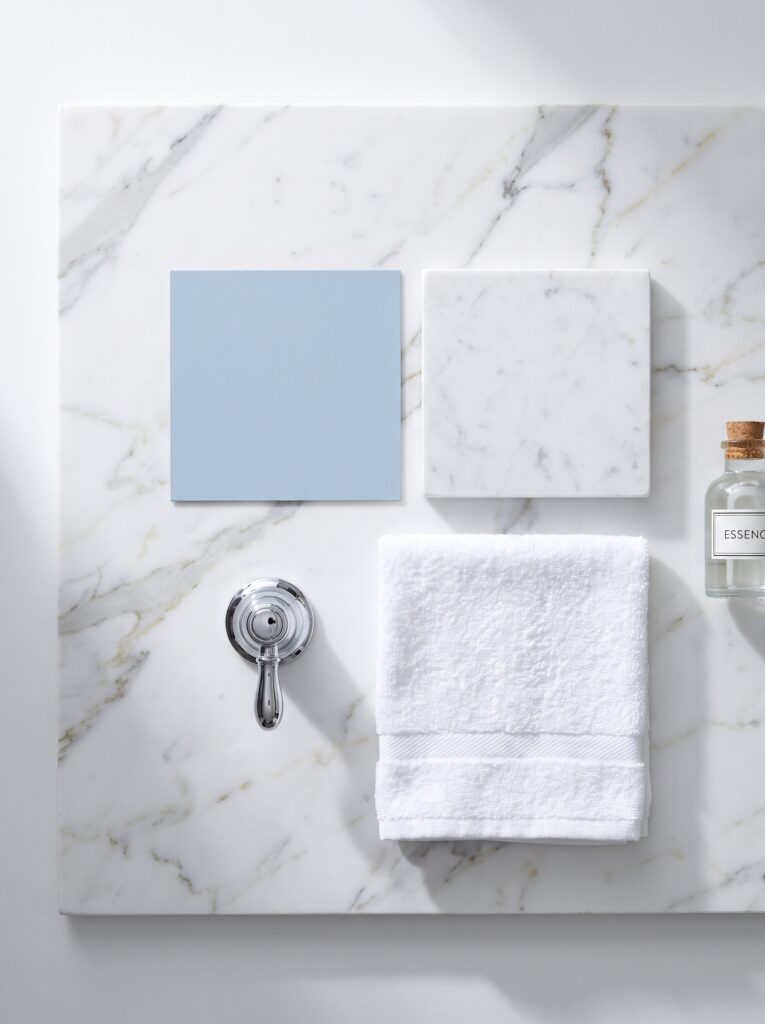
If your bathroom gets strong daylight, a soft blue on the walls stops it feeling stark. A cool bathroom color palette of powder blue beside honed white marble gives a clean, hotel-like calm, and chrome suits it better than brass.
Test the blue on a large card, not a small chip, and tape it beside the marble sample. Blue turns gray in north light and brighter in south light, so judge it at noon and again at dusk.
Keep the textile white or pale gray so the blue has no competition. One small glass dish adds depth without adding another color.
Watch the marble itself. White marble etches when bathroom cleaners touch it and leaves dull spots, so use a stone-safe cleaner, or choose a marble-look porcelain for floors and shower walls.
Add one warm note, like a wooden bath mat or a wood-handled brush, so a cool bathroom mood board does not turn icy. Warm wood on a cool board is the quickest fix for a room that feels like a clinic.
Let one glossy handmade tile lead a sage and walnut board
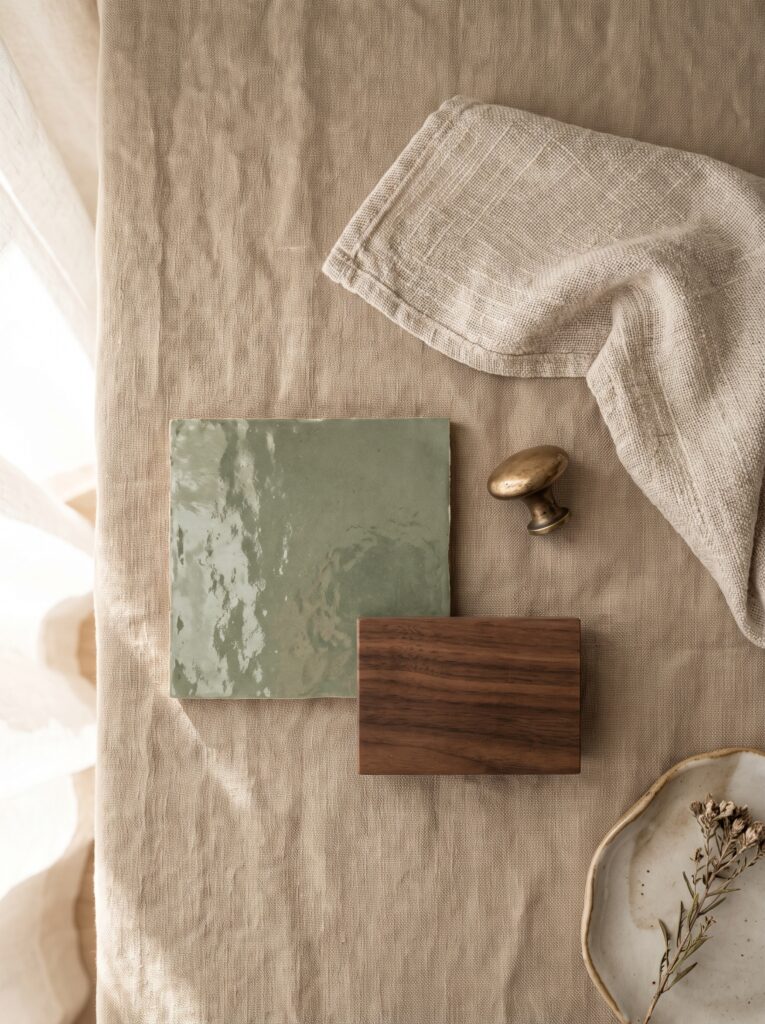
When you want a Japandi feel without going beige, let a glossy sage tile carry the board. Its uneven glaze catches light in a way a flat tile cannot, and walnut with an aged brass knob warms it up.
Buy about 10 percent more tile than you measure, since handmade glazes vary from box to box. Lay every sample in one line before you order so you can see the full range of shade.
Keep the rest of the bathroom material palette plain: one wood, one metal, one oatmeal linen. Handmade tile already gives the eye plenty to read, and a fourth material starts to crowd it.
Use this board on one wall or a backsplash, not the whole room, or the glaze starts to feel loud. The wood and brass can repeat in the vanity and the hardware.
Match the grout to the glaze, not the wall. A soft sage or warm gray grout lets the uneven tile shine, while bright white grout makes every wobble in the glaze look like a mistake.
Keep a terrazzo floor calm with one wood and one black

Terrazzo already has a lot going on, so a board built around it should hold back. One walnut surface and one matte black metal give it structure without adding a second pattern.
Choose a terrazzo with chips close to your wall color, such as cream and taupe against a warm white wall. Bigger, brighter chips are fun in a powder room but tire fast in a bathroom you use every morning.
Matte black shows water spots and fingerprints more than brushed metal, so keep it to small pieces like a soap pump or a tap handle. A black pump beside the sink is an easy first test of the look.
Ask whether the terrazzo is cement-based or resin-based, because the two need different care. Cement types need sealing and can stain, while resin types come sealed, and every one of your bathroom finishes should tolerate the same cleaner.
Shop it on Amazon: Pirooso Matte Black Square Soap Dispenser, 14.5oz 304 Stainless Steel
Choose gray and white when you want a board that resells
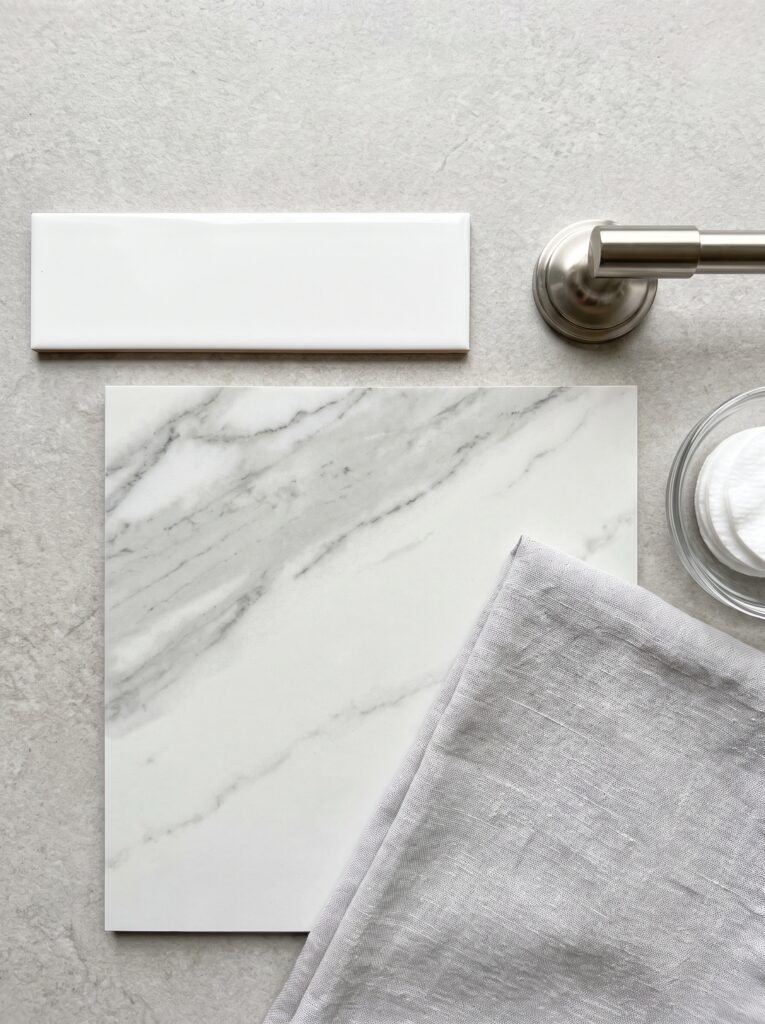
If you might sell in a few years, a gray and white board is the safe bet. Glossy white subway tile, a marble-look porcelain and brushed nickel rarely put buyers off, and they suit most bathrooms.
Use two whites, not one: a glossy white on the wall and a softer marble-look on the floor. Matching them exactly looks flat, while a small difference reads as a designed room.
Bring in warmth with the textile, since gray can feel clinical. A light gray linen towel or an oatmeal bath mat softens the room without changing the base.
Keep the metal to one finish. Brushed nickel on the towel bar, the tap and the cabinet pulls reads as a set, and it hides water spots better than polished chrome.
If the room has no daylight, pick the warmer of your two whites for the floor. Cool whites turn gray under weak bulbs, and a touch of warmth keeps the board from feeling like an office washroom.
Use charcoal tile in a dark room and layer the light
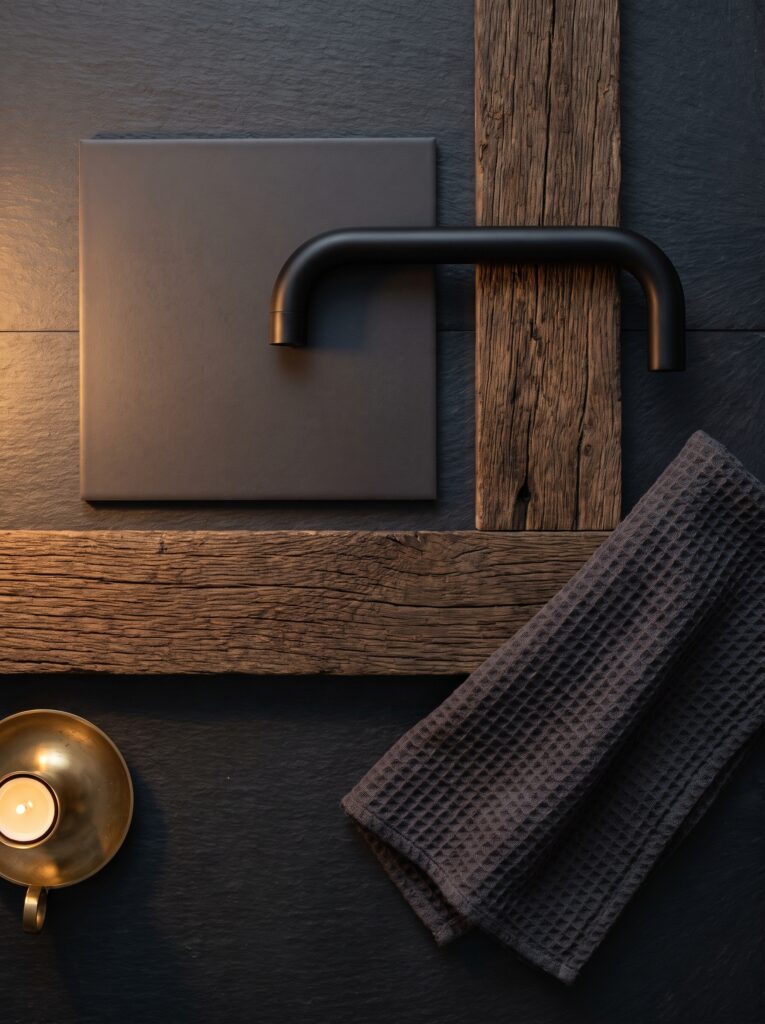
A windowless bathroom will not get brighter with white, so lean into the dark. A matte charcoal tile with aged oak and a matte black tap makes a moody bathroom mood board that feels intentional, not gloomy.
Light is the real ingredient. Plan a warm sconce on each side of the mirror and a small lamp or candle on the counter, then check your samples under those bulbs, not under shop lighting.
Dark tile and dark grout hide dirt but show soap film and water spots, so pick a matte finish and expect a weekly wipe. For more ways to style a compact, dark room, browse our bathroom styles and aesthetics ideas.
Keep one lighter surface, like a pale towel or a cream dish, so the board has a place for the eye to rest.
Avoid a dark ceiling unless the room is tall and well lit, since it can make a low bathroom feel like a box. A soft off-white overhead lifts the edge of the room and bounces the lamp light back down.
Bring in limewash and stone for a soft organic finish
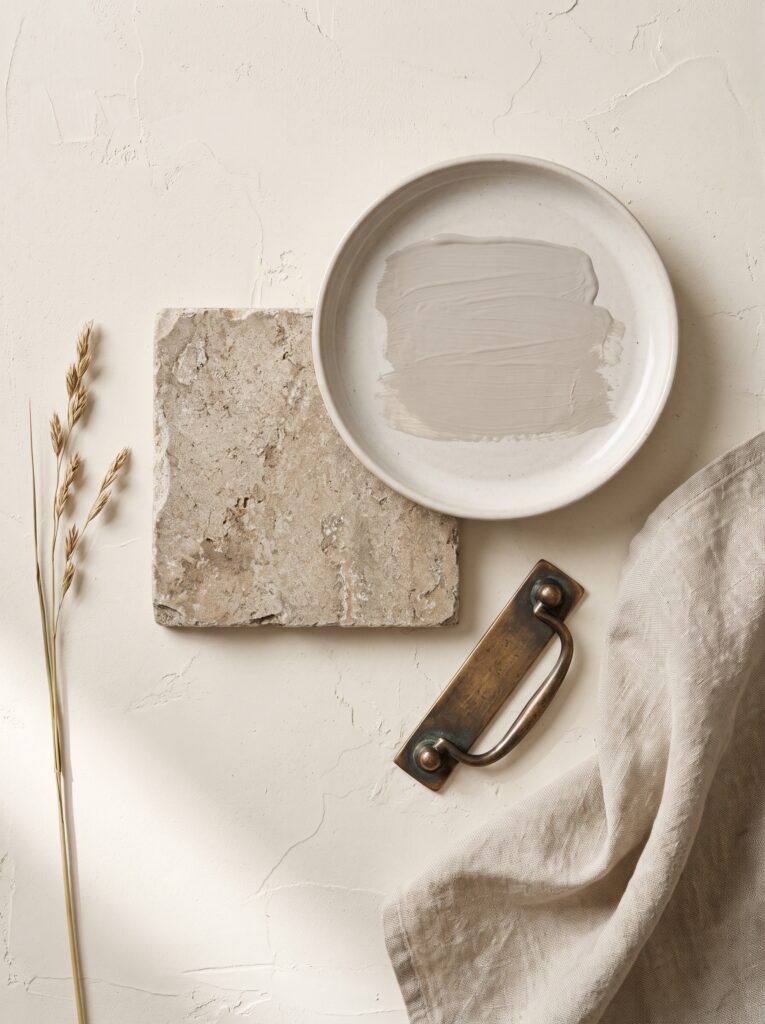
Limewash gives walls a cloudy, hand-finished look that flat paint cannot copy, and a rough honed stone keeps it from feeling too soft. Add an aged bronze pull and a natural linen towel, and the board reads as organic and calm.
Use limewash on dry walls only, such as the wall behind the vanity or above a wainscot. Keep it out of the shower, where it needs a sealer and still wears faster than tile.
Paint a large sample board and move it around the room for a day. Limewash shifts a lot between morning and evening, and a gray-beige can turn pink under warm bulbs.
Choose stone with a matte, textured face so it echoes the wall. Smooth polished stone next to limewash looks like two different rooms stitched together.
Wipe splashes quickly and use a soft brush on textured stone, since its pits hold dirt and a sponge only pushes it around. A clear matte sealer keeps the surface from darkening with each spill, and it suits the rest of your bathroom finishes.
Pick microcement and oak when you want fewer grout lines
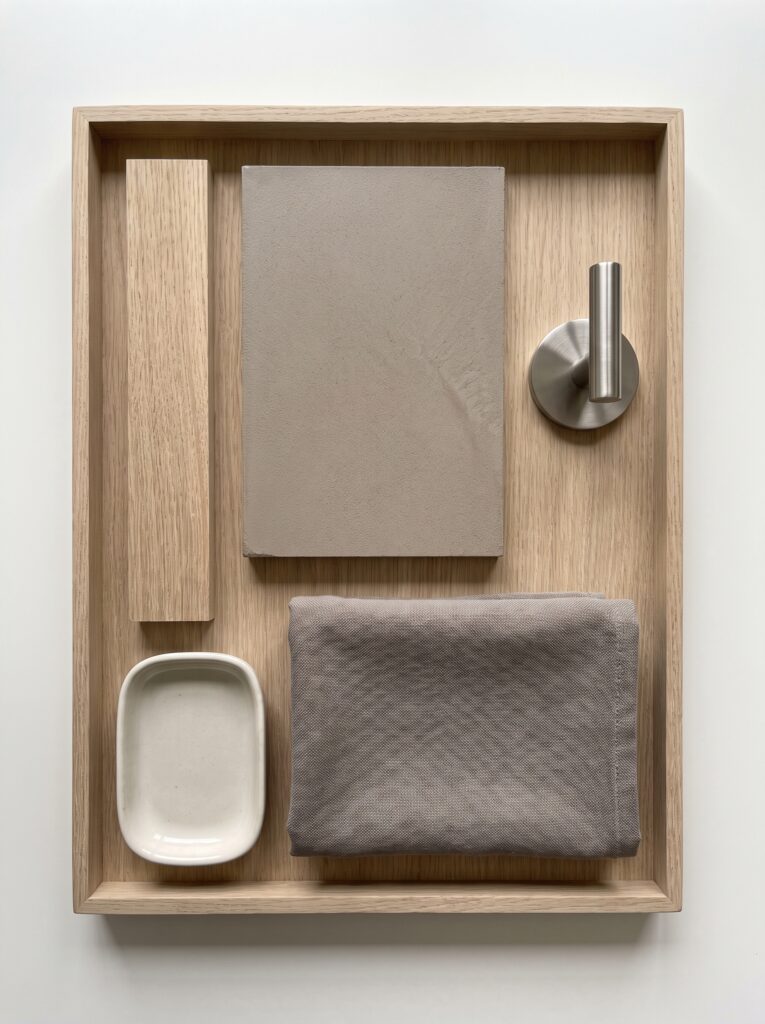
Microcement is the answer when you hate scrubbing grout. It runs seamlessly over walls and floors, so a warm taupe board with pale oak and brushed steel gives a clean, quiet room.
Ask the installer for a sample made with the exact sealer, since the sealer changes both the sheen and the color. Microcement can scratch or stain when it is thin or badly sealed, so look at their finished bathrooms first.
Brushed stainless hooks fit this palette. Adhesive ones need a smooth, clean surface such as tile, glass or metal and are not meant for painted drywall, so press them on and wait 24 hours before hanging a towel.
Think about the floor as well. A seamless surface with a slightly textured, slip-resistant sealer is safer when wet, so ask to stand on a sample barefoot. A microcement bathroom mood board looks calm, but it should also feel safe underfoot.
Shop it on Amazon: Livabber Adhesive Towel Hooks, 304 Stainless Steel, Brushed Nickel, 6 Pack
Warm a cold room with terracotta and cream

A north-facing or all-tile bathroom often feels cold, and terracotta fixes that faster than any paint. A hex terracotta floor with creamy wall tile and a brass tap gives a warm, Mediterranean board.
Terracotta is porous, so seal it before grouting and reseal it on a regular schedule, or it stains from soap and oils. Ask for a glazed version if you want less upkeep.
Let cream do the heavy lifting on the walls, and add a touch of rust in a striped towel rather than more clay color. Too much terracotta makes a small room feel closed in.
Order two or three tiles from different boxes. Terracotta varies a lot in tone, and that spread is part of the charm, but you want to see it before it covers a floor.
Terracotta and brass age together, each picking up a soft patina over time. If you would rather keep a bright gold look, choose a lacquered brass tap, and save the unlacquered kind for pulls you do not mind aging. Order both bathroom samples before you decide.
Copy a hotel with marble, nickel and one navy

A classic hotel bathroom uses very little color: white marble, polished nickel and one deep navy accent. The navy gives the room a spine, and the white keeps it bright.
Keep the navy small, such as a painted vanity, a stripe on a towel or a single wall. Dark blue on every surface turns the room heavy, while a small amount reads as confident.
Real marble is lovely but fussy, so use a marble-look porcelain on the floor and keep the real stone for a vanity top. Polished nickel looks warmer than chrome and pairs well with navy.
Hold the navy sample card next to the towels you already own. A blue that clashes with them is easy to catch before you paint.
Edit hard before you buy. A hotel-style bathroom mood board depends on repeating the same few items, so if a fourth finish sneaks in, such as gold hooks beside nickel taps, take it out.
Build a rental board from peel-and-stick and removable pieces

Renters can still build a real board if every piece can come off again. Peel-and-stick vinyl tile, removable wallpaper and adhesive hooks give you a full palette without touching the landlord’s surfaces.
Start with the floor, since it covers the most area. A white marble-look vinyl tile reads as stone at a distance. Check the listing’s removal notes and test one corner on a clean, flat floor before you commit.
Choose a soft, small pattern for the wallpaper, like a faint leaf print, so it does not fight the tile. A gray or oatmeal towel and a satin nickel hook tie the set together.
Keep the packaging notes for everything you stick down, so you know what to remove first at move-out. A photo of the floor before you start also helps if the deposit comes up later.
Shop it on Amazon: WESTICK Marble Peel and Stick Floor Tile Bathroom Waterproof Vinyl Tiles
Spend the budget on one stone and keep the rest plain

A small budget goes furthest on one beautiful surface. Put the money into a single stone piece, like a honed stone floor or vanity top, and keep the wall tile, paint and hardware plain.
White ceramic wall tile, a cream paint and a satin brass knob cost little and let the stone do the talking. Matching the cheaper pieces to the stone’s undertone makes them look chosen rather than leftover.
To see how far one splurge can go, flip through our budget bathroom remodel before and after photos. Then set a spending cap for each surface before you shop.
Keep a one-page list beside the board with the cost of each sample and the full-room total, so the number never surprises you at checkout.
A plain board can still feel rich if you repeat one detail. Use the same brass finish on the knob, the towel hook and the tap, and the room reads as planned instead of cheap.
Order your bathroom samples in this sequence
Turn the bathroom mood board into a shopping list by ordering bathroom samples in the order below. Each step locks one decision, so the next one gets easier.
- The floor or hero tile. It covers the most area and has the fewest choices, so everything else matches it.
- The wall finish. Order a tile sample or a paint pot, and judge it beside the hero tile in daylight.
- The metal. Get one real tap handle, pull or hook in the finish, not a photo of it.
- The wood or vanity color. Ask for a door or drawer sample, because screens shift wood tones.
- The textile. Buy one towel last, since it is the cheapest piece to change if the board feels off.
Then run three tests. View the set in morning light and under your night bulb, splash a little water on it, and leave it on the bathroom counter for a week. If you still like it, buy.
Start with the surface you cannot change
Every bathroom mood board starts with the surface you cannot change, such as the floor, the tub or the tile already on the wall. Match the rest of the board to that, test samples in your own light and stop at four materials.
If you want one place to begin, pick your hero surface this week and order the largest sample you can get.
Save this pin to your bathroom ideas board so the material palettes are handy when you shop.