Cost to Add a Bathroom: 10 Steps From Plumbing Check to Final Quote
Most sources put the cost to add a bathroom between $5,000 and $75,000, with a typical project near $21,000 to $49,000, according to HomeAdvisor and This Old House. The nearest drain pipe moves that number more than anything else, so price the job in order: type, drain, room, floor, fixtures, labor and a cushion.
Online figures clash because each site prices a different bathroom. A powder room in a closet and a full bath on a new foundation share a name and almost nothing else. Bathroom addition cost is mostly a question of which of those two you are building.
The ten steps below follow the order a plumber would use. Each ends in a decision you can write down, so by Step 10 you hold a range, a cushion and a list of questions for contractors instead of one frightening figure.
Every price here names its source, and the sources disagree on purpose. Seeing the spread is the quickest way to tell whether a quote is normal.
Affiliate disclosure: this post contains Amazon affiliate links. If you buy through one, we may earn a small commission at no extra cost to you.
Table of Contents
Step 1: Decide which kind of bathroom you are adding
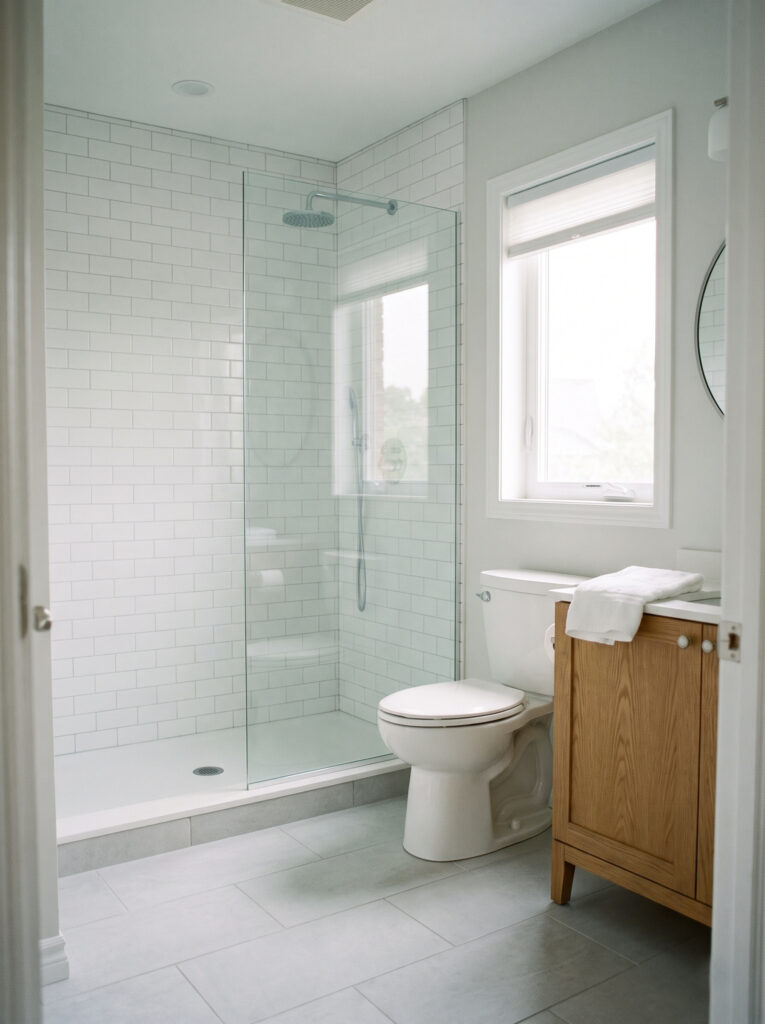
The type sets the price band before you look at a single fixture. A half bath has a toilet and a sink, a three-quarter bath adds a shower, and a full bath adds a tub or a tub and shower. Pick one now, because every later number depends on it.
| Type | What it holds | Typical size | Price range, by source |
|---|---|---|---|
| Half bath | Toilet and sink | 20 to 35 sq ft | $4,000 to $12,000 (HomeAdvisor); $3,000 to $15,000 (Nationwide Builders) |
| Three-quarter bath | Toilet, sink and shower | 35 to 50 sq ft | $6,000 to $22,000 (HomeAdvisor); $8,000 to $22,000 (Nationwide Builders) |
| Full bath | Toilet, sink and tub or tub-shower | 50 to 100 sq ft | $10,000 to $50,000 (HomeAdvisor); $15,000 to $35,000 (Nationwide Builders) |
| Primary bath | Full set plus double sink or soaking tub | 60 to 120 sq ft | $22,000 to $90,000 (HomeAdvisor) |
Sizes come from Nationwide Builders. Notice the gaps. A full bath can cost $10,000 or $50,000 under the same label, so the type narrows your range without closing it. Steps 2 to 4 close it.
Check the space too. This Old House says a half bath needs at least 15 to 20 square feet, roughly a 3 by 6 foot room. That small footprint is why the cost to add a half bath stays far below a full bath.
Use square footage as a quick sanity check. HomeAdvisor puts conversions at $200 to $250 per square foot and new additions at $400 to $550. A 40 square foot room therefore lands near $8,000 to $10,000 as a conversion and $16,000 to $22,000 as an addition.
Step 2: Find your nearest drain and vent stack before you pick a room
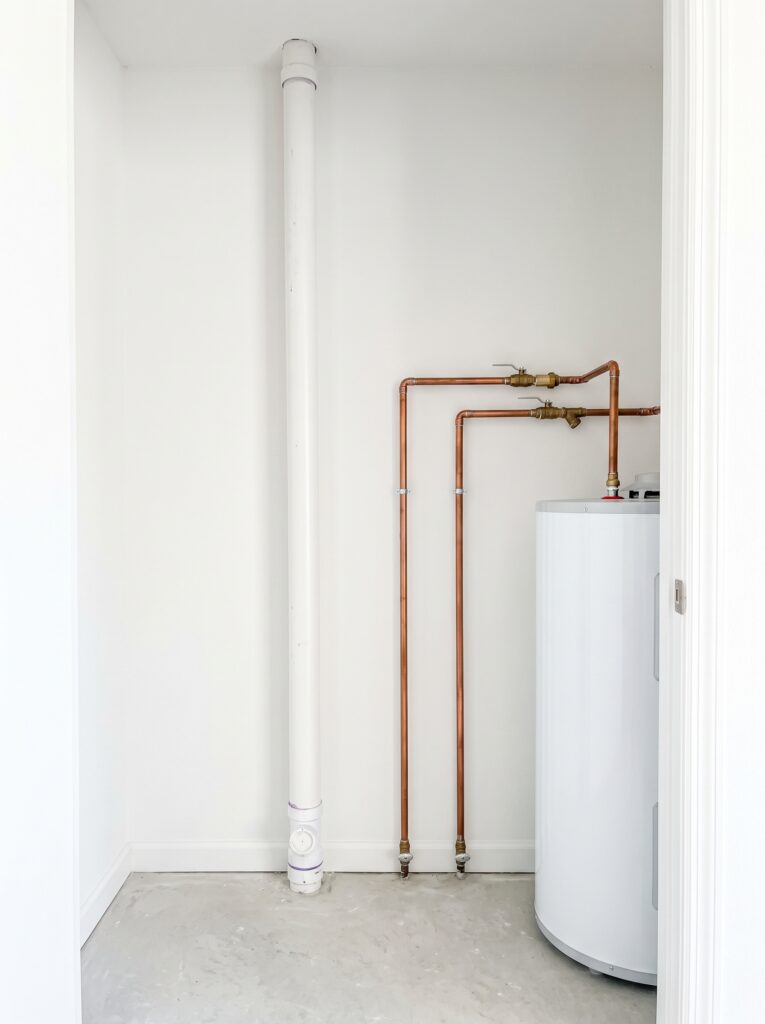
Plumbing distance does more to the bill than size, finishes or style. Nationwide Builders calls the distance to the existing drain-waste-vent line the single biggest cost driver, and every extra foot of pipe means more cutting, more labor and more patching.
Start in the basement or a utility closet. Look for the large vertical pipe, usually 3 or 4 inches wide, that carries waste down and vents it up through the roof. That is the stack. Your new bathroom wants to sit close to it.
Contractor Quinn Babcock, quoted by Block Renovation, suggests placing the new bathroom back-to-back with a kitchen or another bathroom. Shared walls cut labor.
Then ask whether the new drains can run downhill to it. A bathroom below the sewer line cannot drain by gravity, which is why basement baths so often need a sewage ejector pump. HomeGuide adds $2,000 to $5,500 for one, while Rate Your Plumber quotes $800 to $3,000 installed. Pumps add cost.
Step 3: Rank your candidate rooms by distance to that stack
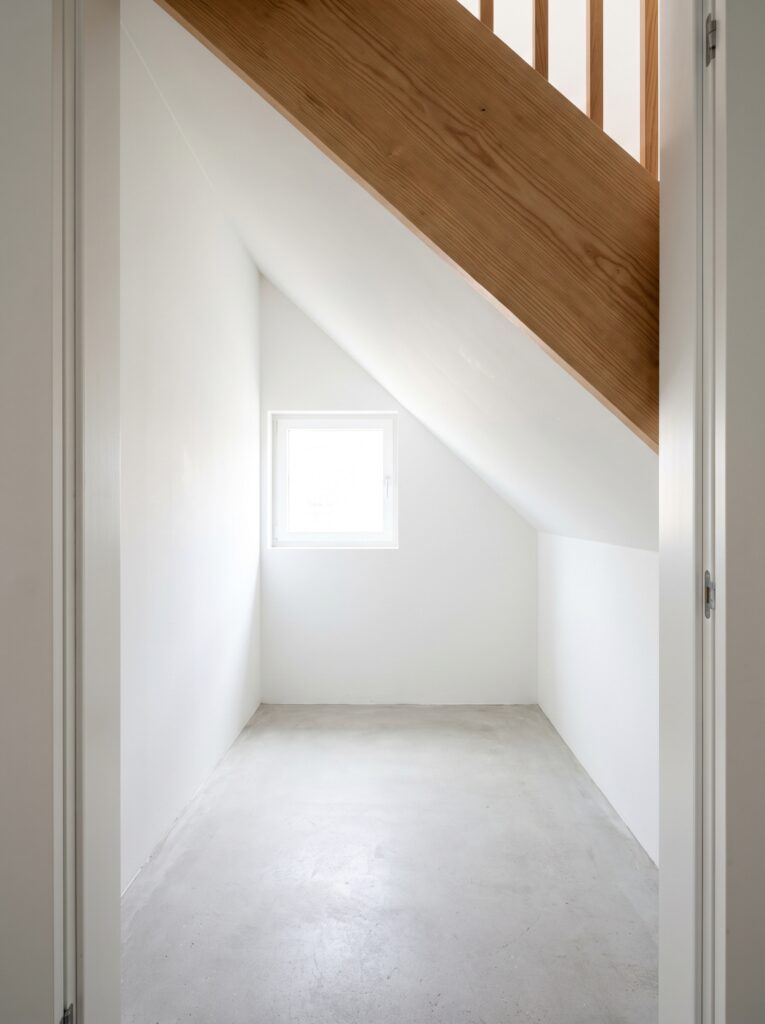
Converting a room that already has plumbing nearby beats building new. HomeGuide puts conversions at $5,000 to $25,000 and new additions at $20,000 to $75,000, so the room you choose matters more than the tile you pick.
The same rooms price differently by source. A closet or under-stairs space runs $5,000 to $10,000 on HomeAdvisor and $3,000 to $7,500 on HomeGuide, while a laundry room runs $5,000 to $19,000 and $7,500 to $16,000. Attics, garages and bedrooms climb higher still.
Measure from each candidate to the stack with a laser measure or a tape, and rank the rooms by distance. Whether you are adding a bathroom to a house with one bath or three, the closest room with enough space usually wins.
Shop it on Amazon: BOSCH GLM100-23 100 Ft Blaze Laser Distance Measure, with 2 AA Batteries
Then score each room from 1 to 3 on distance, on whether it shares a wall with existing pipes, and on minimum size. Add the scores. The room with the highest total goes forward to quotes. Distance wins.
Step 4: Check what is under the floor before you commit
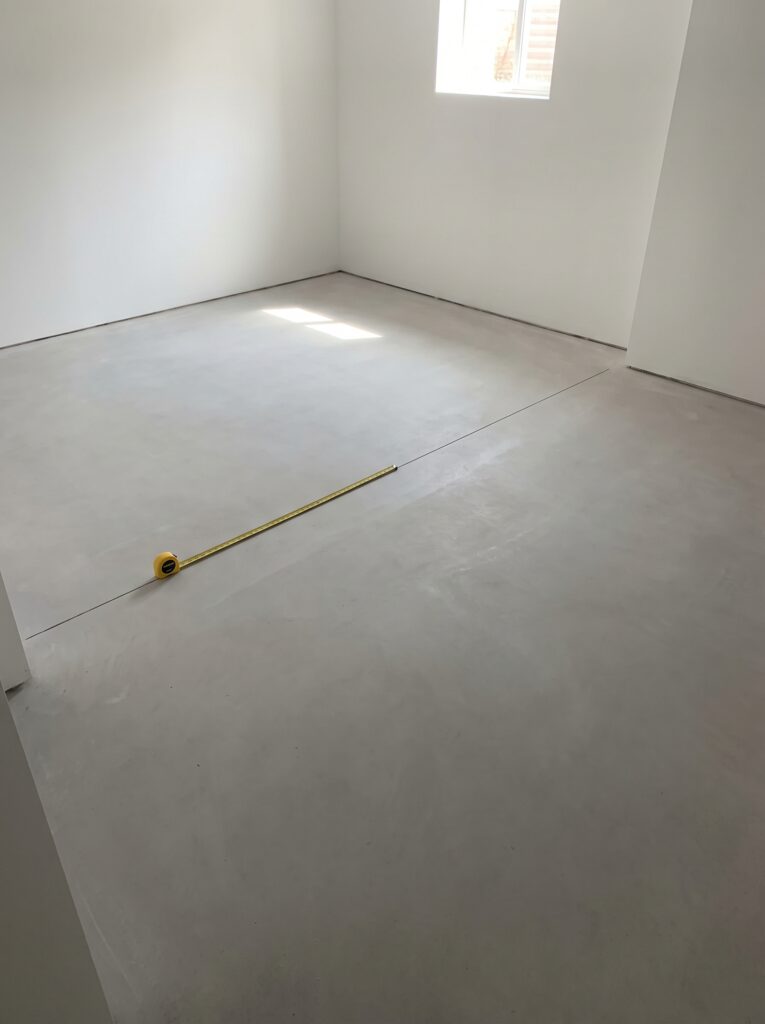
A concrete slab changes the job, while a crawl space or framed floor keeps it simple. Over a slab the crew must saw-cut the floor, trench new drain lines and patch the concrete, according to HomeAdvisor, and that work is priced apart from the fixtures.
Cutting figures vary. Nationwide Builders puts it at $500 to $2,000, while Rate Your Plumber says $1,500 to $5,000, so the length of the run matters.
Nationwide Builders splits basement bathroom jobs into three scenarios. With existing rough-in on a builder-prepped slab, expect $3,000 to $7,000. With no rough-in but a gravity drain, $5,000 to $12,000. With an ejector pump, $8,000 to $20,000.
Look for stub-outs. Rate Your Plumber says many homes built after 1990 have capped drain and supply connections in the basement slab, which cuts $2,000 to $5,000 from the plumbing bill.
Floors above a basement or crawl space are the easy case. The plumber works from below. Only a hole per fixture gets cut.
Step 5: Check code minimums and permits before you price anything
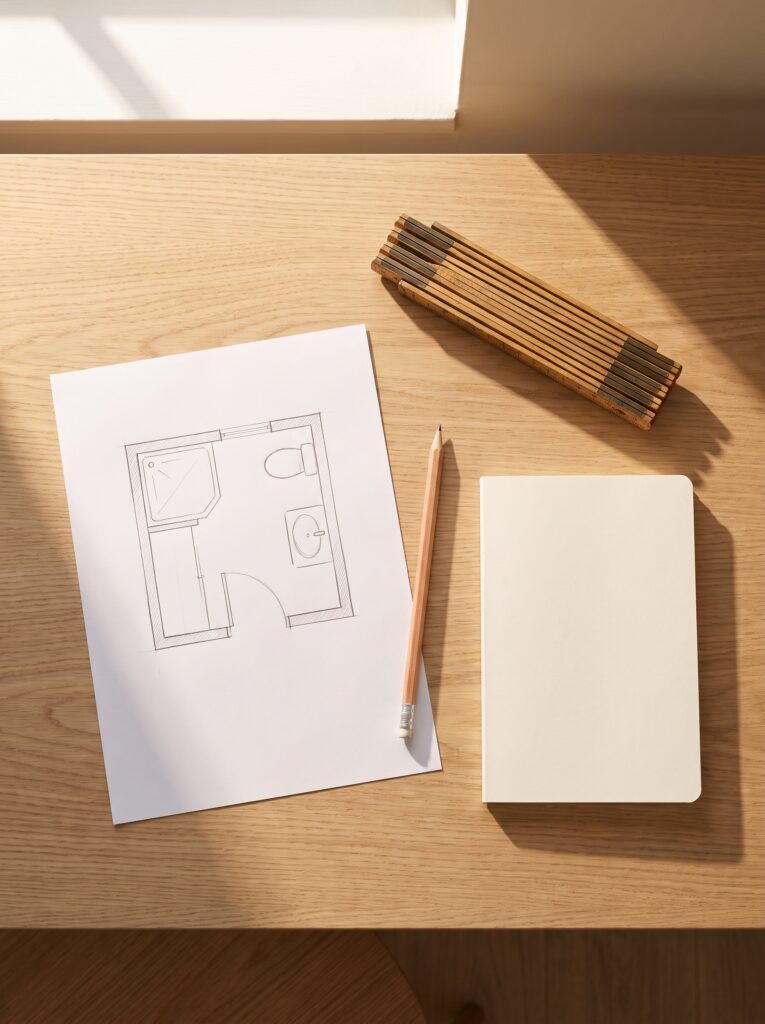
Permits cost less than the rework they prevent. The bathroom addition permit varies widely: This Old House says at least $100, HomeAdvisor lists $150 to $2,000, and Rate Your Plumber quotes $500 to $2,500 with inspections.
Call your building department and ask four things: which permits you need, the minimum room size, whether an exhaust fan is required, and how many inspections to expect. This Old House notes that many codes require a fan, which adds $300 to $800.
Know who pulls the permit. Rate Your Plumber says a licensed contractor who pulls it in their own name also takes on liability for code compliance.
Tiny rooms still count. HonestCasa lists 18 square feet, or 3 by 6 feet, as the minimum for a half bath. If yours is that small, our half bathroom ideas show how to fit a toilet and sink into it.
Skipping permits is the costly mistake. Nationwide Builders warns that unpermitted work can cause serious problems at resale.
Step 6: Price the fixtures you actually want
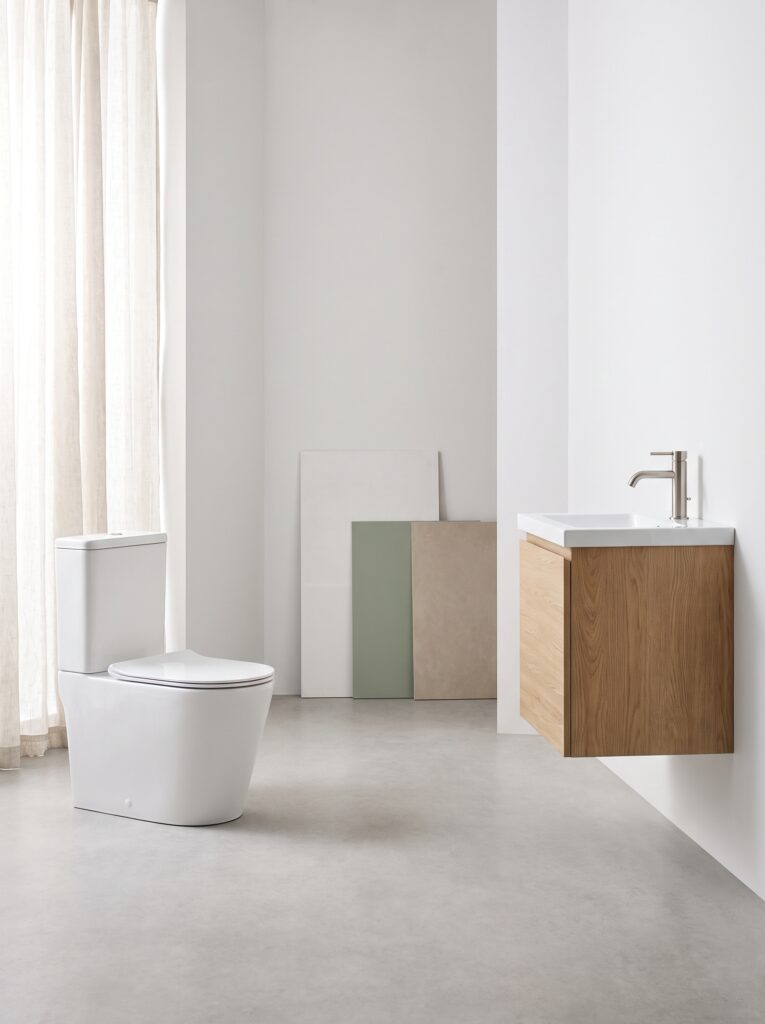
Fixtures are the one part of the budget you control completely, and the ranges are huge. HomeAdvisor lists toilets at $200 to $800, vanities at $400 to $5,000, bathtubs at $1,100 to $5,900 and showers at $1,200 to $19,000.
Write down each fixture twice: the basic version and the one you would love. For a toilet, vanity, bathtub, faucet, lighting and fan, HomeAdvisor’s low ends total $2,350 and its high ends $14,300. That gap is your design budget.
Flooring adds more. This Old House puts vinyl and laminate at $6 to $14 per square foot and ceramic tile at $21 or more, so a 40 square foot room swings by several hundred dollars.
Choose the toilet early. Its rough-in distance fixes where the drain must end. A one-piece model is easy to wipe clean and has no gap behind the tank for dust.
Shop it on Amazon: KOHLER K-26813-0 One Piece Toilet, Chair Height Elongated Toilet with Soft Close Toilet Seat, 1.28 GPF, White
Step 7: Add labor and decide which jobs you can safely do yourself
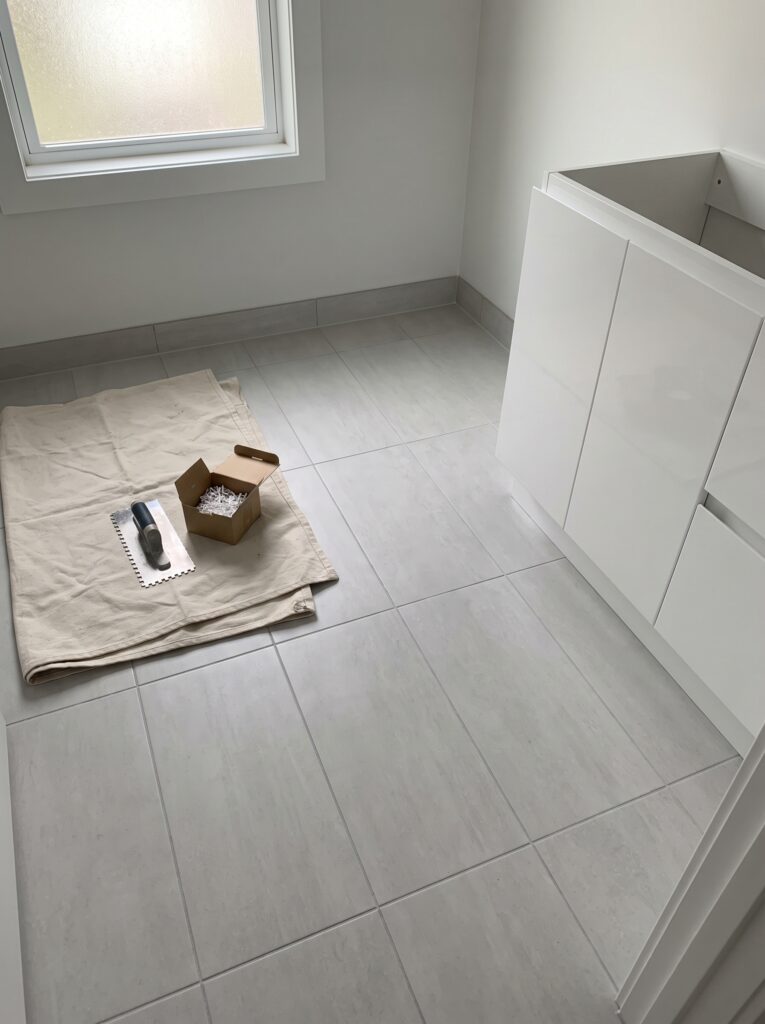
Labor is the biggest slice. This Old House says 40 to 55 percent of the cost to add a bathroom goes to labor, and HomeAdvisor puts it near 55 percent. On a $20,000 job that is $8,000 to $11,000, plus 15 to 25 percent more if a general contractor manages the work.
Hourly rates explain much of it. This Old House lists plumbers at $75 to $150 an hour and electricians at $50 to $150. Ask for fixed prices where you can, since hourly rates reward slow work.
Sort the jobs by risk. Paint, towel bars, mirrors and accessories are easy DIY work, says HonestCasa. Tile is learnable. Plumbing rough-in and electrical belong to licensed trades, and Rate Your Plumber says bathroom wiring must meet NEC code.
HomeGuide gives the same advice. Our DIY and budget bathroom projects show which finishing jobs are worth the weekend.
Step 8: Budget for the hidden costs
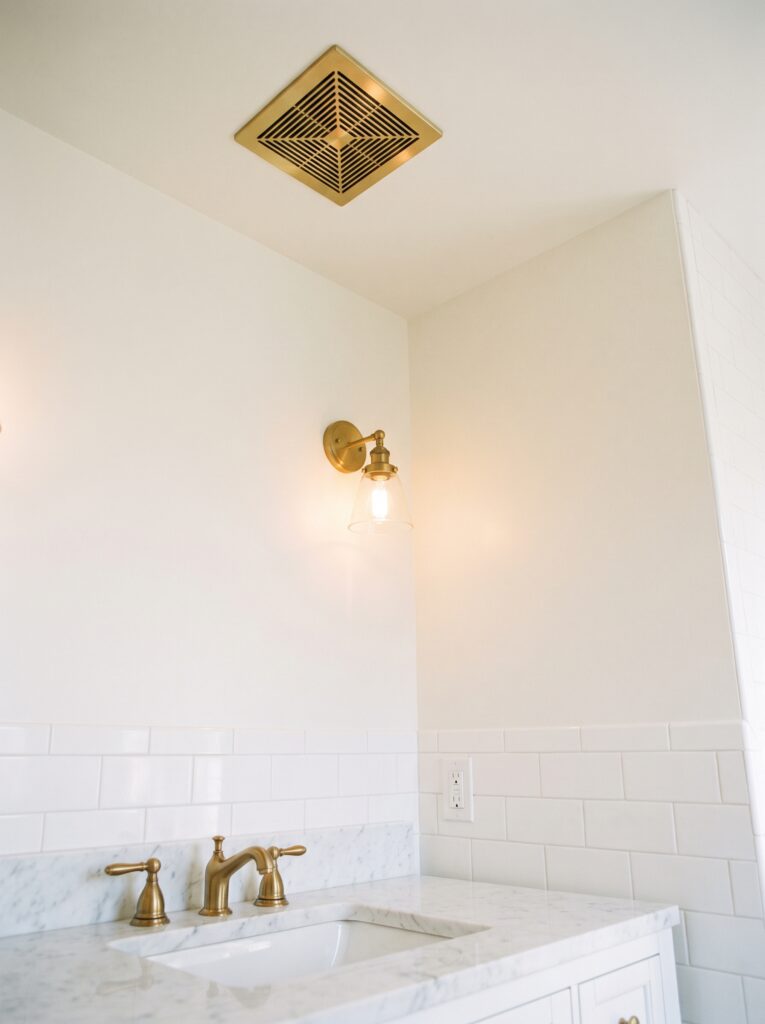
Hidden costs live in the walls, not the catalog. A vent duct to the roof, a new circuit with GFCI protection, a wall opened for pipes and the patch afterward all appear on quotes as separate lines.
Nationwide Builders’ breakdown of a full bath built inside existing space shows the pattern. Plumbing runs $2,500 to $4,500, electrical $600 to $1,500, and framing and drywall $800 to $2,000. With waterproofing, permits and overhead, the six lines total $5,750 to $12,000 before a single fixture.
Venting is a good example. This Old House prices code-required exhaust fans at $300 to $800, and the duct run to the outside is extra.
Shop it on Amazon: Panasonic FV-0511VQL1 WhisperCeiling Bath Fan +Light, 50-80-110 CFM
Budget for an electrician too. Rate Your Plumber says bathroom electrical must meet current NEC code, and Block Renovation notes that new circuits are typically needed for lighting, outlets and ventilation. Check the panel early.
Older houses carry a special risk. Neighborly warns that outdated plumbing or wiring may need to be brought up to code once the walls are open.
Step 9: Add a contingency and test the total against what your home would gain
Cushion first. Take your running total for the cost to add a bathroom and add 10 to 20 percent, which HomeGuide and Badeloft both recommend and Neighborly trims to 10 to 15. Old pipes, wiring and foundation surprises appear once the walls are open.
Then test the result against value. This Old House cites about 53 percent recouped at resale for a midrange addition, HomeAdvisor says 55 percent, and Moon Mirror says 60 to 70 percent. HonestCasa claims 100 to 140 percent for a half bath in a one-bath house, the best case.
Here is the math on a $12,000 half bath that returns 55 percent. It comes back as $6,600 at resale, so the real net cost is $5,400.
Stay or sell? If you will stay ten years, comfort counts and the payback figures matter less, but if you plan to sell within three, put the money into the type buyers expect.
Step 10: Get three line-item quotes and compare them like for like

Three is the minimum. Get written quotes and ask every contractor to price the same scope. Rate Your Plumber says to collect three bids for a $15,000 to $40,000 project, and Nationwide Builders suggests having a plumber assess the rough-in first.
Ask for separate lines for plumbing, electrical, drywall, tile, fixtures, permits and cleanup. HomeGuide recommends itemized breakdowns of labor, materials and permit fees. A quote without those lines hides where the money goes.
Bring a short list of questions to every walk-through:
- Does the bid include all permits and inspections? (a question HomeGuide recommends)
- Does the estimate cover all material and labor costs? (also from HomeGuide)
- Who pulls the permit, and in whose name?
- Which lines are allowances, and what happens when they run over?
Line the quotes up in a grid with one column per contractor and one row per line. Grids tell the story. If one is far lower, find the missing line, and if one is far higher, ask which line has grown. Hold back cash: Rate Your Plumber says never pay more than 10 to 15 percent upfront.
What to do if your quotes land far above these ranges
Ranges differ by source, region and finish, so a high quote is not always a bad one. Find the cause before you walk away.
- If every quote is high on the same line, the cause is plumbing distance or a slab. Ask whether another room, nearer the stack, would work.
- If one quote is high and two are normal, ask the high bidder for the missing line items, or drop that bid.
- If all three are high, look at your region and finishes. Nationwide Builders puts the Northeast 40 to 70 percent above the national average, so a New York quote can run well past a Midwest one.
- If the total is simply too big, build the half bath first and ask the plumber to rough in for a shower later.
Where the cost to add a bathroom lands for your own house
The steps work as a funnel. Type fixes the band, the drain fixes the distance, the floor fixes the method, and code and fixtures fix the extras. What remains is labor, a cushion and a quote that names every line.
Start with the drain this week. Find the stack, measure the distance and write down the type you want. With those three facts you can read any quote and judge the cost to add a bathroom for your own house.
Save this pin to your budget board so the ten steps stay close when quotes arrive.