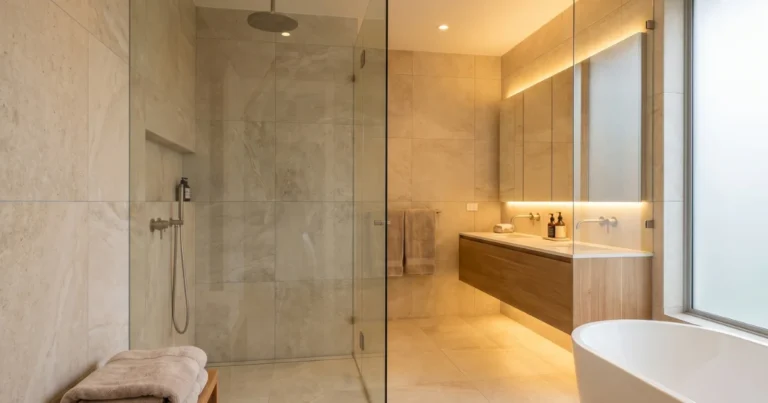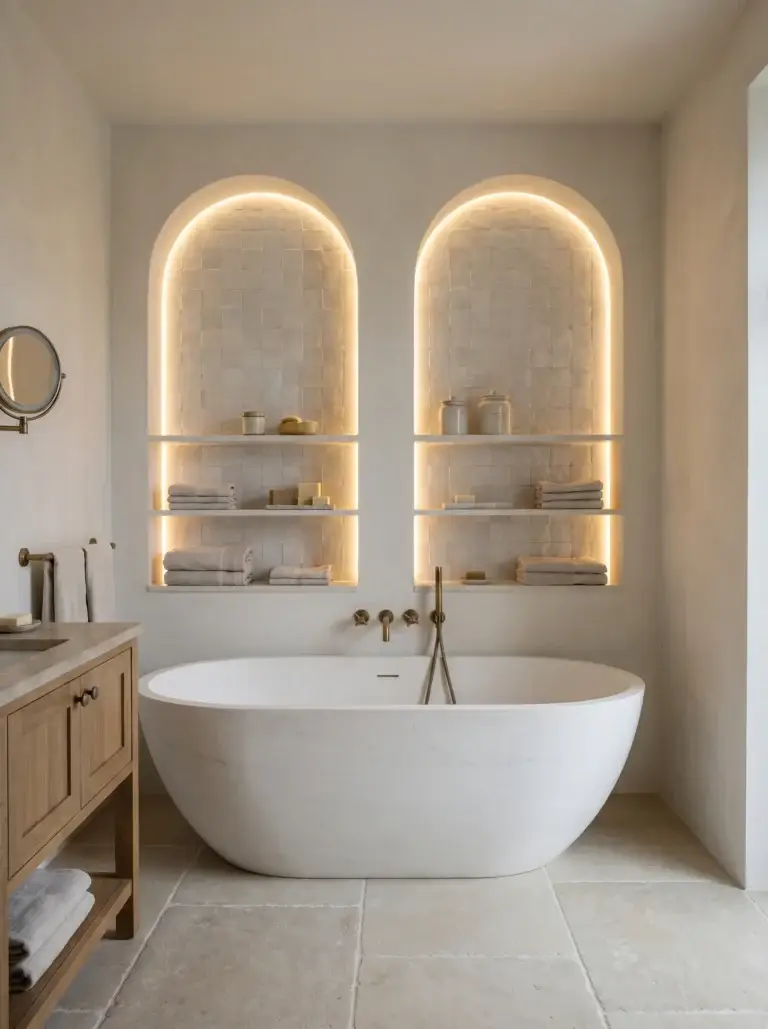
Microcement Bathroom Ideas: 19 Looks That Skip the $5k Quote
You know that moment when you finally pull up a quote for retiling the bathroom and your stomach drops a little? Grout lines, tile lippage, a two week job that turns into five weeks. And at the end of it you still have grout to scrub for the next decade.
Now picture the same room with no tile at all. Just one smooth, soft, hand troweled surface running up the wall, over the edge, into the shower, across the floor. That is the whole appeal of microcement bathroom ideas, and it is why micro cement bathroom inspiration keeps showing up in every saved folder on Pinterest right now.
Microcement (sometimes sold as microtopping or tadelakt style plaster) goes on in thin coats over what you already have. Old tile, plasterboard, concrete, an ugly shower tray. It cures hard, seals waterproof, and leaves almost no seams to clean.
Below are 19 real bathrooms using it, one at a time. I will tell you what makes each one work and what you can copy this weekend without calling a contractor.
Affiliate disclosure: some links in this post are Amazon affiliate links. If you buy through them I may earn a small commission at no extra cost to you. I only link to things that fit the looks shown here.
1. The terracotta tub alcove that feels like a warm cave
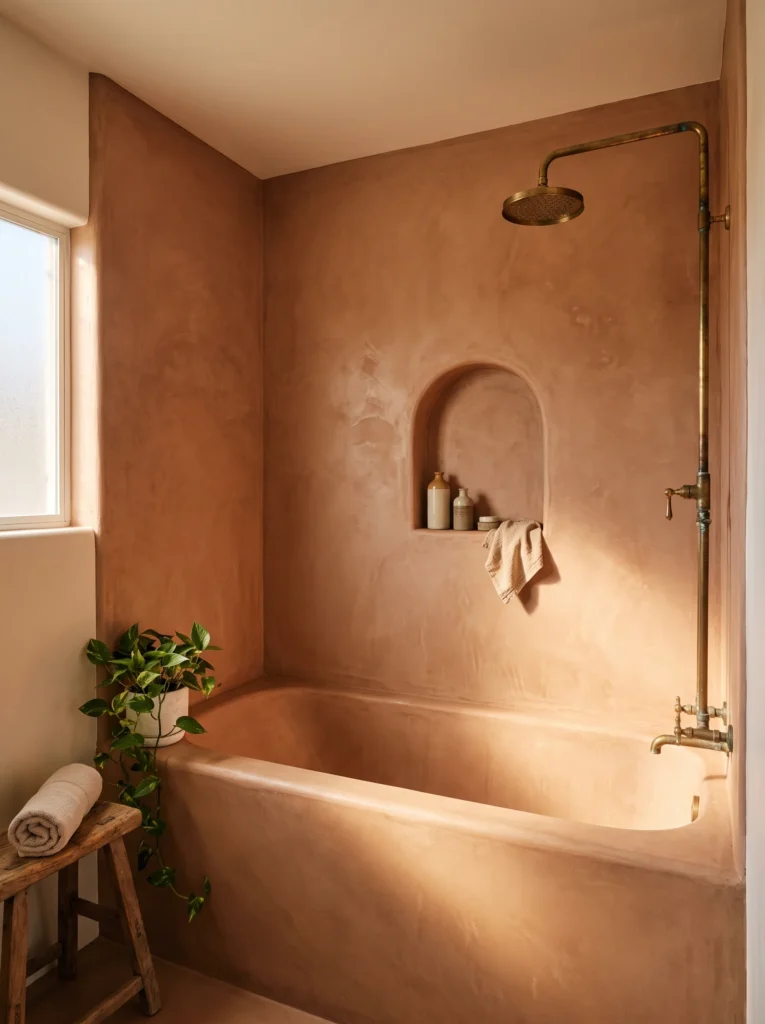
The hero here is the color. That soft clay terracotta wraps the walls, the tub surround, and the tub itself, so the whole alcove reads as one carved block instead of separate parts. Because there are no tile lines to break it up, the arched niche looks like it was scooped out by hand. The little ceramic bottles and folded towel keep it lived in rather than staged.
Then the aged brass shower pipe does the heavy lifting. Warm metal against warm clay is a safe pairing, and running it on the surface instead of inside the wall saves a plumber’s day rate.
The pothos on the ledge and the little wood stool stop the room from feeling like a spa waiting area. Steal this: pick one warm earth tone and take it across the tub, the walls, and the niche instead of stopping at the tile line.
2. Half height plaster that costs a fraction of a full room
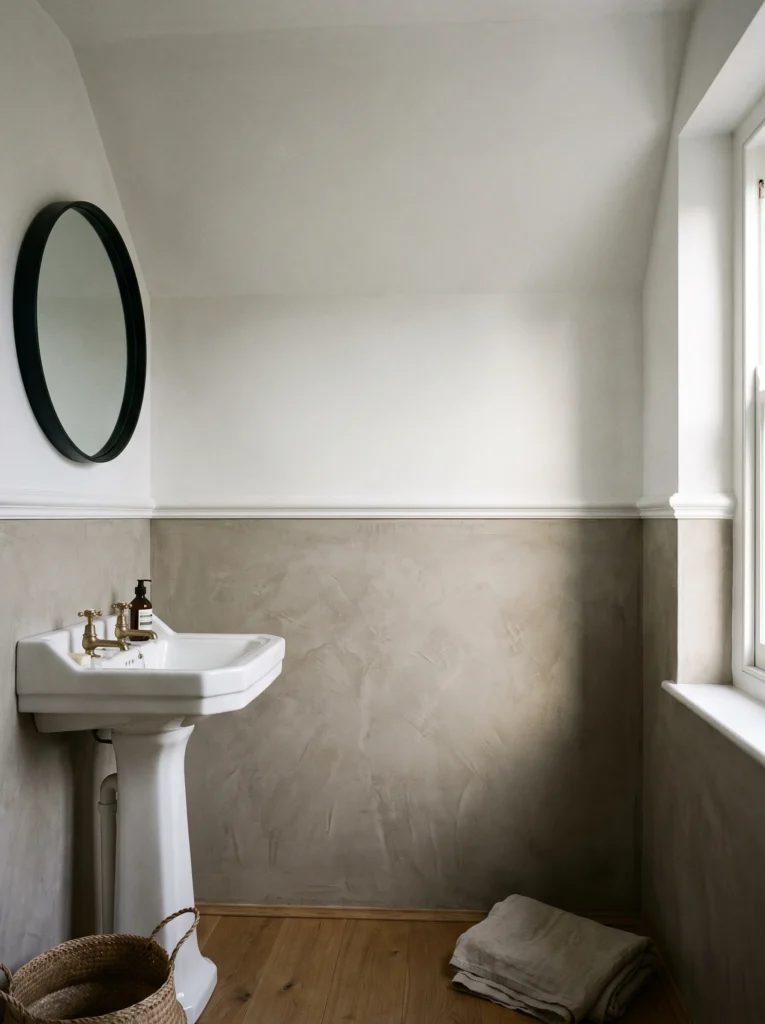
The smart move in this bathroom is where the plaster stops. Only the bottom half of the wall is microcement, capped with a simple white rail, and the top stays plain painted white. That cuts your material and labor almost in half. It also protects the zone that actually gets splashed, which is the only part that really needs it.
The greige tone has a cloudy, hand pulled quality that plays well with the old pedestal basin and unlacquered brass taps. A black round mirror snaps the whole thing into focus.
Warm oak floorboards and a rush basket keep it from feeling cold. Steal this: run plaster to dado height in a small or rented bathroom and paint above it.
3. The built in ledge that replaces a shelf you would have to drill
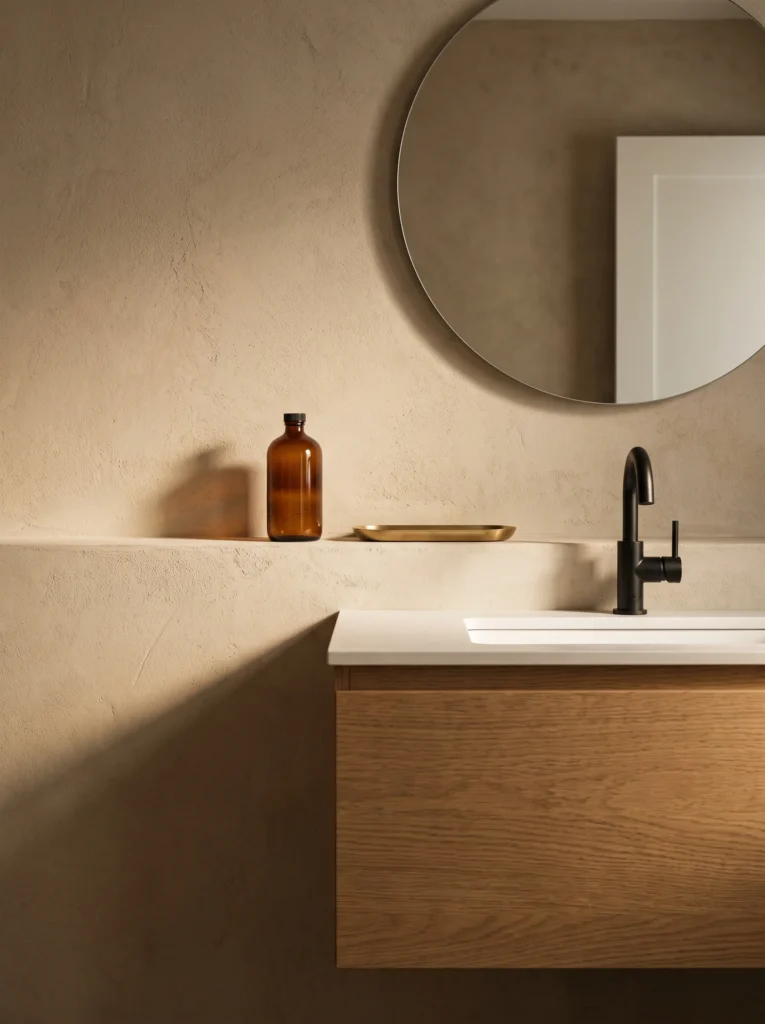
Look at the ledge running along the wall. It is not a shelf that was screwed on later, it is part of the plaster itself, formed and coated in the same pass. That single detail is why the wall looks expensive. Nothing interrupts it, so light slides across the texture and shows every trowel mark.
Sand toned plaster with warm oak underneath is the easiest palette in this whole list to live with. The matte black tap gives your eye somewhere firm to land. Amber glass bottles and a small brass tray do the rest.
Steal this: build a shallow ledge into one wall instead of hanging a shelf, then style it with three things max.
4. A seamless wet room with rounded corners and no shower tray
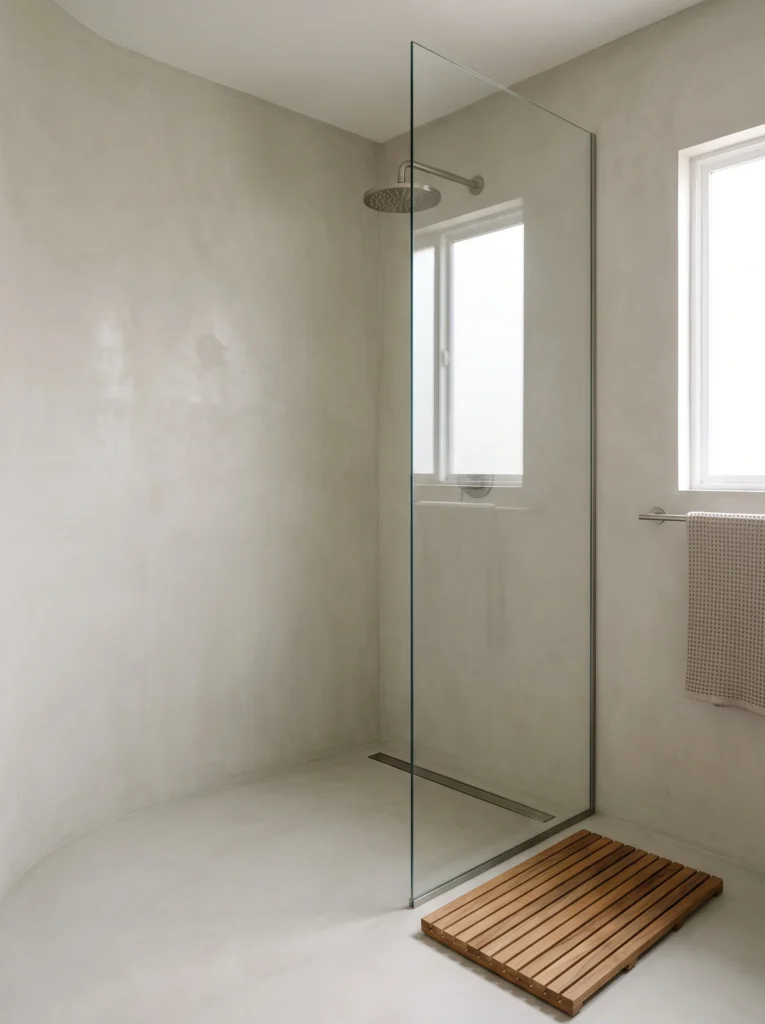
The curve is the trick. Where the wall meets the floor, the microcement sweeps up in a soft radius instead of a sharp 90 degree corner. That coved edge is the reason the room reads as one continuous shell. It also kills the exact spot where grout normally goes black.
Everything else is deliberately quiet. One frameless glass panel, one slot drain, brushed steel fittings that almost disappear into the pale grey. The teak mat brings in the only warmth in the room and stops your feet hitting cold plaster.
Shop it on Amazon: teak wood bath mat.
Steal this: ask for a coved junction between wall and floor. It costs almost nothing extra and changes how the whole room reads.
5. The dark powder room that swallows the light on purpose
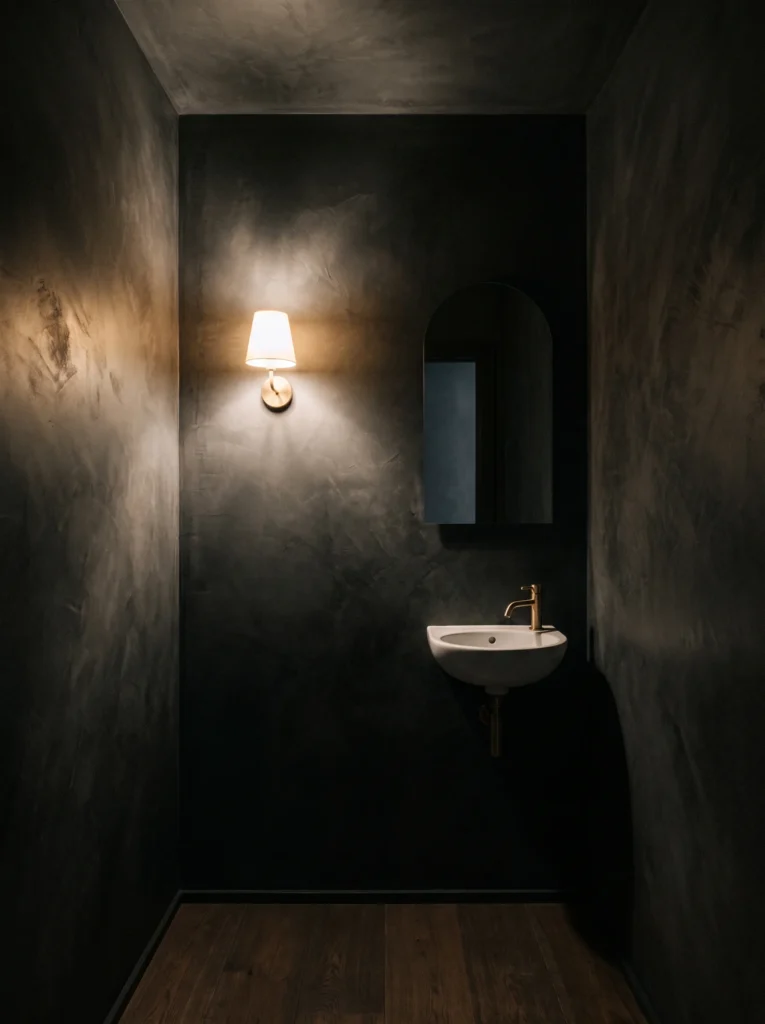
Most people go pale with plaster. This one goes almost black, and the cloudy grey movement in the finish is exactly why it works. A flat black paint would look like a void. Microcement holds those smoky variations, so the walls still have depth when the single sconce hits them.
Because the room is tiny, going dark is the right call. Small and dark feels intentional. Small and bright just feels small. One warm sconce, one arched mirror, one little white basin with a brass tap, and that is the whole design.
Shop it on Amazon: brass wall sconce with fabric shade.
6. One long plaster counter with the sink carved right in
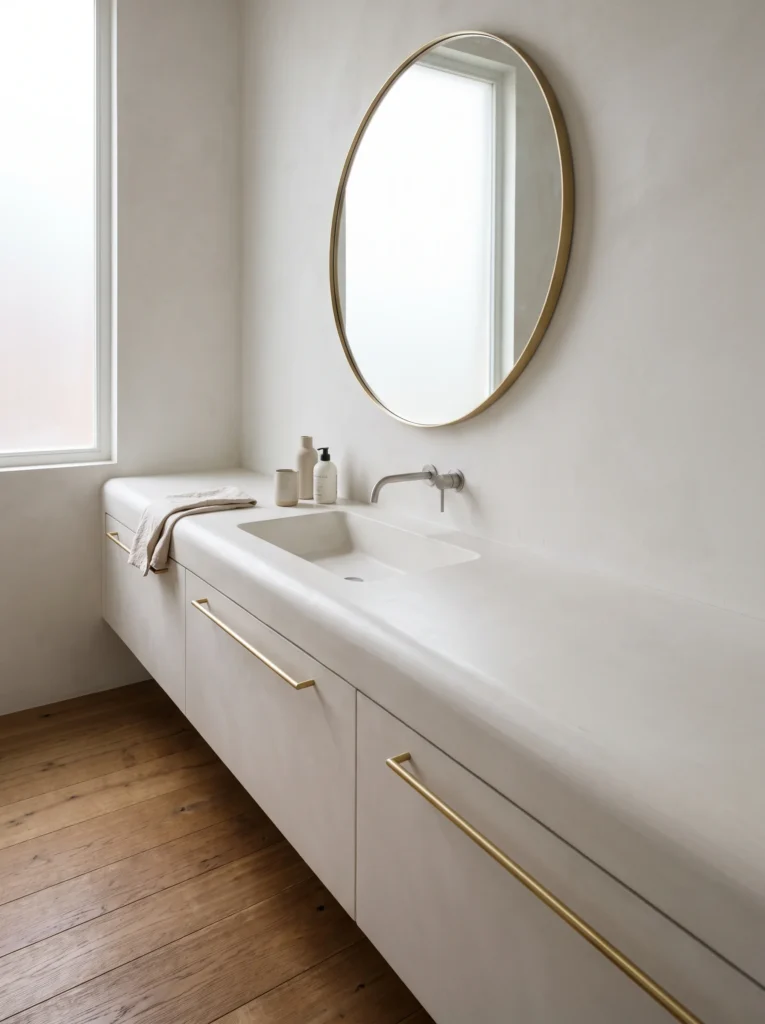
The sink is the story. It is not dropped in or sitting on top, it is molded as part of the counter, so the basin, the run, and the bench seat by the window are all one piece. That eliminates the silicone line around a basin, which is usually the first thing to go yellow in a bathroom.
Off white plaster over pale cabinet fronts could easily go flat. Long brass bar pulls fix that, giving the run a horizontal rhythm and a bit of jewelry.
Shop it on Amazon: long brass cabinet pull handles.
A slim brass framed circle above breaks the straight lines. Oak floorboards warm the whole thing up. Steal this: extend your vanity counter past the cabinets to make a ledge or bench, even if you only gain 30cm.
7. Microcement over old tile, the cheapest transformation here
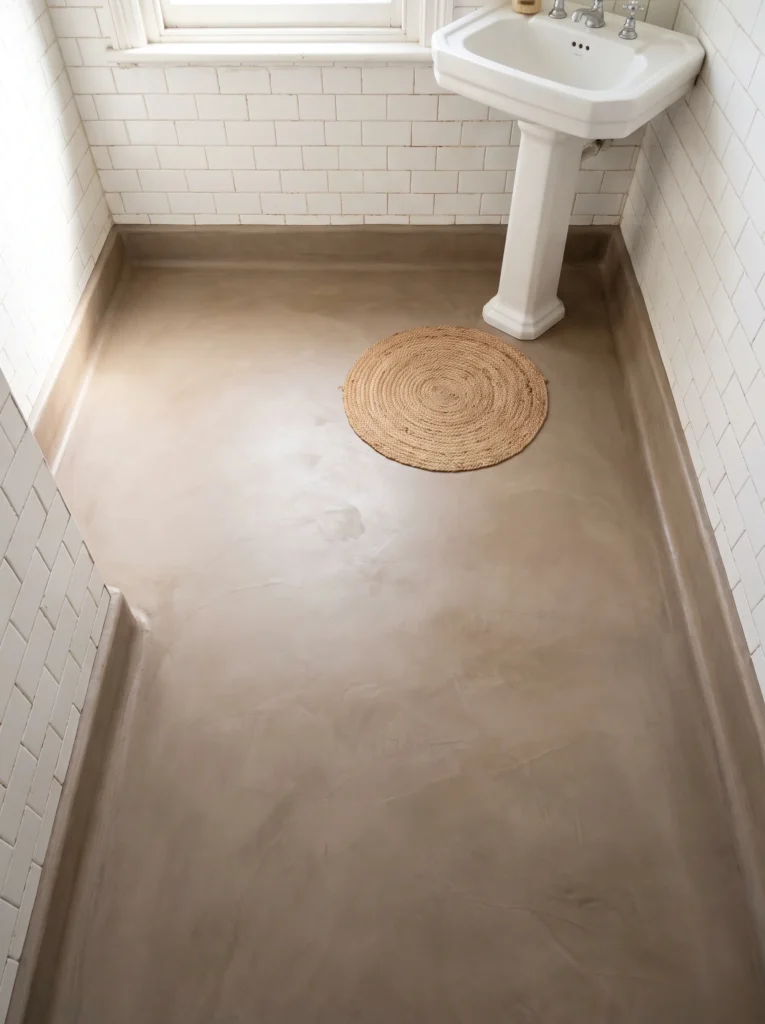
This is the one that answers the $5k quote, and it is the reason microcement bathroom ideas spread so fast. The white subway tile on the walls stayed exactly where it was. Only the floor changed.
Microcement went straight over the old floor tile and up into a small skirting curve at the base of the wall. No demolition, no skip hire, no relaying anything.
The taupe tone bridges the cool white tile and the natural jute rug, which is why the room now feels considered instead of dated. If you like this kind of low commitment update, my guide on how to give your bathroom a vintage look without renovating walks through nine more changes under $200. A round jute rug is the cheapest one on that list.
Steal this: resurface the floor first. It is the single biggest visual change per dollar in any bathroom.
8. A tall arched niche that acts like a piece of art

That arch is nearly full height, and its scale is what makes this shower memorable. Most niches are a squat little box. This one reads as architecture. The plaster here has visible grain, closer to a lime wash than a polished concrete. Steam and side light catch it, so the wall never looks flat.
Inside the arch, the styling is restrained on purpose: three stoneware bottles and a natural sea sponge in matching sandy tones. A matte black rain head is the only dark object in the frame, and it anchors everything.
Shop it on Amazon: matte black rain shower head.
9. Chunky oak against soft plaster, the easiest contrast to pull off
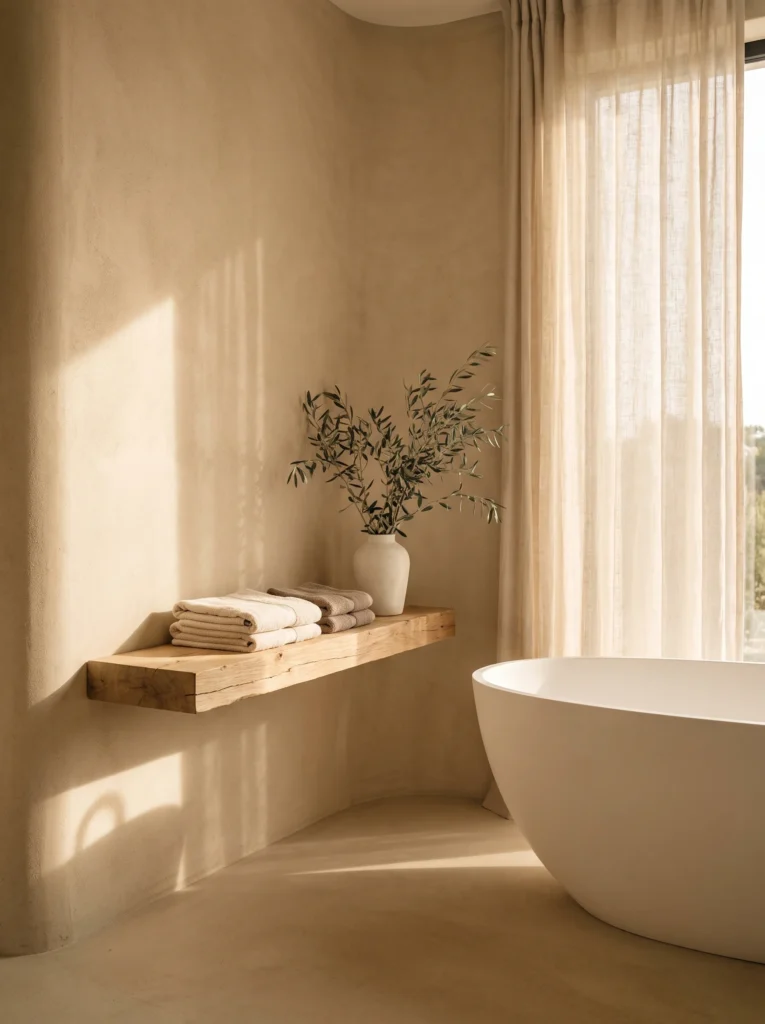
Look at the thickness of that shelf. A thin floating shelf would have vanished against the plaster. This one is a solid slab with visible saw marks and a split running through it. Rough wood next to smooth plaster is the whole idea. One surface has grain and knots, the other has almost nothing, and each makes the other more obvious.
The curved corner where the two walls meet keeps the beige feeling soft instead of boxy. Folded towels in two tones, a chalky vase, and a few olive branches finish it.
Sheer linen at the window throws that warm light across the wall. Steal this: choose one thick, honest piece of timber instead of three thin ones.
10. A built in bathtub that looks carved from the room
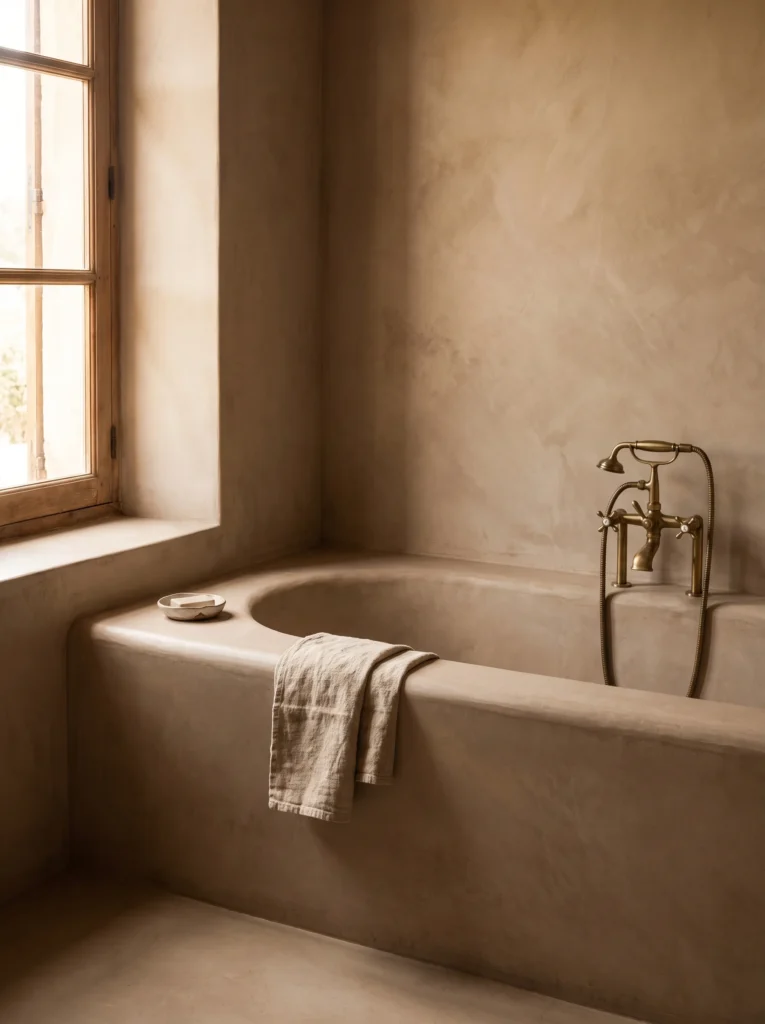
The tub has no lip, no acrylic edge, no visible join. It flows out of the wall, forms a wide deck for soap, and curves back down into the floor. Building a tub this way costs less than you would guess, because it is usually a blockwork or foam shell plastered over. The finish is what sells it.
Clay plaster in this warm mid tone does something flattering to afternoon light. Add the old wooden casement window and it starts feeling like a farmhouse in Provence. The aged brass telephone filler is the one deliberately old fashioned object in the room.
Shop it on Amazon: antique brass tub filler with handheld shower.
11. A terracotta panel behind the toilet instead of a full wall
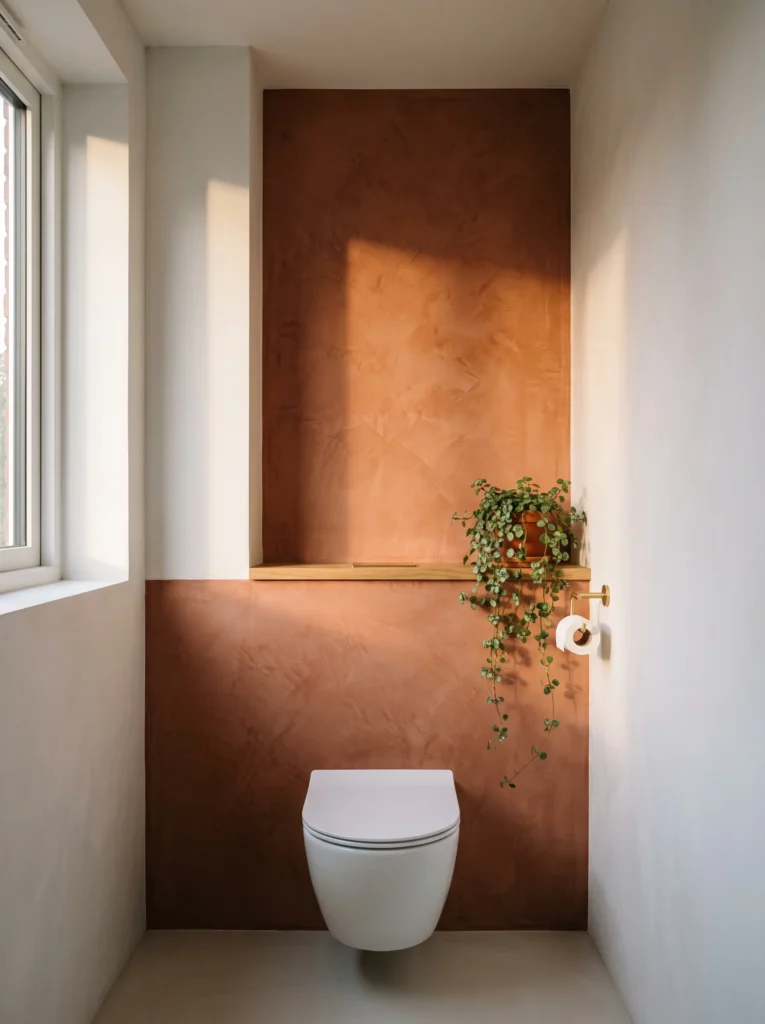
Only one rectangle of this room is plastered. The rest stays plain white, which makes the terracotta panel behind the toilet look framed, almost like a canvas. This is a brilliant move for a narrow cloakroom. You get all the color and texture for a fraction of the material, and the white surround keeps the space feeling wide.
A slim oak shelf cuts across the panel at shelf height and gives the plant somewhere to spill from. Trailing pilea against burnt orange is a good pairing. A small brass roll holder repeats the metal.
Steal this: treat one wall panel as a feature and leave everything around it white.
12. A laundry corner that hides inside the plaster
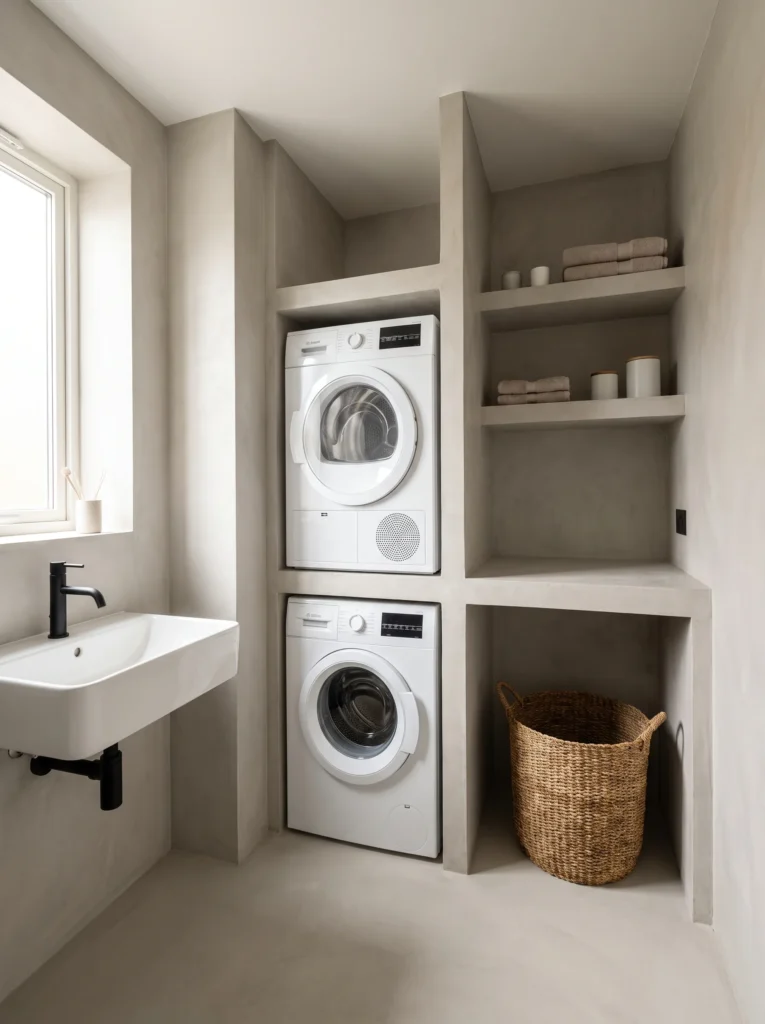
The washer and dryer sit in a plastered niche built exactly to their size, with the same microcement on the frame, the shelves, and the floor. That is why your eye slides past the appliances. When the surround matches the room, white machines stop shouting.
Everything is built in: two plaster shelves for towels and jars, an open cubby underneath for the basket, no cabinet doors anywhere. A woven seagrass basket softens all the grey.
The black tap and matching bottle trap under the basin give the pale room its outline. Steal this: box your machines into a plastered alcove sized to the millimetre and skip the doors.
13. Sage green plaster with a curved shower divider

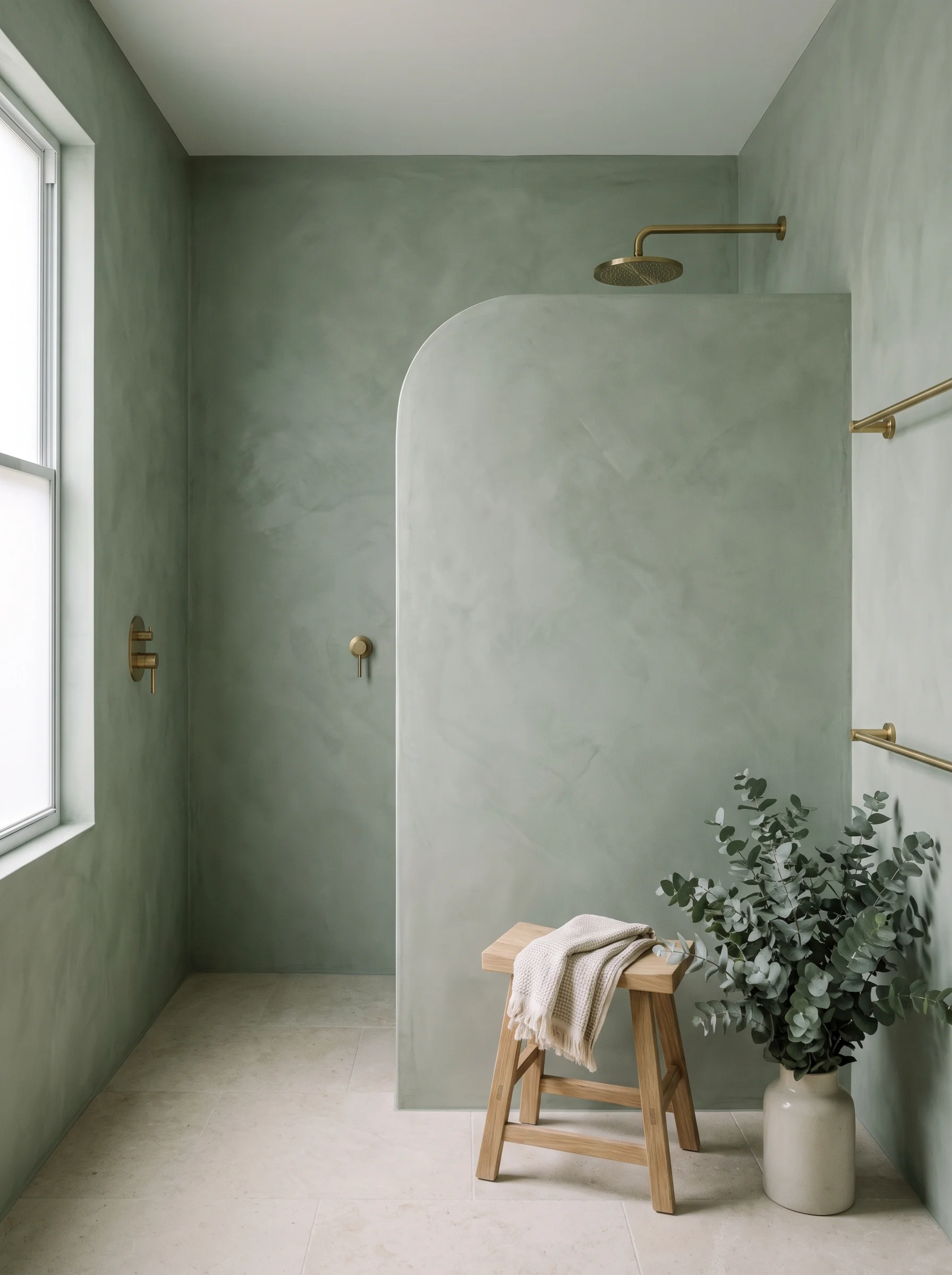
The green is what stops you scrolling. Muted sage sits between grey and green depending on the light, and the cloudy plaster movement keeps it from looking like flat paint.
The half wall is the practical star, though. Its rounded arch top separates the shower from the rest of the room without a door to clean or a full glass screen.
Brass fittings against sage is the pairing that makes the whole scheme. Shower head, mixers, rails, all warm metal on cool green. Pale stone floor tiles keep the base neutral.
A simple oak stool holds a waffle towel. Shop it on Amazon: waffle weave cotton towels.
14. The dark speckled shower with light hidden in the ceiling
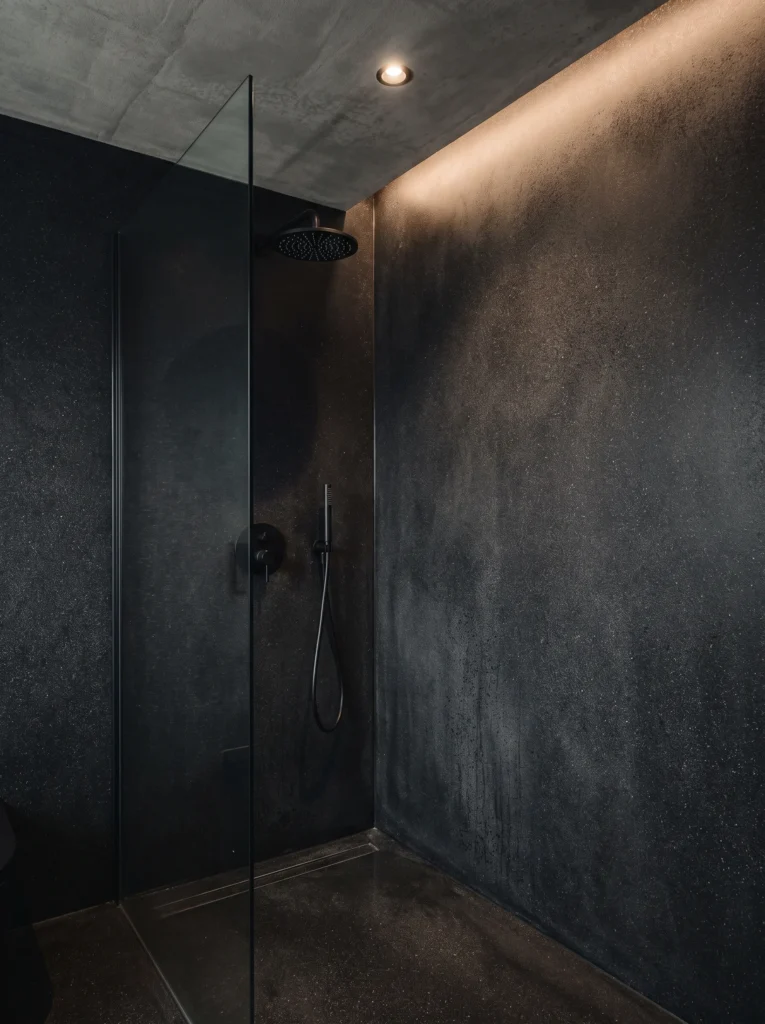
The lighting is doing the design work here. A strip tucked above the wall washes down over the dark plaster, and that grazing light is what reveals the speckle in the finish. Under flat ceiling lights this would look like a black box. Under a wash of warm light it looks like polished stone.
Charcoal microcement with fine pale flecks runs across the walls and the floor, so the shower has no visible tray. A raw concrete ceiling adds a second texture without adding a second color. Matte black head, hand shower, and mixer disappear into the wall.
15. A mocha feature wall that makes two basins look custom
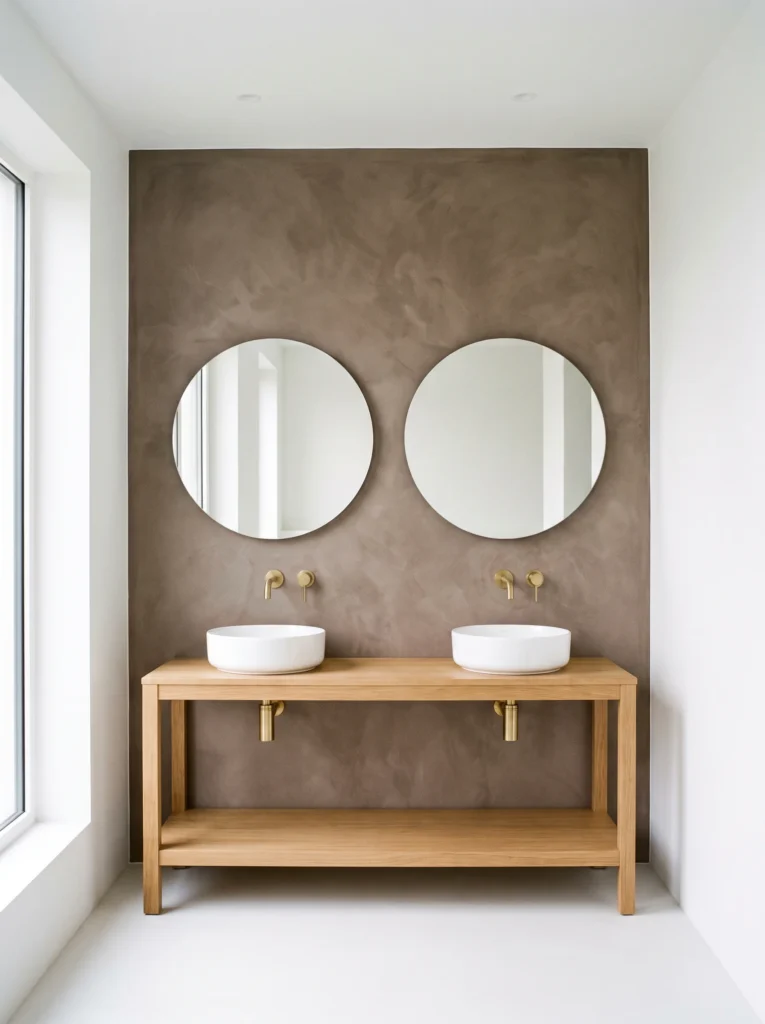
Take away the brown wall and this is an oak console with two bowls on it. Add the plaster panel and it becomes a designed vanity zone. The plaster stops short of the ceiling and the side walls, so the white surround acts like a mat around a picture. That restraint is what makes the cheap parts look intentional.
Two identical round mirrors and two matching wall taps set up a symmetry your eye reads instantly. Brass bottle traps below the basins are left on show, which is a nice touch of honesty.
Shop it on Amazon: white round vessel sink bowl.
16. A sculpted shower bench you can actually sit on
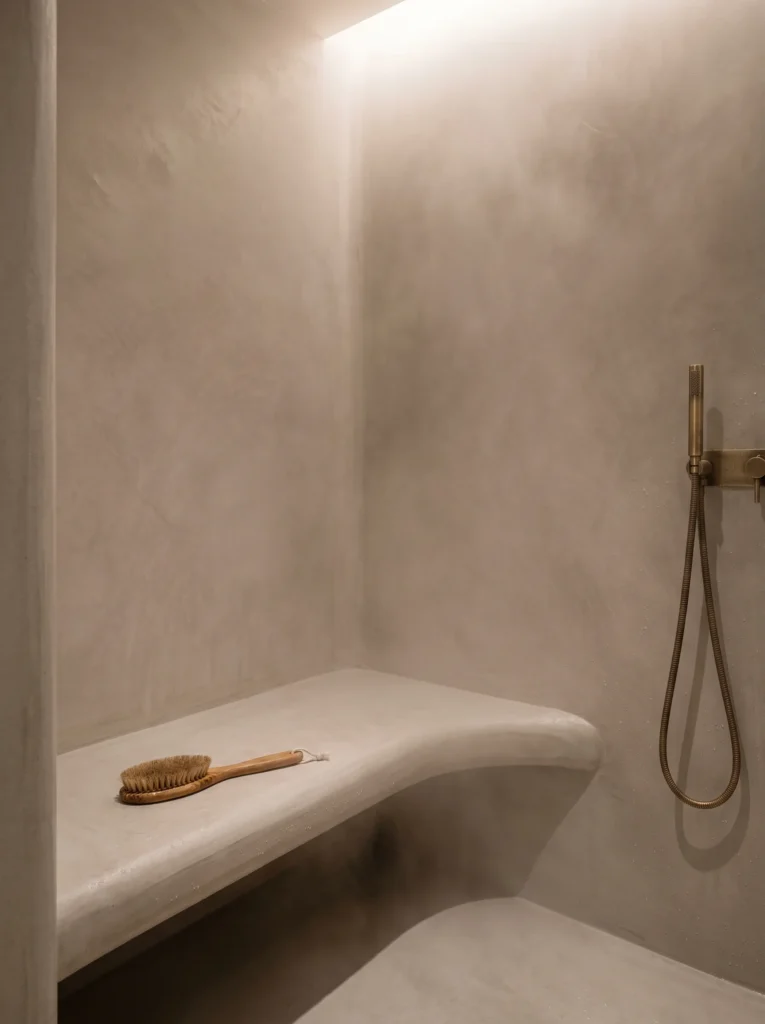
The bench is molded, not built from timber and tiled. It has an organic wave along the front edge, thicker at one end, thinner at the other.
You could only do that with a plaster finish. Tile forces you into flat planes and straight lines.
A narrow light slot above the bench pours light down the corner and highlights how soft the whole shell is. Water beads on the sealed surface instead of soaking in.
One aged brass hand shower on a wall bracket is the only hardware in the frame, and a wooden body brush is the only object.
17. An arched doorway that turns a tiny loo into a moment

The archway sets everything up. Before you see the basin, you see a soft curved opening cut through thick plaster, and it changes how big the little room behind it feels. Inside, a floating plaster shelf holds a rough stone bowl. That shelf is the same material as the walls, so nothing breaks the flow.
An antique gilt mirror is the surprise. Old gold against fresh lime plaster is a very French pairing, and it stops the room feeling brand new. Warm terracotta floor tiles ground it.
Shop it on Amazon: natural stone vessel sink bowl.
18. Pink toned plaster and a low recessed niche
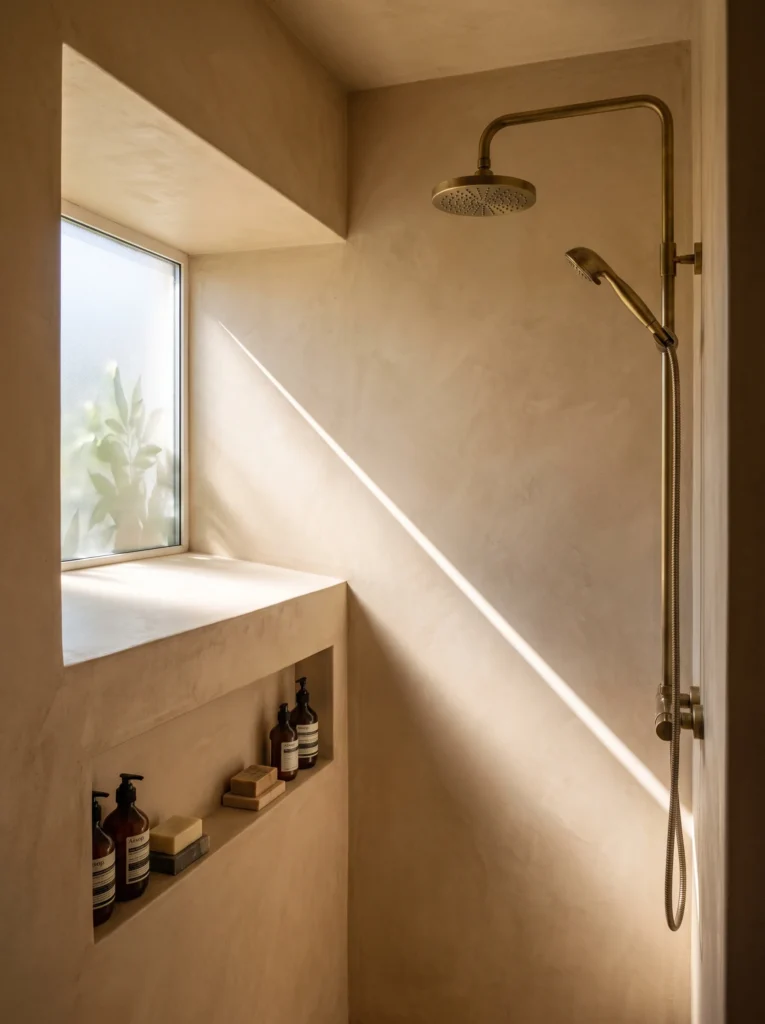
That blush undertone is what separates this shower from every beige one you have seen. It is barely pink, but the sun coming through the window turns it peach for a few hours a day. The niche placement is worth copying too. It sits low, right under the window ledge, which is where your hand actually goes when you are reaching for soap.
The window sill is plastered into a deep ledge, so the room gets one more usable surface for free. Frosted glass keeps it private without blocking light. Aged brass shower pipe, hand shower, and simple amber bottles on the shelf finish it.
19. Bright white plaster with a lit ceiling edge
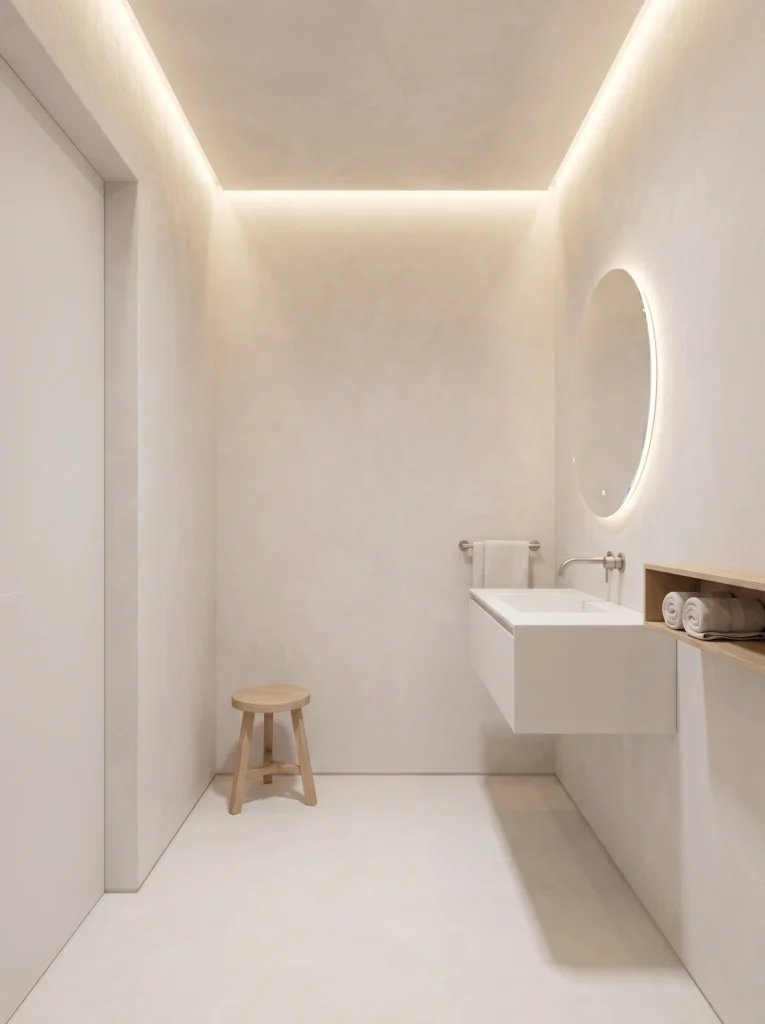
The ceiling is where the money went. A recessed cove around the perimeter throws warm light up and out, which makes the white plaster glow instead of glare. That soft wash is the reason this pale room feels calm rather than clinical. Flat downlights would have flattened all the texture.
The backlit round mirror repeats the same idea at eye level. A floating white vanity, a slim towel rail, and an oak niche with rolled towels are the only other things in the room.
One small oak stool in the corner keeps it human. Steal this: hide your lighting at the edges of a white plaster room and use warm bulbs, around 2700K.
Common mistakes that ruin a good plaster job
Skipping the sealer. Microcement is not waterproof on its own. It needs the right primer underneath and two coats of sealer on top, especially in a shower. Choosing a texture that is too rough for a wet zone. Heavily grained finishes look great on a feature wall and hold soap scum in a shower.
Going over a floor that flexes. If your subfloor bounces, the plaster will crack. Timber floors usually need a rigid board or a decoupling membrane first. Using bleach or scouring cream to clean it. That eats the sealer. Warm water and a pH neutral soap keep the finish alive for years.
How to pick the right microcement bathroom ideas for your room
Most microcement bathroom ideas fail for one reason: people copy a photo taken in a room that gets completely different light from theirs. Start with what your room already has. No window and not much space? Go dark, like the charcoal cloakroom in image five. Dark plaster in a small room reads as a decision, not an accident.
Lots of natural light and warm floors? Terracotta, clay, and sand tones will look best, as in images one, ten, and eighteen. Renting or nervous about commitment? Do a half height wall or a single feature panel. Images two and eleven both do this and cost far less than a full room.
Chasing the easiest cleaning of your life? A full wet room shell with coved corners, like image four, is the one to aim for.
Budget versus splurge, where to actually spend
Spend on the application. A good installer is the difference between a surface that lasts fifteen years and one that hairlines in eight months. This is the least sensible place to save money. Spend on the sealer and the shower mixer. Both live in the wettest part of the room and both are miserable to redo.
Save on decor. Baskets, stools, towels, and glass bottles are what make these microcement bathroom ideas look styled, and they cost very little. Save by keeping your existing sanitaryware. Almost every room in this list would look the same with a basic white basin and toilet.
Make it yours
Pick your tone by looking at what is already in the room. If you have warm oak floors, lean into clay, terracotta, and sand. If you have cool grey tile staying put, go greige or pale stone.
Then choose one metal and repeat it at least three places: tap, shower, and something small like a hook or roll holder. That repetition is what makes a plaster bathroom look finished rather than unfinished.
Where to start in your own bathroom
Every room above is the same base material treated differently. Color, texture, curve, and light are what separate the terracotta cave in image one from the glowing white box in image nineteen. If you take one thing from these microcement bathroom ideas, make it this: pick the one surface that annoys you most and resurface only that. The floor over old tile, the wall behind the vanity, the panel behind the toilet.
You do not need to gut the room. You need to stop the eye at one continuous, quiet surface, and the rest of the bathroom suddenly behaves. Start small, seal it properly, and add one warm metal. That is the entire formula behind every one of these microcement bathroom ideas.
Save this pin so you have all 19 looks when you are ready to start, and follow along for more small bathroom updates that cost less than the quote you were dreading.
Table of Contents
For more help choosing materials, fixtures, and layouts that fit your bathroom’s real constraints, see our guide on fitting a tub and separate shower into a small bathroom.